Deconstructing the Smallsword: A Blueprint for SS26 Avant-Garde Silhouettes
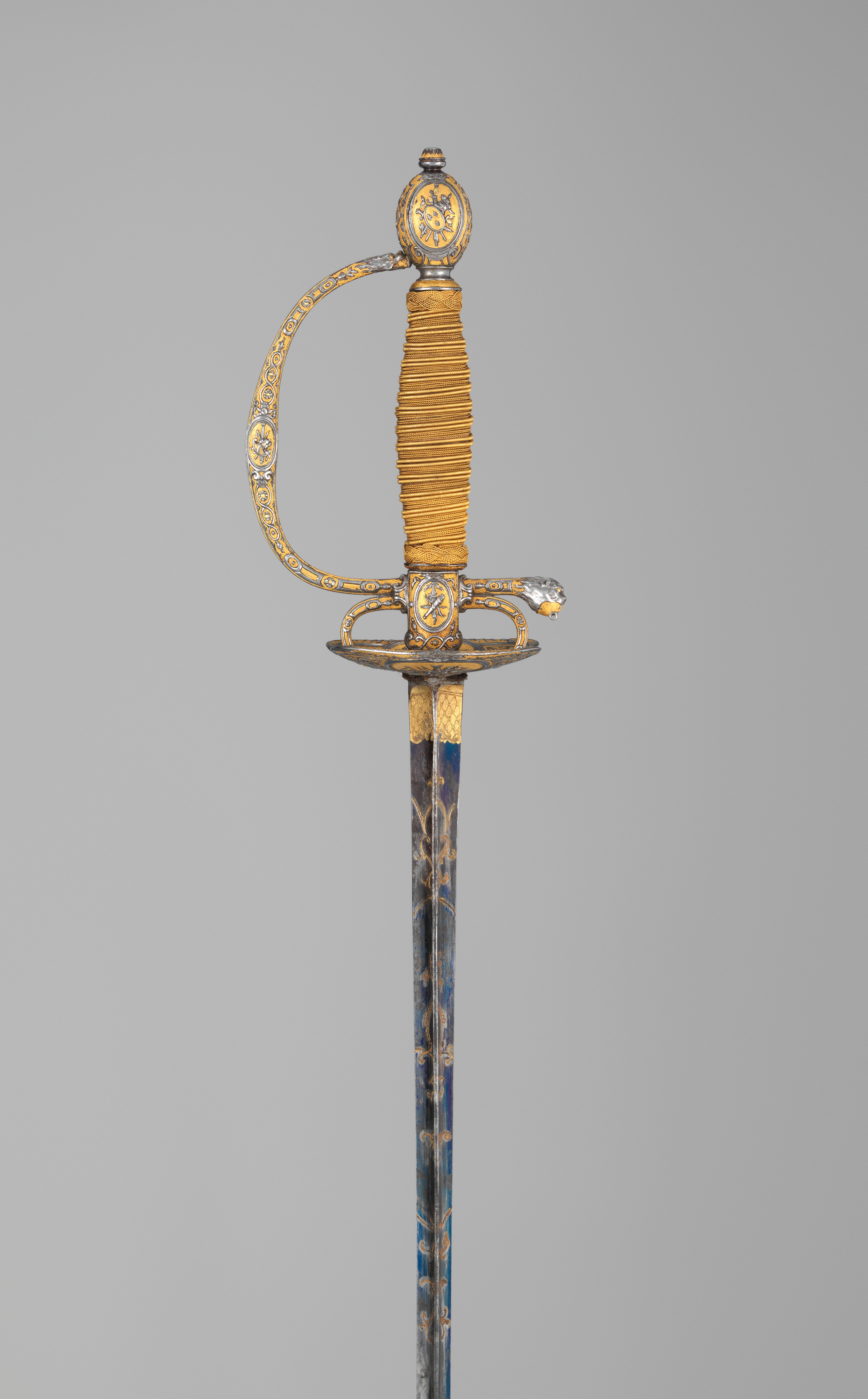
The smallsword, a quintessential artifact of 18th-century French aristocratic dueling, is often misread as a mere accessory of ornament and ritual. For the SS26 collection at Zoey Fashion Laboratory, we reject this historical reductionism. Instead, we interrogate the smallsword as a primary structural diagram—a manifesto of tension, precision, and lethal elegance that directly informs a new language of futuristic silhouettes. This analysis dissects the weapon’s material logic—steel, gold, wood, and textile—and translates its architectural principles into garments that defy temporal boundaries.
Steel as Structural Spine: The Exoskeletal Silhouette
The blade of the smallsword, forged from high-carbon steel, is not merely a cutting edge; it is a linear vector of force. In our SS26 deconstruction, steel translates into rigid, exoskeletal panels that articulate the human form. We envision a jacket where the lapel is replaced by a single, curved steel stay that traces the collarbone and terminates at the hip—a geometric line that mimics the blade’s thrust. The silhouette here is not draped but engineered: a narrow, angular torso that flares abruptly at the shoulder, echoing the sword’s guard. This is a silhouette of controlled aggression, where the body becomes a chassis for metallic inserts. The steel is not decorative; it is functional, creating tension points that pull the fabric into sharp, asymmetrical folds. The result is a garment that stands independent of the wearer’s posture, a frozen moment of motion—a lunge made textile.
Gold as Luminescent Cartography: The Gilded Seam
The smallsword’s hilt, often adorned with gold filigree, is a locus of opulence and ergonomics. In our analysis, gold is reimagined not as surface decoration but as conductive circuitry woven into the garment’s seams. For SS26, gold thread is used to create illuminated pathways that trace the body’s kinetic lines—the spine, the deltoid, the iliac crest. These gilded seams are not static; they are embedded with micro-LEDs that pulse in response to movement, transforming the garment into a living map of the duel. The silhouette this creates is one of fragmented luminosity: a black wool coat sliced by rivers of gold that break the form into distinct, floating panels. The gold does not soften the steel; it amplifies the contrast, turning the wearer into a beacon of precision. This is not a dress; it is a diagram of intention.
Wood as Counterbalance: The Rigid Drape
The wooden core of the smallsword’s grip, often wrapped in wire, provides counterbalance to the blade’s forward weight. In our structural lexicon, wood becomes a rigid understructure that redefines draping. We introduce sculpted wooden corsets that are not worn as armor but as internal scaffolding. These pieces, laser-cut from laminated ash, are articulated at the joints—shoulder, elbow, wrist—allowing for a range of motion while maintaining a severe, architectural silhouette. The wood is left raw, its grain visible, contrasting with the high-gloss steel. The effect is a hybrid silhouette: the upper body appears encased in a geometric cage, while the lower body flows in weightless organza. This tension between the rigid and the fluid mirrors the smallsword’s own duality—a weapon that is both a tool of violence and a work of art. The wooden elements are not hidden; they are exposed, becoming the focal point of the garment’s narrative.
Textile as Membrane: The Kinetic Second Skin
The textile component of the smallsword—the velvet or silk wrapping of the grip, the tassels of the sword knot—is often the most ephemeral. For SS26, we treat textile as a responsive membrane that mediates between the rigid and the organic. We employ a proprietary fabric: a double-faced jersey with a liquid-metal coating on one side and a brushed matte finish on the other. This textile is cut into panels that are bonded to the steel and wood structures, creating a second skin that moves with the body but is shaped by the armature. The silhouette this yields is one of dynamic containment: the fabric appears to be in constant flux, rippling in response to the wearer’s breath, yet it is anchored by the metallic and wooden elements. The textile’s color palette is monochromatic—charcoal, pewter, obsidian—punctuated only by the gold seams. This is not a fabric that drapes; it is a fabric that performs.
The Futuristic Silhouette: A New Anatomy of Power
Integrating these four material logics, the definitive SS26 silhouette emerges as a deconstructed exoskeleton that reimagines the human form as a weapon. The shoulders are broad and angular, supported by steel brackets that extend beyond the natural clavicle. The waist is cinched by a wooden corset that tapers to a sharp, blade-like point at the navel. The hips are asymmetrical—one side is encased in a rigid steel panel, the other flows in a cascade of liquid textile. The overall line is a zigzag of tension: a visual representation of a fencing lunge, frozen in time. This is not a silhouette for the passive; it is a silhouette for the active agent—the wearer who moves with precision, who commands space through geometry.
The structural innovation lies in the modularity of these elements. The steel panels can be detached and reattached via magnetic couplings, allowing the wearer to adjust the silhouette from a full exoskeleton to a minimal, linear form. The wooden corset is designed with a hinge mechanism that allows it to flatten for storage or expand for movement. The gilded seams are powered by a flexible battery pack sewn into the lining, enabling the luminescence to be controlled via a haptic glove. This is not fashion as costume; it is fashion as technology—a wearable system that adapts to the user’s intent.
Conclusion: The Smallsword as a Temporal Bridge
In the hands of Zoey Fashion Laboratory, the French smallsword ceases to be a relic of dueling culture. It becomes a temporal bridge between the precision of 18th-century craftsmanship and the fluidity of 21st-century digital fabrication. The steel, gold, wood, and textile are not materials of nostalgia; they are components of a new syntax for the body. The SS26 collection is not about looking back; it is about projecting forward—a silhouette that carries the weight of history but moves with the velocity of the future. This is the anatomy of the avant-garde: a weapon reimagined as a garment, a duel transformed into a dance, and a smallsword that cuts through time itself.