Deconstructing the Paracas Mummy Bundle Mask: An Avant-Garde Analysis of Textile Time
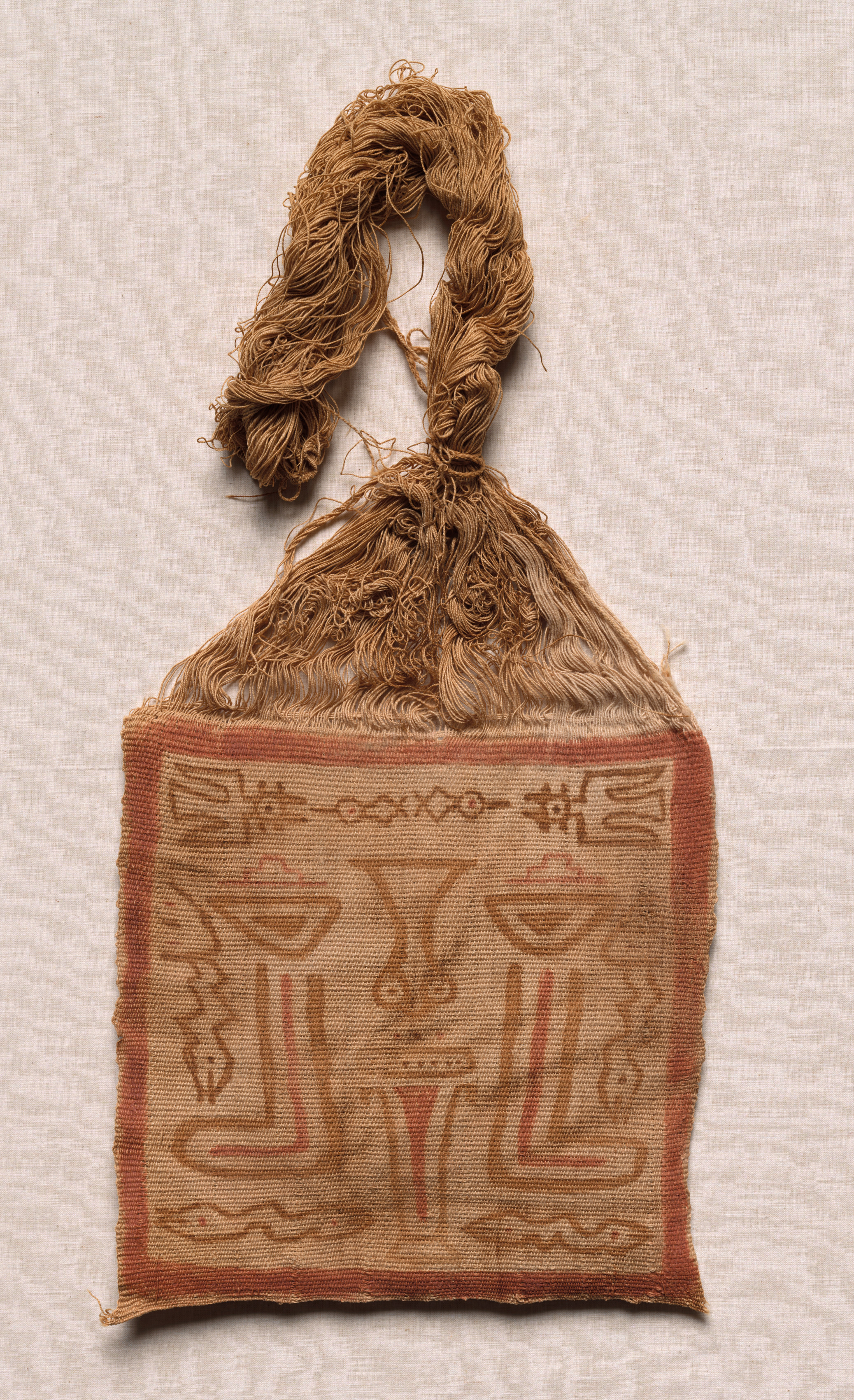
At Zoey Fashion Lab, our mission is to unravel the narratives woven into fabric, not merely as historical artifacts but as living blueprints for avant-garde design. The subject of this analysis—a Mummy Bundle "Mask" from the Paracas culture of Peru’s South Coast, Ica Valley, Ocucaje site (700 BCE–1 CE)—presents a profound challenge and inspiration. Constructed from cotton and pigment in a plain weave, this object transcends its funerary context. It is not a mask in the theatrical sense, but a textile encapsulation of identity, status, and the liminal space between life and death. For the avant-garde fashion designer, this piece offers a radical lexicon: a deconstruction of the body, a celebration of surface texture, and a dialogue between permanence and decay.
Material Memory: Cotton, Pigment, and the Plain Weave
The technical foundation of this mask is deceptively simple: plain weave cotton. In an era obsessed with high-tech synthetics and complex jacquards, the Paracas artisan’s choice of a basic over-under structure is a powerful statement. The plain weave is the zero point of weaving—a grid, a binary code. Yet, it is precisely this simplicity that allows the pigment to become the protagonist. The cotton serves as a neutral canvas, an absorbent surface that drinks in color, creating a matte, velvety finish that synthetic fabrics struggle to replicate. For the avant-garde, this is a lesson in restraint: the most radical statement can be made through the most elemental technique. The pigment, likely derived from mineral and plant sources, is not a printed layer but an integral part of the fiber. This fusion of material and color suggests a design philosophy where the medium and the message are inseparable.
From a deconstructionist perspective, the plain weave becomes a site of potential rupture. The mask’s surface, now aged and fragmented, reveals the warp and weft in a way a pristine textile never could. These frayed edges, faded pigments, and missing threads are not flaws but features. They are a record of time, of use, of burial. In an avant-garde collection, this could be translated into intentional fraying, laser-cut perforations, or layered, semi-transparent fabrics that mimic the mask’s decay. The cotton’s natural off-white, now darkened by centuries of contact with resin and soil, offers a palette of earth tones—ochre, cinnabar, indigo—that feel both ancient and hyper-modern. The pigment’s uneven application, its bleeding into the weave, becomes a pattern language: a controlled chaos that challenges the sterile perfection of contemporary digital printing.
Form as Function: The Mask as Second Skin and Architectural Shell
The mask’s form is a paradox. It is both a second skin, intimately molded to the face of the deceased, and an architectural shell, a rigid, almost sculptural object. This duality is central to its avant-garde potential. The Paracas culture wrapped their dead in multiple layers of textiles, creating a bundle that was part body, part building. The mask, often placed over the face, is the final, most visible layer. It is a portal—a barrier that simultaneously conceals and reveals. For the fashion designer, this translates into garments that are not merely draped but constructed. Think of a jacket that is also a shell, a dress that is also a cage. The mask’s geometric features—often stylized eyes, a nose, and a mouth—are not naturalistic. They are abstracted, reduced to essential symbols. This abstraction is a powerful tool for the avant-garde, allowing the designer to re-contextualize the human face as a pattern, a motif, or even a structural element.
The mask’s flatness is another key feature. Unlike European masks that are three-dimensional, many Paracas masks are essentially painted rectangles of cloth that were folded or tied. This two-dimensionality challenges Western notions of tailoring and fit. It suggests a garment that is not shaped to the body but worn as a panel, a banner, or a shroud. This could inspire oversized, boxy silhouettes, flat-fronted coats, or garments that are more about surface than volume. The mask’s placement on the mummy bundle also implies a disregard for the body’s natural anatomy—the face is not the head, but a separate, detachable component. This opens the door for modular design: detachable collars, hoods, and face coverings that transform the wearer’s silhouette and identity.
Archive Resonance: A Dialogue Across Millennia
The provided reference, Archive Resonance, speaks of artifacts as “silent witnesses” to cultural collision and aesthetic fusion. The Paracas mask is precisely such a witness. It belongs to a period (700 BCE–1 CE) when the Paracas culture was interacting with, and eventually being absorbed by, the Nazca civilization. The mask’s style—its use of bold colors, abstracted anthropomorphic figures, and ritualistic symbolism—is a product of this cultural negotiation. For the avant-garde designer, this is a call to embrace hybridity. The mask is not a pure, isolated object; it is a conversation between traditions, between the living and the dead, between the textile and the body.
The pigment itself tells a story of trade and technology. Colors like deep indigo and vivid cinnabar were not locally sourced; they were traded across vast networks. The mask is thus a map of ancient globalization. In a contemporary context, this resonates with the fashion industry’s own global supply chains. An avant-garde collection inspired by this mask could critique or celebrate this interconnectedness. It could use natural dyes sourced from endangered plants, or it could employ digital imaging to recreate the mask’s fading pigments. The key is to acknowledge the mask’s role as a connector—between cultures, between epochs, between the sacred and the profane.
Avant-Garde Application: From Burial to Runway
How does this ancient textile inform a modern, avant-garde collection? The answer lies in a radical reinterpretation of its core elements.
- Surface as Narrative: The mask’s painted surface is a storyboard. For a garment, this could mean hand-painted or screen-printed panels that depict abstracted faces, geometric patterns, or symbolic motifs. The pigment’s imperfection—its cracks and fades—should be celebrated, not hidden. This could be achieved through crackle finishes, distressed fabrics, or reactive dyes that change over time.
- Fragmentation and Layering: The mask is a fragment of a larger bundle. A garment could be deconstructed into multiple, overlapping pieces—a jacket with a detachable “mask” hood, a skirt with a painted panel that echoes the mask’s face. The plain weave base could be slashed and woven with contrasting threads, creating a visual and textural dialogue.
- Ritual and Performance: The mask was part of a funerary ritual. Avant-garde fashion often blurs the line between clothing and performance. A collection could include garments that are meant to be “unwrapped” or “re-wrapped” by the wearer, echoing the mummy bundle’s multiple layers. The act of dressing becomes a ritual, a transformation.
- Color as Code: The mask’s colors—reds, blues, yellows, blacks—are not decorative. They hold symbolic meaning, often related to status, lineage, and the afterlife. An avant-garde designer could re-code these colors for a contemporary context. Red could signify power or danger; blue, the digital realm; yellow, the sun or synthetic light. The pigment is no longer a dye but a language.
Conclusion: The Mask as Manifesto
The Paracas Mummy Bundle Mask is not a relic. It is a manifesto from a civilization that understood the power of textiles to transcend time. Its cotton and pigment, its plain weave, and its abstracted form offer a blueprint for an avant-garde that is both ancient and futuristic. At Zoey Fashion Lab, we see this mask as a call to deconstruct the body, to celebrate imperfection, and to weave narrative into every thread. The mask’s silence speaks volumes. It is our job, as fabric deconstructionists, to listen, to translate, and to create garments that are not just clothing, but portals—connecting the wearer to a history that is still being written. The future of fashion lies not in the new, but in the radical re-reading of the old. The Paracas mask is our guide.