Deconstructing the Nobleman: A Blueprint for SS26 Avant-Garde Silhouettes
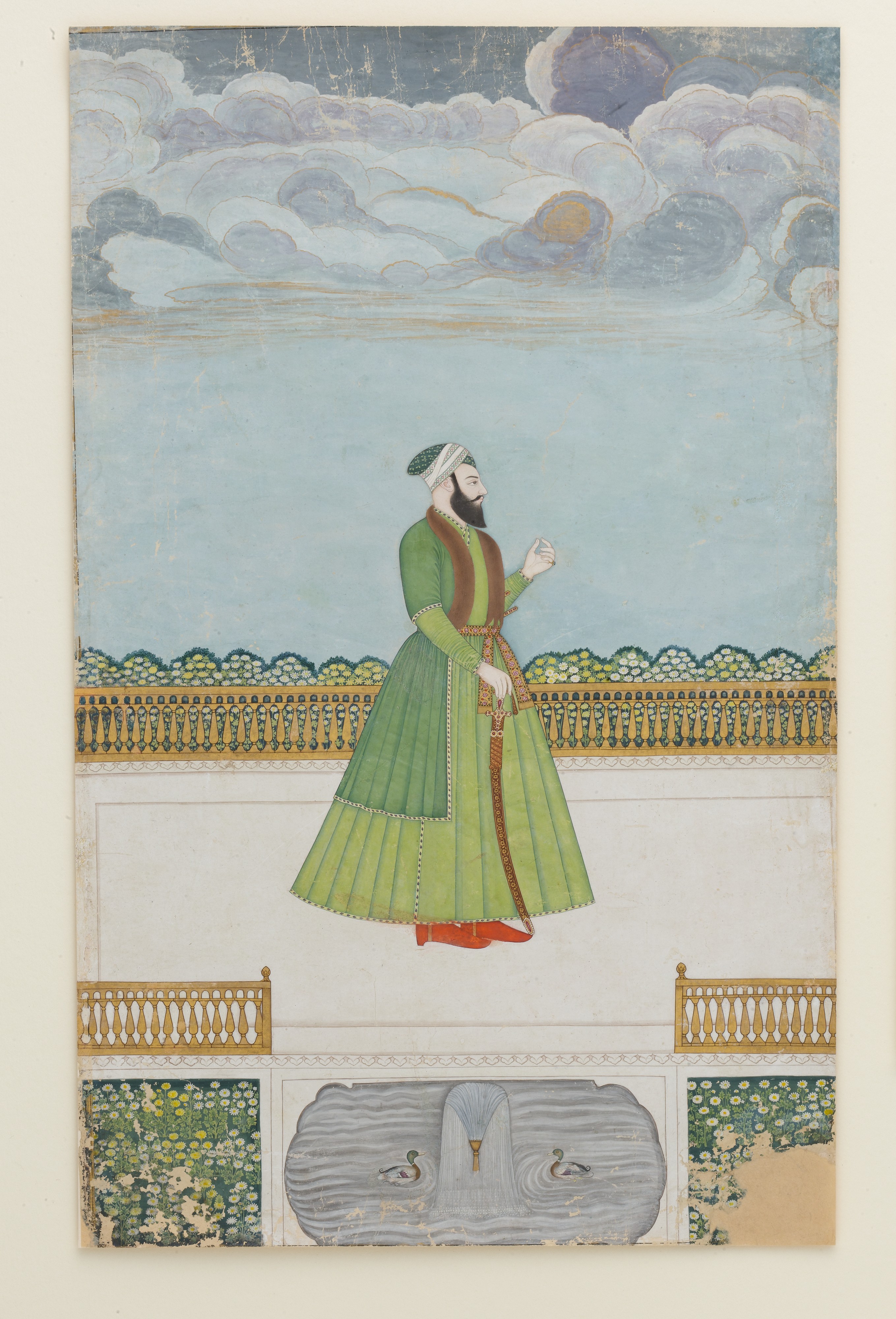
The Nobleman on a Terrace, a study rendered in ink, opaque watercolor, silver, and gold on paper, presents a paradox of static authority and dynamic potential. It is not a portrait of a man, but a diagram of a system—a system of power, of geometry, and of material hierarchy. For Zoey Fashion Laboratory’s SS26 collection, this artwork serves as a foundational text for a new architectural vocabulary. We are not recreating the nobleman; we are deconstructing his terrace, his posture, his very essence, to forge a futuristic silhouette that interrogates the relationship between the body and the built environment. This analysis will dissect the piece’s structural innovations, its material alchemy, and its profound implications for a season defined by deconstructive elegance and futuristic pragmatism.
Structural Innovation: The Terrace as Exoskeleton
The terrace in the title is not mere backdrop; it is the primary structural armature. In the artwork, the balustrade, the floor tiles, and the distant horizon are rendered with a metallic precision that suggests a latent exoskeleton. For SS26, we translate this into garments where the architecture of the terrace becomes a wearable framework. The futuristic silhouette is not draped but engineered. Think of a jacket whose shoulder pads extend into cantilevered forms, echoing the stone balustrade—a rigid, protective shell that simultaneously reveals and conceals the wearer’s form.
Geometric Deconstruction of the Body
The nobleman’s posture—erect, commanding—is a study in axial tension. We deconstruct this posture into a series of asymmetrical, angular panels. A coat might be constructed from a single piece of fabric that folds and pleats to create a three-dimensional volume, reminiscent of the terrace’s receding perspective lines. The ink and watercolor strokes suggest a fluidity within the rigid framework; thus, our garments will feature kinetic seams that allow for movement while maintaining a sharp, architectural profile. The silver and gold highlights are not decorative but functional—they are structural reinforcements, metallic threads woven into high-tension zones (shoulders, hips, spine) to create a luminous, armor-like effect.
Material Alchemy: Ink, Water, and Precious Metals
The material palette of the artwork—ink, opaque watercolor, silver, and gold—dictates a radical approach to textile innovation. We are not simply printing these elements; we are infusing them into the fabric’s DNA. The ink represents the foundational black of the collection—a deep, carbon-based textile that absorbs light, creating a void against which the metallic elements can explode. The opaque watercolor suggests a translucent, layered technique: garments will feature double-layered organza or fine-gauge mesh, where the outer layer is digitally printed with an opaque, watercolor-like gradient, while the inner layer is a solid, structural base.
Silver and Gold as Spatial Markers
Silver and gold are not mere accents; they are spatial markers that define the garment’s architecture. In the artwork, these metals delineate the terrace’s edges and the nobleman’s silhouette. In our SS26 pieces, silver will be used as a reflective, liquid-like coating on high-gloss PVC or recycled polyurethane, applied in strips that follow the body’s contours. Gold will be reserved for laser-cut, structural appliqués that mimic the balustrade’s intricate patterns. These metallic elements are not static; they catch light and shift with movement, creating a dynamic interplay between the wearer and the environment. The result is a garment that is both a sculpture and a second skin.
Futuristic Silhouettes: The Nobleman Reimagined
The nobleman’s silhouette is traditionally one of broad shoulders and narrow hips—a classic masculine form. For SS26, we dismantle and reimagine this archetype. The new silhouette is volumetric and anti-anatomical. The shoulders are exaggerated into geometric, box-like structures that extend beyond the natural frame, reminiscent of the terrace’s balustrade. The waist is cinched not by a belt but by a rigid, metallic corset that echoes the terrace’s floor tiles. The hips are widened through asymmetrical, pleated panels that cascade like watercolor washes, creating a sense of fluidity within the rigid architecture.
The Inverted Trapeze and the Floating Hem
A key innovation is the inverted trapeze—a silhouette that narrows at the shoulders and flares dramatically at the hem, mimicking the perspective lines of the terrace as they recede into the background. This is achieved through strategic draping and internal tension structures (thin, flexible metal rods or carbon-fiber stays) that hold the fabric in a permanent, sculpted form. The hem itself is floating—cut away at irregular intervals to reveal the wearer’s legs, creating a visual disconnection between the garment and the ground. This echoes the nobleman’s detachment from the terrace below, his presence hovering between the earthly and the ethereal.
Avant-Garde Couture as Critical Discourse
This analysis is not merely about aesthetics; it is a critical intervention. The nobleman represents a system of power, of hierarchy, of static tradition. By deconstructing his form and the architecture that supports him, we are questioning the very foundations of fashion’s relationship to the body. The SS26 collection is a manifesto of deconstructive elegance, where the garment becomes a site of negotiation between the wearer and the world. The silver and gold are not symbols of wealth but of structural intelligence. The ink and watercolor are not decorative but narrative devices that speak to the fleeting nature of power and the permanence of design.
Application to Zoey Fashion Laboratory’s SS26 Collection
For the Zoey Fashion Laboratory SS26 collection, these principles will be applied across a series of twelve key looks. Each look will be based on a specific element of the Nobleman on a Terrace: the balustrade, the floor tiles, the horizon line, the nobleman’s posture. The color palette will be dominated by obsidian black (ink), pewter gray (silver), and burnished gold. The textures will range from high-gloss, mirror-like surfaces to matte, watercolor-softened fabrics. The construction will prioritize modularity—garments that can be reconfigured, their structural elements detached and reattached, allowing the wearer to adapt the architecture to their own body and context. This is not passive fashion; it is active, critical couture that demands engagement.
In conclusion, the Nobleman on a Terrace is not a historical artifact but a blueprint for the future. It challenges us to see garments as architectural interventions, materials as structural systems, and the body as a site of constant negotiation. For SS26, Zoey Fashion Laboratory will deliver a collection that is both a homage to the deconstructive tradition and a radical leap into a new, futuristic pragmatism. The nobleman is gone; the terrace remains, reimagined as a wearable, kinetic, and luminous exoskeleton. This is the new frontier of avant-garde couture.