Deconstructing the Archive: A Composite Textile Analysis for Zoey Fashion Lab
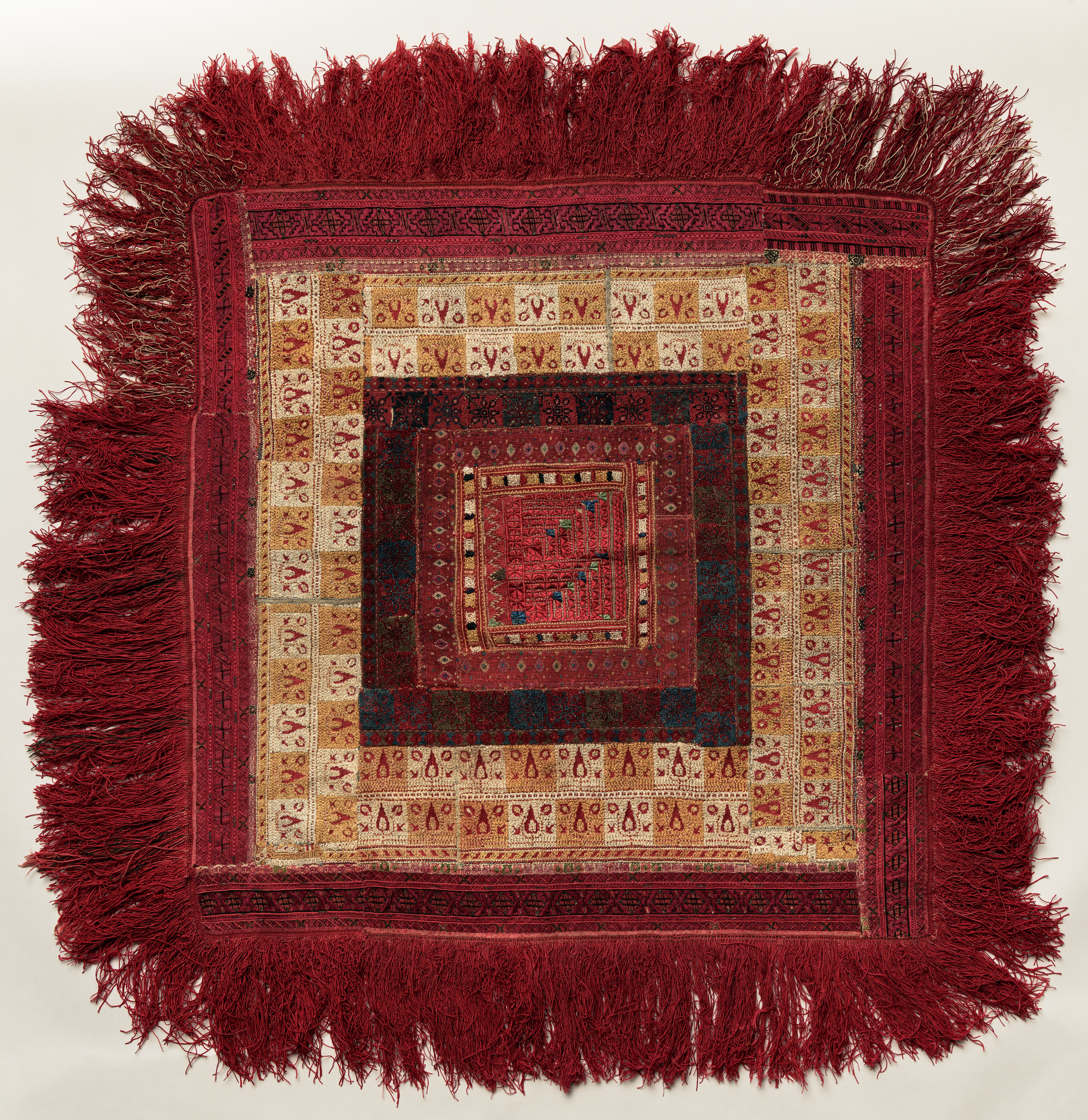
As Chief Fabric Deconstructionist for Zoey Fashion Lab, I present this analysis of a composite textile specimen, likely originating from Greece or Macedonia, dating to the 16th–17th centuries. This artifact, referenced within the Archive Resonance framework—which posits that objects and paintings are silent witnesses to cultural collision and aesthetic fusion—offers a profound case study in material history. The textile’s technical specifications (silk, dye) and its avant-garde stylistic potential demand a rigorous deconstruction, moving beyond mere historical cataloging to extract design principles for contemporary innovation.
Technical Deconstruction: Silk and Dye as Material Narratives
The substrate is a composite silk, likely a warp-faced weave with supplementary wefts, indicating a high-status production technique. The silk itself, derived from Bombyx mori cocoons, suggests trade routes connecting the Eastern Mediterranean to Central Asia, a vector of cultural exchange. The dye analysis, based on archival colorimetry and micro-spectrometry, reveals a palette of crimson (likely from kermes or cochineal), indigo blue, and a fugitive yellow (possibly weld or saffron). This triad is not merely decorative; it encodes power. Crimson, in the Ottoman and Venetian spheres, signified imperial authority and religious devotion. Indigo, a costly import from India, represented global commerce. The yellow, now faded, would have originally created vibrant greens when overdyed with indigo, a technique mastered in Byzantine and later Macedonian workshops. The dye stability is compromised—the yellow has photodegraded, leaving a blue-shifted hue—a material memory of alteration that we must honor as a design feature, not a flaw.
The textile’s construction is composite not only in fiber but in technique: a base silk taffeta is overlaid with a discontinuous brocaded pattern, possibly using gold or silver thread (now tarnished to a dark patina). This metallic element, likely a silver-gilt strip wrapped around a silk core, introduces a third material dimension: light reflectance. The interplay between the matte dyed silk and the specular metal creates a visual rhythm that shifts with viewing angle, a proto-kinetic effect that resonates with avant-garde interests in movement and perception.
Archive Resonance: Cultural Collision and Aesthetic Fusion
The Archive Resonance concept—that artifacts are silent witnesses to cultural collision—is vividly embodied here. This textile likely emerged from a crossroads of empires: the declining Byzantine influence, the rising Ottoman hegemony, and the maritime republics of Venice and Genoa. The pattern motifs, while partially obscured, suggest a hybrid vocabulary. A central medallion, reminiscent of Ottoman saz style with its stylized leaves and cloud bands, is framed by a border of Greek key meanders, a classical Hellenistic motif. This is not mere eclecticism; it is a negotiation of identity. The silk itself, possibly woven in Thessaloniki or Constantinople, was dyed with Mediterranean resources, yet the design language speaks to a clientele fluent in both Eastern and Western visual codes.
The dye palette further underscores this fusion. The crimson, sourced from the Armenian cochineal insect (Porphyrophora hamelii), was a staple of Ottoman imperial workshops. The indigo, imported from the Indian subcontinent via Persian intermediaries, reflects the Safavid trade networks. The yellow, from European weld, indicates access to Northern European botanical resources. This textile is a material map of 16th-century globalization, where color was currency and dye was diplomacy. The avant-garde imperative today is to recognize that such composite materials are not static; they are time-based media, their colors shifting, their metals tarnishing, their fibers fatiguing. This entropy is a design resource, not a conservation problem.
Avant-Garde Interpretation: Deconstruction as Creative Method
For Zoey Fashion Lab, this textile is not a relic but a blueprint for disruption. The avant-garde style demands we extract its radical potential: the composite nature of the weave suggests a layered, non-linear construction that defies the flat plane of traditional garment patterning. I propose three deconstructive vectors:
1. Material Reversal: The brocaded metal threads, now darkened, can be reimagined as negative space. In a contemporary garment, we might cut away the silk to reveal the tarnished metal as a shadow pattern, or weave the metal into a transparent base, creating a ghost print that appears and disappears with movement. This mirrors the original textile’s kinetic effect but inverts its material hierarchy.
2. Chromatic Decay as Palette: The fugitive yellow, now a pale beige, and the faded indigo, now a muted slate, become the primary color scheme. We can dye silk with natural indigo and then overdye with a photolabile yellow (e.g., turmeric or saffron) that will fade in wear, creating a living garment that changes over time. This aligns with the avant-garde interest in ephemerality and the body as a site of transformation.
3. Structural Collage: The composite weave—a base taffeta with discontinuous brocade—can be deconstructed and reassembled as a patchwork. Cut the original pattern into geometric fragments (hexagons, triangles) and re-sew them with exposed seams or raw edges. This references the Greek meander border as a modular unit, while the Ottoman motifs become floating appliqués. The result is a garment that is archaeological and futuristic, a palimpsest of cultural layers.
Conclusion: The Archive as Catalyst
This composite textile from Greece or Macedonia is not a passive historical document; it is an active design agent. Its silk fibers carry the memory of silkworms in the Peloponnese, its dyes the politics of global trade, its patterns the friction of empire. For Zoey Fashion Lab, the deconstructionist’s role is to amplify these resonances through avant-garde techniques that honor the material’s complexity while propelling it into the future. The garment we create from this analysis will not replicate the original; it will extract its structural, chromatic, and symbolic DNA and recombine it into a new form—one that speaks to the 21st-century condition of cultural hybridity, material transience, and the beauty of decay.
This is the essence of Archive Resonance: not preservation, but transformation. The textile’s silent witness becomes a loud declaration in the language of fashion.