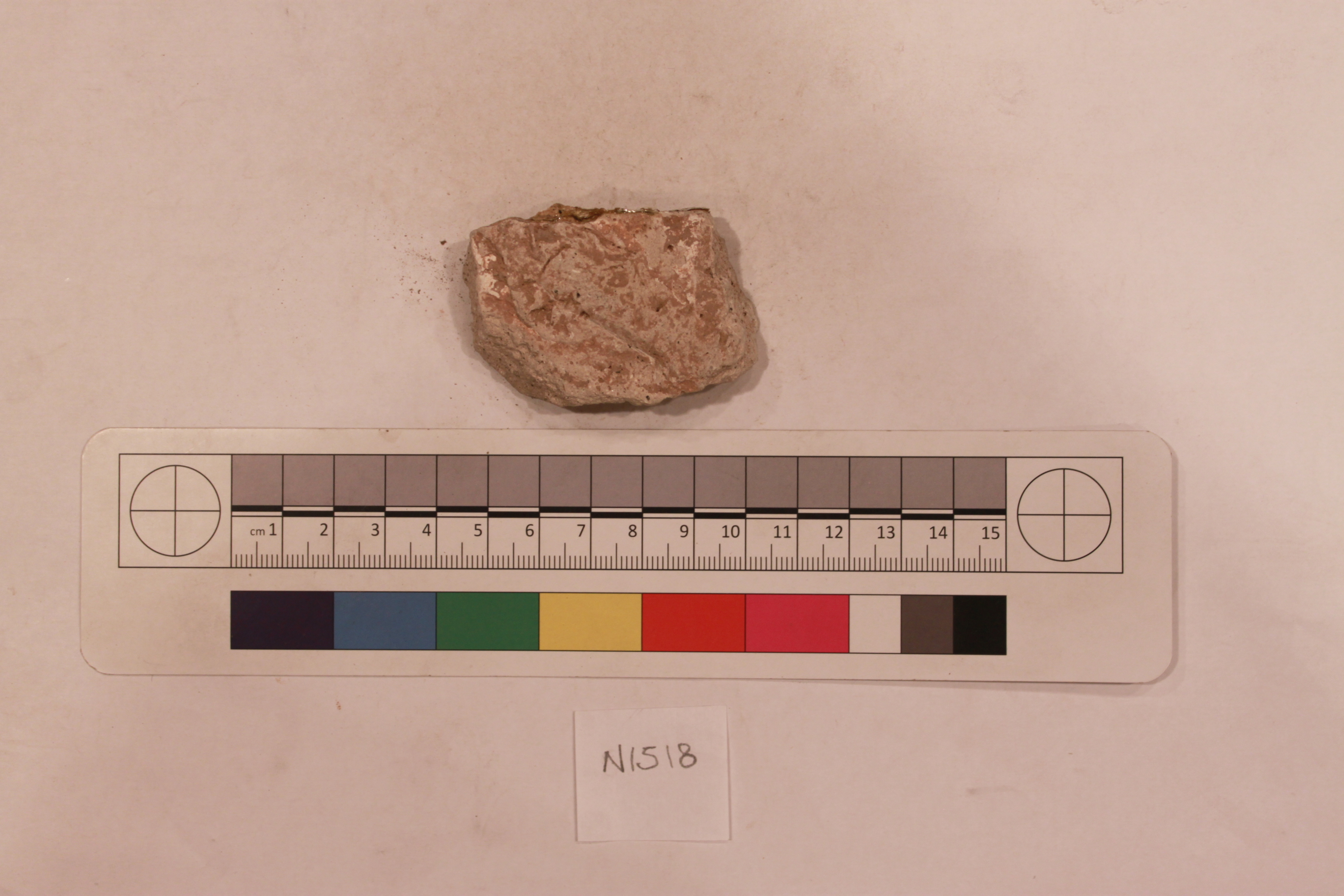
Deconstructing the Global Frontier: Stucco Fragment as Avant-Garde Structural Lexicon for SS26
In the relentless pursuit of architectural fashion, the avant-garde designer must look beyond conventional textiles to the raw, unyielding language of construction materials. For Zoey Fashion Laboratory’s SS26 collection, the Stucco Fragment—a carved and painted relic from the Global Frontier—serves not as a mere decorative motif, but as a foundational structural lexicon. This fragment, born from the intersection of ancient building techniques and the harsh, undefined edges of an expanding world, offers a radical departure from fluid draping. It proposes a future where silhouette is a direct negotiation with gravity, texture, and the memory of space itself. This analysis deconstructs how the stucco fragment’s inherent properties—its brittleness, its layered paint, its carved relief—can be translated into a high-concept, futuristic wardrobe for the SS26 season.
The Physics of Imperfection: Translating Brittleness into Silhouette
The primary innovation of the stucco fragment lies in its material contradiction: it is both structurally rigid and perpetually fragile. For SS26, Zoey Fashion Laboratory must embrace this paradox as a core design principle. The silhouette is no longer about the fluidity of movement, but about the arrested moment of fracture. Imagine garments constructed from segmented panels of laser-cut, resin-hardened organza that mimic the cracked, peeling edges of the stucco surface. These panels are not sewn; they are interlocked through a system of concealed, magnetic or mechanical joints, allowing the wearer to literally reconfigure the garment’s volume. The resulting silhouette is a crystalline, angular architecture—a series of sharp, asymmetrical planes that jut outward from the body, echoing the fragment’s irregular break lines. The “painted” aspect of the stucco becomes a digital-print overlay of weathered pigments—ochre, faded azure, and calcified white—applied only to the edges of each panel, creating a trompe-l’oeil effect of chipping and decay. This is not a garment that moves; it is a garment that shifts, its form changing with the wearer’s deliberate, sculptural poses.
Carved Relief as Wearable Topography: The New Surface Decoration
The carved nature of the stucco fragment introduces a third dimension to the garment’s surface. Traditional embroidery or beading is replaced by a process of additive and subtractive textile engineering. Zoey Fashion Laboratory can employ a technique of heat-pressing multiple layers of recycled polyester and cellulose-based fibers, then using a CNC router to carve away the top layers, revealing the contrasting hues beneath. This creates a relief map of the Global Frontier—abstracted topographies of desert dunes, eroded cliffs, and forgotten settlements. The “painted” aspect is not superficial; it is integral to the carving process. Each layer is pre-dyed, so the act of carving exposes a hidden color story. For SS26, this translates into a jacket where the shoulders are a raised plateau of geometric folds, the sleeves a series of descending terraces, and the back a single, sweeping, concave depression that mimics the fragment’s hollowed center. The garment becomes a wearable artifact, its surface a narrative of geological time and human intervention.
Structural Innovation: The Exoskeleton of the Global Frontier
The stucco fragment’s original function as a building material demands a rethinking of the garment’s internal support. For SS26, the avant-garde silhouette must be self-supporting, requiring a new kind of understructure. Zoey Fashion Laboratory can pioneer a carbon-fiber and bio-resin exoskeleton that is worn directly against the skin, or integrated into the garment’s lining. This exoskeleton is not hidden; it is celebrated as a visible, functional element. Its lines follow the fragment’s carved grooves, creating a lattice of support that allows the fabric panels to stand away from the body, forming dramatic, cantilevered forms. A skirt, for example, might feature a single, sweeping, wing-like panel that extends two feet from the hip, supported by a delicate, branching carbon-fiber armature. The “painted” stucco texture is then applied to the fabric via a spray-on, silicone-based coating that dries to a matte, granular finish, further blurring the line between textile and architectural finish. This is not fashion for walking; it is fashion for occupying space.
Color Palette as Geological Archive: The Painted Fragment
The painted surface of the stucco fragment is not a single color; it is a stratified record of time and environment. For SS26, the color palette is derived from this archaeological layering. Base tones are the raw, unbleached whites and grays of plaster, while the “painted” layers are limited to a tertiary spectrum of oxidized mineral pigments: iron-oxide reds, copper-verdigris greens, lead-white, and carbon-black. These colors are not applied uniformly; they are faded, chipped, and overlaid, mimicking the fragment’s exposure to the elements. Zoey Fashion Laboratory can achieve this through a combination of digital printing, hand-painting, and chemical distressing. A single garment might feature a gradient from a deep, rust-red at the hem to a pale, sun-bleached ochre at the collar, with patches of raw, unpainted “stucco” (undyed fabric) exposed at stress points. This palette is intentionally non-organic—it rejects the floral and the pastoral in favor of the mineral and the industrial, aligning with the Global Frontier’s aesthetic of harsh, man-made landscapes.
The Final Silhouette: A Standalone Avant-Garde Study
The definitive SS26 avant-garde look, derived from the Stucco Fragment, is a study in controlled asymmetry and volumetric tension. The silhouette is dominated by a single, oversized, asymmetrical shoulder—a carved, cantilevered structure that rises like a ruined wall. The opposite side of the garment is fitted, almost skeletal, revealing the carbon-fiber exoskeleton. The waist is cinched not by a belt, but by a rigid, carved corset of painted resin, its surface mimicking the fragment’s chipped edges. The lower half is a series of overlapping, geometric panels that create a truncated, conical shape, reminiscent of a classical column base. Movement is limited and deliberate; the garment is designed to be worn in a state of controlled stillness, a living sculpture that references the fragment’s origin as a piece of a larger, now-lost structure. This is the ultimate expression of avant-garde couture: a garment that is not merely worn, but inhabited, a fragment of a future world that has already begun to crumble.