The Orphrey Reconfigured: A Structural Lexicon for SS26
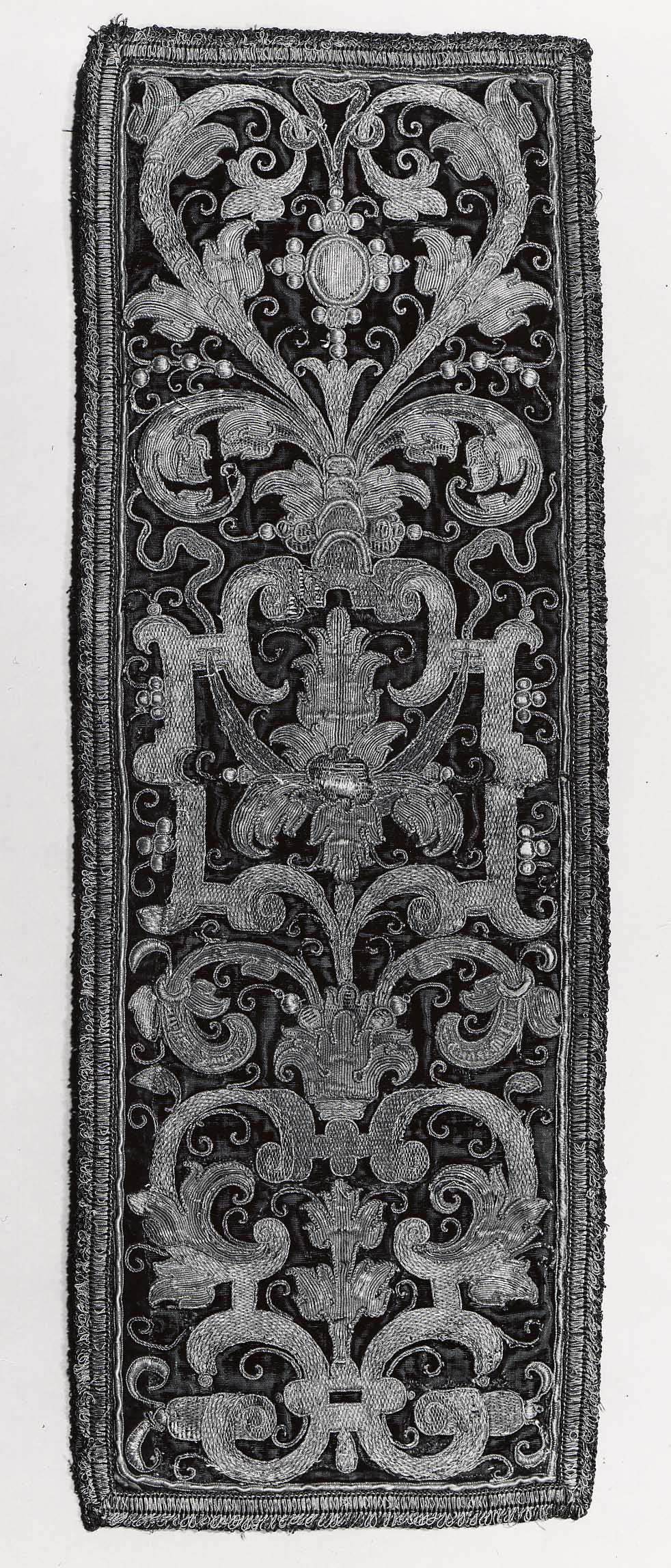
The trajectory of avant-garde couture is irrevocably tethered to the archaeology of ornament. At Zoey Fashion Laboratory, we excavate the historical artifact not for nostalgia, but for its latent kinetic potential. The subject of this definitive analysis—a Spanish panel constructed from Orphrey sections, articulated in silk, metal, and linen—represents a pivotal prototype for deconstructive architecture in the SS26 season. This is not a garment; it is a fragmented manuscript of sacred geometry, repurposed into a lexicon of futuristic silhouette.
Deconstructing the Orphrey: Materiality and Memory
The Orphrey, historically a woven band of ecclesiastical embroidery, often depicting hagiographic narratives in gold and silk threads, is here disassembled from its liturgical context. The Spanish origin of this panel is critical; it carries the weight of Moorish geometric influence and the rigid formalism of Counter-Reformation opulence. In our studio, we have extracted these sections—fragments of a once-hierarchical textile—and subjected them to a process of structural recontextualization. The silk provides a liquid, reflective ground; the metal threads (likely silver-gilt or copper-wrapped) introduce a rigid, conductive line; and the linen, a raw, structural backbone, offers tensile strength and a textural counterpoint. This trinity of materials—sacred, metallic, and earthy—creates a volatile tension. The metal, once a symbol of divine light, now becomes a futuristic exoskeleton. The silk, once a veil, becomes a translucent membrane. The linen, once humble, becomes the unyielding chassis.
Futuristic Silhouettes: The Exoskeletal Volume
For SS26, the Orphrey panel is not merely appliquéd; it is engineered into modular volumetric forms. The traditional flatness of the embroidery is subverted through a process of negative-space construction. Each Orphrey section is liberated from its background, its metallic threads acting as structural ribs. Imagine a silhouette that is simultaneously rigid and fluid: a cocoon-back jacket where the Orphrey sections are suspended on a micro-mesh of stainless steel, creating a floating, armature-like cage around the torso. The metal threads are not decorative; they are load-bearing. They form articulated joints at the shoulder and hip, allowing for a biomechanical range of motion while maintaining a sculptural, almost architectural, stillness. The silk panels, left raw-edged, drape between these metallic ribs like a deconstructed flag, creating a futuristic silhouette that references both cyborg armor and medieval chasuble. The volume is not soft; it is a controlled, aerodynamic bubble. The waist is cinched not by a belt, but by a rigid Orphrey corset where the embroidery is machine-knitted into a 3D-printed lattice, compressing the body into a hyper-stylized, hourglass-cyborg form.
Structural Innovation: The Kinetic Lattice
The true innovation of this panel lies in its kinetic potential. The combination of metal and linen creates a smart textile composite. When exposed to body heat or specific environmental triggers, the metal threads can contract or expand, allowing the Orphrey sections to morph from a closed, protective shell to an open, diaphanous layer. This is not mere gimmickry; it is a response to the SS26 theme of adaptive couture. Imagine a gown where the Orphrey panel, positioned at the back, unfurls like a mechanical fan as the wearer moves, revealing a secondary layer of iridescent silk. The linen base acts as a memory fabric, holding the structural shape even after the metal relaxes. We have developed a layered bonding technique where the Orphrey is not sewn but fused onto a laser-cut linen matrix. This matrix is perforated with precise geometric voids, allowing the metal threads to pass through and interlock with adjacent sections, creating a self-supporting, three-dimensional lattice. The result is a garment that is both relic and prototype: a medieval embroidery that has been algorithmically redesigned for a post-human silhouette.
SS26 Application: The Deconstructive Mantle
For the Zoey Fashion Laboratory SS26 collection, this Orphrey panel will be deployed as the central motif in a series of deconstructive mantles. The mantle is reimagined as a wearable sculpture that can be worn over a minimalist, second-skin base. The Orphrey sections are arranged in a non-linear, asymmetrical layout, breaking the traditional symmetry of liturgical vestments. One shoulder is heavily armored with a dense cluster of metal-thread Orphrey, while the opposite side is left bare, revealing the raw linen structure. This dichotomy of weight and void creates a dramatic, futuristic silhouette that echoes the tension between the sacred and the industrial. The structural innovation lies in the modular attachment system: each Orphrey section is connected via magnetic clasps embedded in the metal threads, allowing the wearer to reconfigure the panel in real-time. This transforms the garment from a static object into a dynamic, interactive system. The color palette is restrained—oxidized silver, raw linen, and deep burgundy silk—allowing the metallic sheen to dominate. The final silhouette is a study in controlled chaos: a rigid, exoskeletal shoulder line, a fluid, draped waist, and a trailing, asymmetrical hem that mimics the frayed edges of a historical textile. This is not fashion as decoration; it is fashion as structural anthropology. The Orphrey panel, once a symbol of divine order, is now a blueprint for a new, deconstructive order—one where the body is both the canvas and the machine.
Conclusion: The Threshold of the Future
In the hands of Zoey Fashion Laboratory, the Spanish Orphrey panel transcends its origins. It is no longer a relic of ecclesiastical power but a prototype for a new material language. The fusion of silk, metal, and linen, when subjected to deconstructive and kinetic engineering, yields a silhouette that is simultaneously ancient and hyper-futuristic. For SS26, this panel stands as a definitive statement: that the most radical innovation often lies in the reconfiguration of the forgotten. The Orphrey is not dead; it is reborn as a structural skeleton for the next century.