Deconstructing the Helix: An Analysis of Genoese Floral Velvet at Zoey Fashion Lab
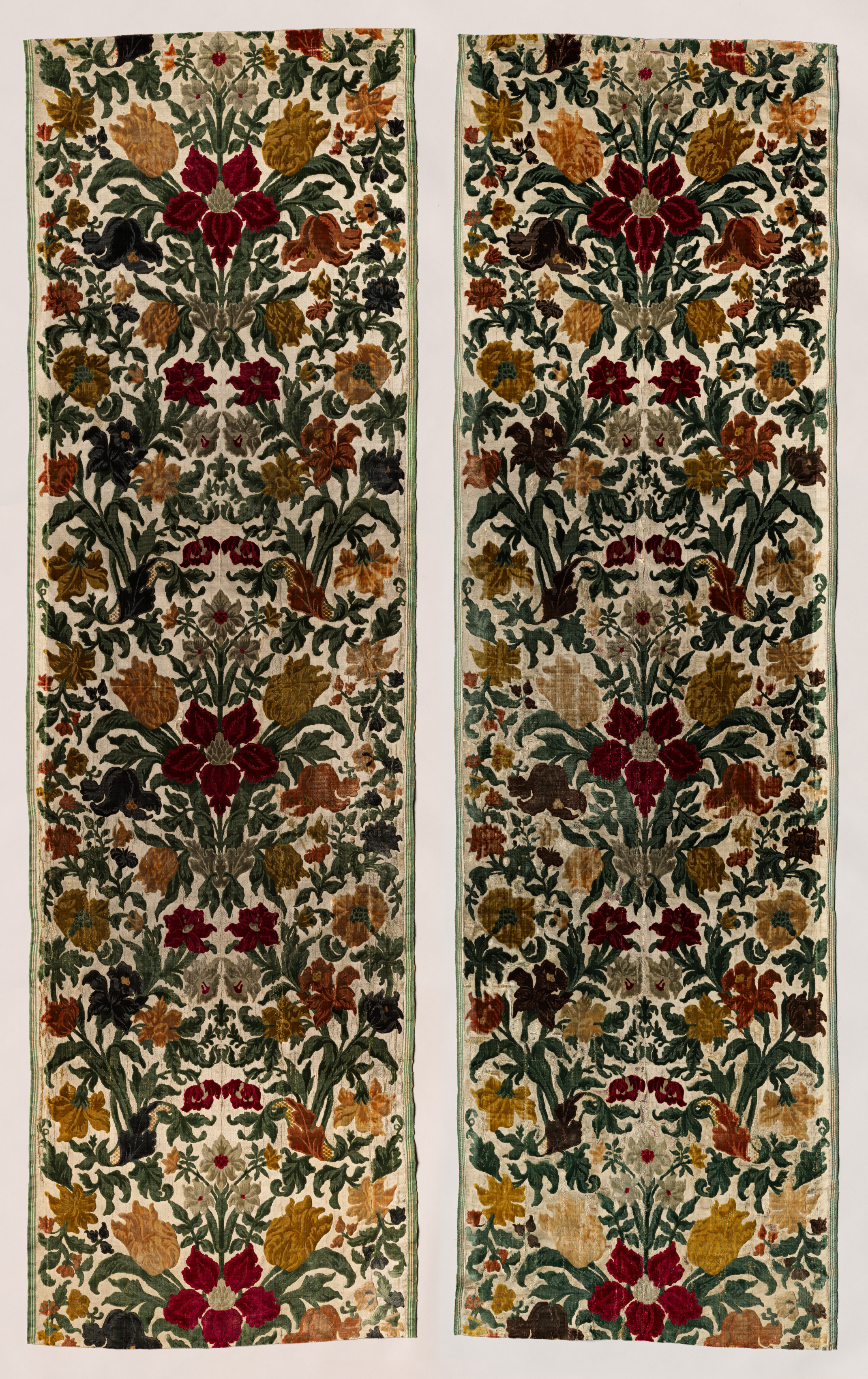
At Zoey Fashion Lab, we do not merely observe textiles; we interrogate them. We dissect their history, their structure, and their potential for radical transformation. Our latest subject of deconstruction is a remarkable specimen: lengths of floral velvet originating from Genoa, Italy. This is not a relic to be preserved under glass, but a New DNA Strand—a genetic code for an avant-garde future. This analysis will unravel the technical complexities of its cut, uncut, and voided velvet construction, and propose how its opulent silk foundation can be re-engineered into a statement of defiant, contemporary style.
I. The Genoese Genome: Historical Context and Material Provenance
Genoa, a maritime republic of immense wealth and power, was a crucible for some of Europe’s most luxurious velvets. From the 15th to the 17th centuries, Genoese weavers perfected the art of silk velvet, creating fabrics that were not just garments but portable wealth and political symbols. The floral motifs characteristic of this period—pomegranates, thistles, and stylized blossoms—were not arbitrary decorations. They were sophisticated patterns, often woven with metal threads, signifying status, fertility, and eternal life. For Zoey Fashion Lab, this history is not a burden but a springboard. The New DNA Strand concept treats this historical velvet as a genetic sequence: its pattern is a code, its weave a replication mechanism, and its material a cellular structure. We are not recreating a Renaissance gown; we are extracting its core logic to design a new species of fashion.
The silk itself is a critical component. Genoese silk of this era was of exceptional quality—long, lustrous filaments that could be dyed in deep, saturated hues. This silk provides a foundation of unparalleled drape and sheen, a quality that the avant-garde designer can manipulate into sculptural, almost architectural forms. The very weight and tensile strength of this silk, originally intended for rigid courtly attire, becomes a tool for creating unexpected volumes, sharp folds, and gravity-defying silhouettes. The floral velvet is not soft and yielding; it is a structured, almost resilient material, ready to be bent to a new will.
II. Technical Deconstruction: Cut, Uncut, and Voided Velvet
To understand the potential of this textile, we must first understand its technical DNA. Genoese floral velvet is a masterclass in three distinct weaving techniques, each offering a different textural and visual proposition.
Cut Velvet (Velluto Cesellato): This is the most familiar form of velvet. During weaving, loops of pile are cut to create a dense, upright, and plush surface. In our Genoese specimen, the cut velvet forms the primary floral motifs. The pile is deep and rich, catching light to create a luminous, almost glowing effect. For the avant-garde, this is a tool of tactile opulence. We can use cut velvet to create focal points—a single, oversized bloom on a shoulder, a cascading train of petals, or a dramatic, sculpted collar. Its density allows for precise, almost painterly control over light and shadow. The pile can be sheared to varying heights, creating a bas-relief effect that is both ancient and futuristic.
Uncut Velvet (Velluto Riccio): Also known as terry velvet or bouclé, this technique leaves the loops intact, creating a surface that is less plush but more texturally complex. The loops catch and refract light in a softer, more diffused manner. In the Genoese floral design, uncut velvet often forms the background or secondary elements. For Zoey Fashion Lab, this is a material of resistance. Its looped structure can be manipulated—pulled, looped further, or left to create a deliberately irregular, almost organic surface. It suggests a fabric in a state of becoming, not finality. Paired with cut velvet, it creates a dynamic tension between smooth and rough, polished and raw. This is the New DNA Strand’s mutation: a controlled chaos within a highly structured weave.
Voided Velvet (Velluto Vuoto): Perhaps the most conceptually radical of the three, voided velvet involves leaving areas of the ground weave (the base silk) completely free of pile. This creates a pattern of negative space. In our Genoese fabric, the voided areas form the outlines and negative spaces between the floral motifs, revealing the lustrous silk ground. This is not a background; it is an active, contrasting element. For the avant-garde designer, voided velvet is a tool for deconstruction and transparency. The voided areas can be cut away entirely to create sheer inserts, or they can be left as deliberate gaps, exposing the skin or a contrasting underlayer. This technique allows for a play of opacity and transparency, of presence and absence—a perfect metaphor for the fragmented, layered identity of the modern individual.
III. The New DNA Strand: Avant-Garde Applications and Styling
How does this historical fabric become a New DNA Strand for Zoey Fashion Lab? The answer lies in a radical recontextualization. We are not creating a costume; we are creating a prototype for a new aesthetic.
Silhouette and Structure: The silk foundation’s inherent strength allows for extreme tailoring. Imagine a jacket with exaggerated, sharp shoulders constructed from the voided velvet, the cut-pile flowers blooming only on the left sleeve. The uncut velvet could form a softer, draped back panel. The floral motifs are no longer decorative; they are structural elements. A single, large cut-velvet bloom could serve as a closure, a pocket, or a sculptural appendage. The weight of the silk allows for dramatic, unlined folds that fall with a deliberate, heavy grace.
Deconstruction and Reconstruction: The New DNA Strand methodology involves taking the textile apart to understand its potential. We can cut the velvet into strips, re-weaving them into a lattice or a mesh. We can separate the cut pile from the ground silk, using the pile as a kind of fur or fringe. The voided areas become literal windows, cut out and replaced with transparent organza or metallic mesh. The floral pattern can be isolated, digitized, and then re-embroidered onto a modern base fabric, creating a hybrid of old and new. This is not about preservation; it is about genetic recombination.
Color and Contrast: Genoese velvets were often dyed in deep, jewel-like tones: ruby, emerald, sapphire, and deep purple. For the avant-garde, these colors can be used in unexpected ways. A single garment might combine a deep, voided velvet in black with cut-velvet flowers in a shocking, neon pink. The uncut velvet could be left in its natural, undyed state, creating a raw, almost linen-like contrast. The interplay of light on the cut pile versus the matte ground becomes a kinetic, ever-changing visual experience.
Final Styling: The final garment is not a dress; it is a wearable sculpture. It is meant to be seen in motion, under dynamic lighting. The cut velvet glows, the uncut velvet absorbs, and the voided areas reveal the body or a second skin. This is a garment for the individual who refuses to be a passive consumer. It demands engagement, interpretation, and a willingness to embrace the paradox of historical opulence reimagined as radical, forward-facing design. The New DNA Strand of Genoese floral velvet is not a memory; it is a living, evolving code for the future of fashion.