Introduction: Deconstructing the Mouton d'Or as Avant-Garde Textile Code
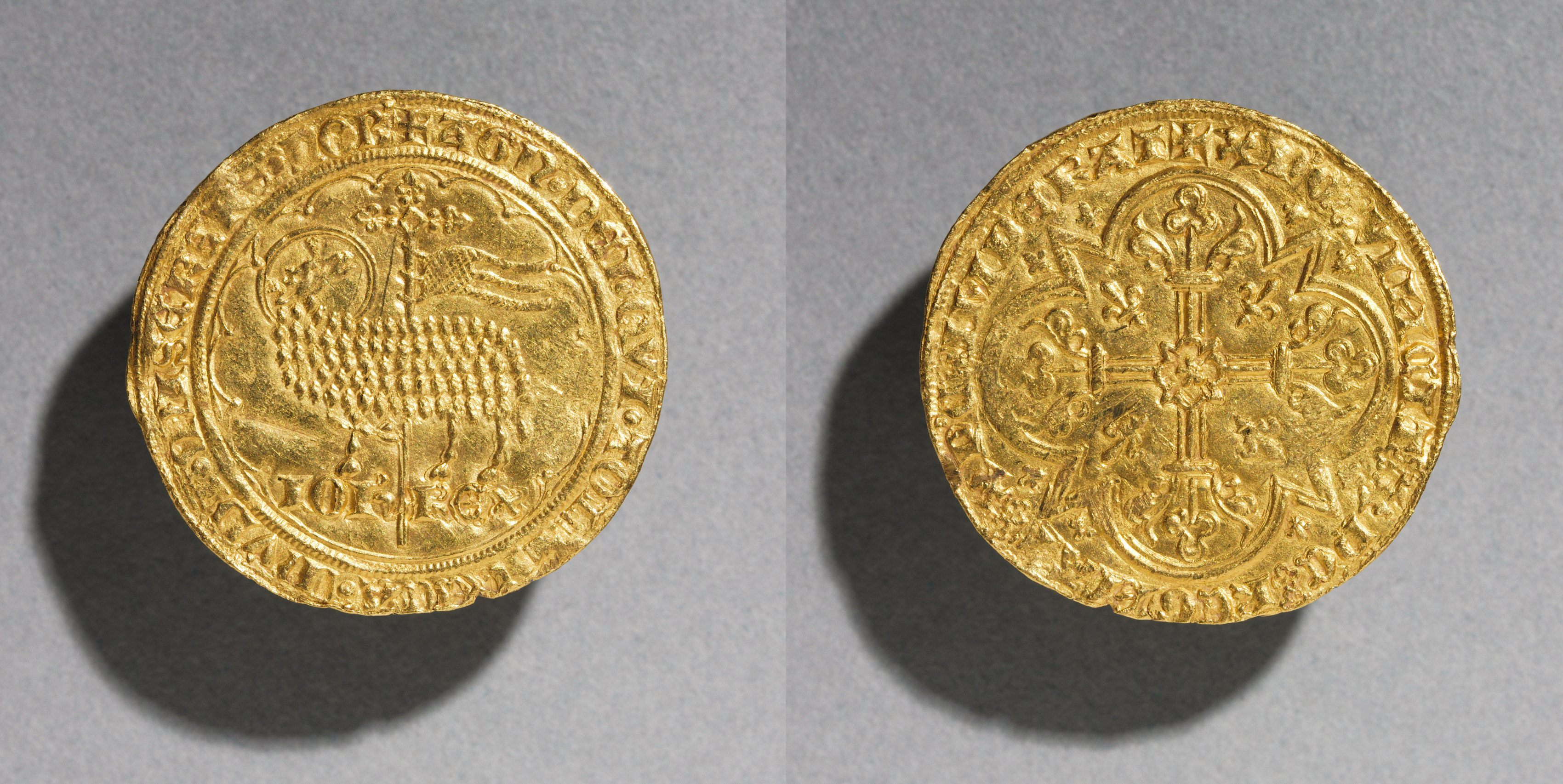
At Zoey Fashion Lab, we approach historical artifacts not as static relics but as dynamic textile narratives—fragments of material culture that can be rewoven into avant-garde fashion language. The Mouton d'Or of King Jean le Bon of France (1350-1364) is a gold coin minted during the Hundred Years' War, a period of profound political and aesthetic turbulence. Its name, "Golden Sheep," derives from the lamb of God (Agnus Dei) depicted on one side, while the other bears a Gothic cross and fleur-de-lis. For our lab, this coin is not merely numismatic history; it is a compressed archive of power, sacrifice, and ornament—a perfect specimen for deconstruction into a garment that speaks to our era's obsession with surface, depth, and the tension between the sacred and the profane.
The coin's technical execution—pure gold, struck with high-relief detail—demands a fabric analysis that treats metal as thread. Its dual faces, as referenced in the Archive Resonance's "Mirror with Split-Leaf" imagery, present a dialectic: one side a polished silver mirror inlaid with gold foliage, the other a cold sarcophagus narrating life through relief. This duality is the core of our avant-garde interpretation. We will dissect the Mouton d'Or into three material layers: the metallic weave of power, the split-leaf of ornament, and the narrative relief of mortality.
Layer One: The Metallic Weave of Power
The Mouton d'Or was a statement of royal authority during a time of crisis—Jean le Bon was captured by the English at the Battle of Poitiers (1356), and the coin was minted to pay his ransom. Its gold content was not just economic; it was a luminous armor of sovereignty. In our deconstruction, we treat the gold as a fabric that can be unwoven into threads of metallic yarn. Imagine a garment that mimics the coin's surface: a high-gauge chainmail of gold-plated brass rings, interwoven with matte silver filaments to create a shifting, reflective texture. This is not a literal armor but a soft, flexible mesh that drapes like a second skin—an avant-garde bodysuit that catches light in fragments, echoing the coin's original function as a portable repository of wealth and power.
The technical challenge is to balance rigidity with fluidity. We propose a laser-cut metallic lamé in a pattern derived from the coin's Gothic cross, but distorted into asymmetrical, organic forms. The cross becomes a repeating motif that fractures as it moves across the body, suggesting the instability of Jean's reign. This layer is the armature of the garment, the structural foundation upon which the other narratives are embroidered.
Layer Two: The Split-Leaf of Ornament
Archive Resonance's "Mirror with Split-Leaf" imagery evokes a surface of polished silver inlaid with gold foliage. The Mouton d'Or's reverse side features a delicate trefoil and fleur-de-lis—Gothic ornament that is both sacred and decorative. In our avant-garde reading, this is not mere embellishment but a language of fragmentation. The "split-leaf" suggests a leaf that is simultaneously whole and torn, a motif that embodies the tension between unity and dissolution inherent in the Gothic period's religious and political turmoil.
We translate this into appliqué work using hand-cut gold leaf on sheer silk organza. Each leaf is deliberately split along its central vein, creating a pattern that appears to unravel as the wearer moves. The leaves are not stitched flat but suspended on fine monofilament, floating above the fabric's surface like frozen fragments of a shattered mirror. This technique references the medieval practice of opus anglicanum (English embroidery) but subverts it with an industrial, almost cyborg aesthetic. The gold leaf is treated with a matte finish to contrast with the shiny metallic base layer, creating a visual dissonance that prevents the garment from becoming merely opulent. It is ornament as archaeological residue—beautiful but incomplete.
Layer Three: The Narrative Relief of Mortality
The obverse of the Mouton d'Or features the Agnus Dei—a lamb with a nimbus, holding a cross and a pennant. This is a symbol of Christ's sacrifice, but in the context of Jean's ransom, it becomes a memento mori for a king in captivity. Archive Resonance's "cold sarcophagus narrating life through relief" is the key to this layer. We interpret this as a tactile storytelling surface—a fabric that embeds narrative through raised embroidery, trapunto, and pleating.
Our avant-garde solution is a skeletal bodice constructed from molded latex and resin, cast from a 3D scan of the coin's relief. The lamb's form is exaggerated and distorted—its body elongated into a spine-like structure that runs down the back of the garment, while the cross becomes a collar that juts forward like a yoke. The pennant is unfurled as a train of stiffened silk, printed with a digital pattern of the coin's surface but in negative colors—silver on black, gold on charcoal. This layer is heavy and sculptural, contrasting with the fluid metallic base and the floating leaves. It is the weight of history made palpable, a narrative that presses into the wearer's body.
Synthesis: The Garment as Archive Resonance
The final garment is a three-part ensemble: a gold-mesh bodysuit (power), a sheer organza overlay with floating split-leaf appliqués (ornament), and a molded latex bodice with relief narrative (mortality). These layers are not sewn together but connected by magnetic clasps and invisible zippers, allowing the wearer to reconfigure the garment—to reveal or conceal each narrative at will. This reflects the avant-garde principle of modular deconstruction, where the wearer becomes a co-author of the artifact's meaning.
The color palette is monochromatic in gold, silver, and charcoal, with occasional flashes of oxidized green (verdigris) to suggest the patina of age. The silhouette is elongated and asymmetrical, with one shoulder exposed (the "mirror" side) and the other encased in the latex bodice (the "sarcophagus" side). This visual imbalance echoes the coin's dual faces and the split-leaf motif—a garment that is never fully resolved, always in a state of becoming and decaying.
In the context of Zoey Fashion Lab's mission, the Mouton d'Or is not a costume piece but a critical garment that interrogates the relationship between wealth, power, and mortality. It asks: What does it mean to wear a ransom? To carry a sacrifice on your back? The answer lies in the tactile dissonance of the materials—the cold metal against warm skin, the stiff resin against fluid silk. This is avant-garde fashion as historical excavation, where every stitch is a fragment of a forgotten narrative, and every layer is a threshold between the medieval and the modern.