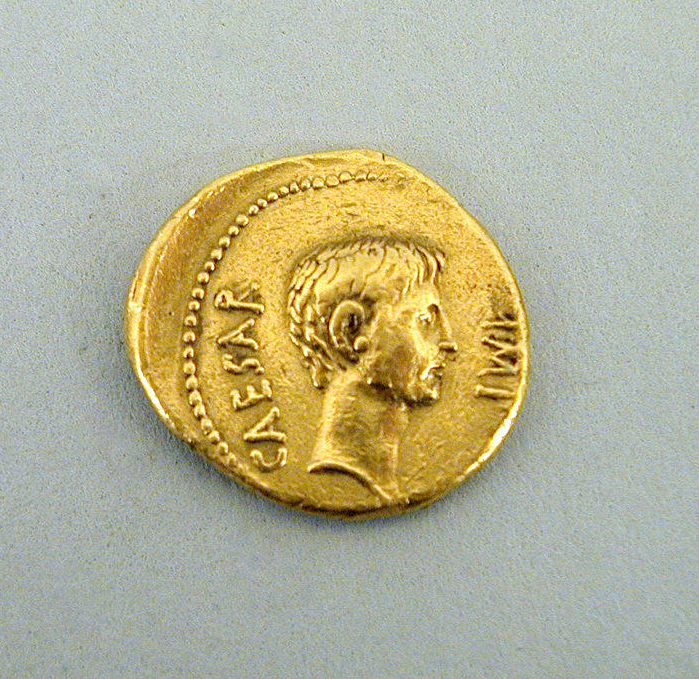
The Octavian Aureus: Currency of Power, Blueprint for SS26
In the hallowed archives of Zoey Fashion Laboratory, where history is not merely referenced but deconstructed and reanimated, the gold aureus of Octavian emerges as a foundational text for the SS26 collection. This coin, a portable monument to imperial consolidation, transcends its numismatic origins to become a radical blueprint for futuristic silhouettes and structural innovation. The aureus, struck to commemorate Octavian’s victory at Actium and his subsequent establishment of the Principate, is a study in dichotomous power: the obverse, a portrait of austere authority; the reverse, a figure of divine or civic virtue. For the avant-garde curator, this duality is the genesis of a new garment architecture, one that mirrors the archive node’s own dialectic—the gleaming silver mirror inlaid with golden foliage versus the cold sarcophagus narrating life in relief. We are not designing clothes; we are forging wearable monuments to temporal collapse.
Deconstructing the Numismatic Body
The physical properties of the aureus dictate the first formal innovation. Gold, a metal of ultimate malleability and permanence, suggests a fabric that is both fluid and rigid. For SS26, we propose liquid metal organza and thermoformed gold-leaf laminate—materials that capture the coin’s paradoxical nature. The silhouette is no longer draped; it is struck. Imagine a tunic where the front panel is a single, unbroken sheet of gilded micro-chain mail, polished to a mirror finish. This is the obverse: the face of power, smooth, impenetrable, and reflective. The back panel, however, is the reverse: a relief map of conquest, constructed from hundreds of individually cast, oxidized brass scales, each embossed with a fragment of a laurel wreath or a legionary standard. The garment becomes a living coin, a three-dimensional object that rotates between two states of being—surface and depth, light and shadow.
The structural innovation lies in the articulated seam. Traditional Roman drapery, the *toga* and *stola*, relied on weight and gravity. Our SS26 iteration rejects passivity. The seams are not sewn; they are clipped and pinned using custom-fabricated gold-plated clasps, reminiscent of the die-stamping process. This allows the wearer to reconfigure the garment’s silhouette from a rigid, columnar form (the imperial statue) to a more fluid, cascading shape (the triumphal procession). The waist is cinched not by a belt, but by a torque—a rigid, circular frame of polished steel and gold, echoing the coin’s perimeter. This torque acts as a structural fulcrum, allowing the upper and lower volumes to shift independently, creating a kinetic tension between the two halves of the body.
The Mirror and the Sarcophagus: A Dialectical Silhouette
The archive node’s pairing of the silver mirror with golden foliage and the stone sarcophagus with life narrative provides the conceptual armature for our silhouette. The coin’s obverse is the mirror: a surface of narcissistic control, of perfect, untouchable beauty. The reverse is the sarcophagus: a surface of memory, of story, of the inevitable decay that gives meaning to power. Our SS26 silhouette must embody this conflict. We propose a bifurcated form—a jacket that is half-armor, half-archive.
The left side of the jacket, the mirror side, is constructed from a single, seamless panel of electroformed silver, polished to a high gloss. Into this surface, we inlay gold filigree in the pattern of a split-leaf acanthus—a direct visual quote from the archive node. This side is pristine, reflective, and utterly static. It is the face of Octavian, the eternal emperor. The right side, the sarcophagus side, is the opposite. Here, the fabric is a heavy, raw linen and steel mesh composite, left unpolished and deliberately distressed. Onto this surface, we emboss a sequential narrative in high-relief: the journey of the coin from the mint to the battlefield, to the temple, to the grave. The relief is not decorative; it is structural. The raised areas are reinforced with internal wireframes, creating a three-dimensional topography that alters the jacket’s natural drape. The shoulder on the sarcophagus side is higher, more angular, as if bearing the weight of history. The shoulder on the mirror side is smooth, sloping, and effortless.
Structural Innovation: The Numismatic Spine
The most radical innovation for SS26 is the Numismatic Spine. This is a central, vertical structural element running from the nape of the neck to the base of the coccyx. It is a literal stack of coins—or rather, a series of interlocking, graduated discs of gold, silver, and blackened steel. Each disc is a modular component, capable of being added or removed. The spine is not merely decorative; it is the load-bearing axis of the entire garment. All other panels—the mirror front, the sarcophagus back, the sleeves—are attached to this spine via hidden magnetic clasps and tension cables.
This allows for a revolutionary modularity of silhouette. The wearer can choose to display the full, rigid spine, creating a silhouette of severe, imperial verticality. Alternatively, they can remove several discs, allowing the spine to become a flexible, articulated chain that drapes down the back like a liquid gold waterfall. The tension cables can be loosened, allowing the garment to collapse into a soft, draped form, or tightened, pulling the entire structure into a taut, architectural shell. The Numismatic Spine is the control mechanism for the garment’s identity, a physical dial between the static power of the obverse and the narrative flow of the reverse.
Futuristic Silhouettes: The Toga of a New Republic
The final silhouette for SS26 is not a dress, but a system of wearable architecture. We envision a series of looks that are less garments and more portable monuments. A floor-length skirt, for example, is constructed from overlapping, hinged panels of gold and silver, each panel engraved with a fragment of the aureus’s legend. When the wearer walks, the panels shift and grind, creating a sound like coins falling. The top is a minimalist, high-necked bustier of black carbon fiber, but its collar is a full, rigid circle of gold—a numismatic halo that frames the head.
These are not clothes for the present. They are artifacts from a future archaeology, unearthed from a civilization that understood the power of surface and story. The gold aureus of Octavian, once a tool of propaganda, is reborn as a tool of self-sovereignty. The wearer controls the narrative. They can present the mirror face of power, or they can turn to reveal the sarcophagus of memory. In the SS26 collection, every garment is a coin. Every silhouette is a choice. Every thread is a line of text in a new, unwritten history. This is the definitive avant-garde couture of Zoey Fashion Laboratory: where the currency of empire becomes the currency of the self.