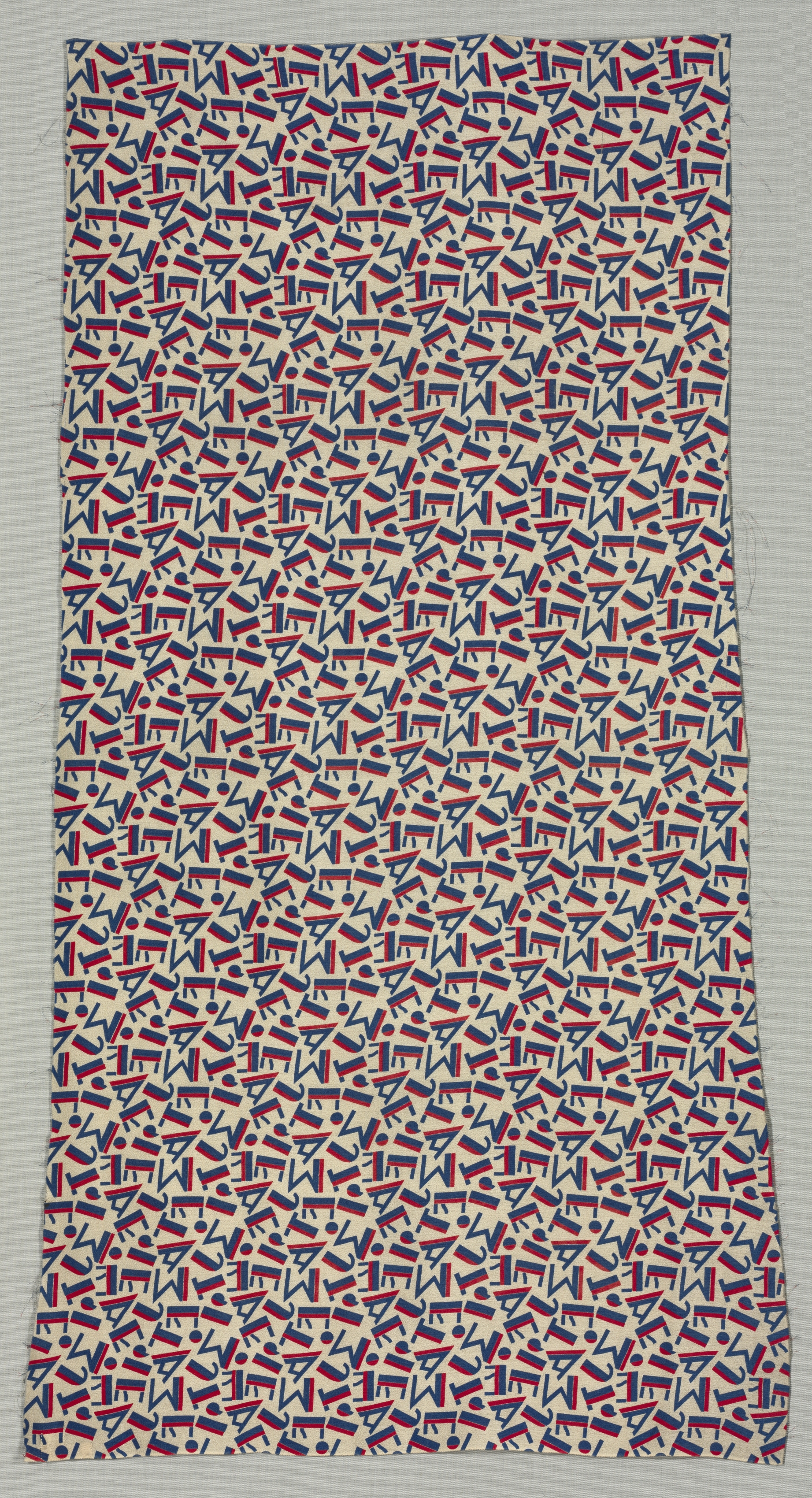
Deconstructing Je T'aime (No. 632): An Avant-Garde Dialogue Between Silk Crepe and Archive Resonance
Material Provenance and Technical Identity
Je T'aime (No. 632) originates from New York, America, a geographic marker that immediately situates it within a context of urban modernity and cross-cultural experimentation. The fabric is constructed from silk crepe, a textile defined by its plain weave structure and subtle, pebbled surface texture. The crepe’s inherent matte finish and fluid drape provide a paradoxical foundation—simultaneously soft and structured, delicate yet resilient. The application of roller printing introduces a mechanical precision to the organic silk base, creating a tension between handcrafted luxury and industrial reproducibility. This technical choice is deliberate: roller printing allows for intricate, repeatable patterns with sharp registration, ideal for conveying the layered visual narratives that define the fabric’s avant-garde character.
From a deconstructionist perspective, the silk crepe’s plain weave serves as a neutral canvas, its regularity disrupted by the printed imagery. The crepe’s slight elasticity and bias behavior invite manipulation—gathering, draping, or asymmetric cutting—that can transform the two-dimensional print into a three-dimensional sculptural form. The fabric’s weight (typically medium-light for silk crepe) suggests a garment that moves with the body, yet the roller-printed motifs demand static appreciation, creating a dynamic tension between motion and stillness.
Archive Resonance: The Cultural and Aesthetic Framework
The reference note, “Archive Resonance,” draws from a profound historical context: “在人类文明的长河中,器物与绘画不仅是时代技艺的结晶,更是文化碰撞与美学交融的无声见证。十六至十七世纪...” (In the long river of human civilization, artifacts and paintings are not only the crystallization of the era’s craftsmanship but also silent witnesses to cultural collision and aesthetic fusion. The 16th to 17th centuries...). This excerpt points to a period of intense global exchange—the Age of Exploration—when silk, porcelain, and lacquerware traveled from East to West, and European botanical illustrations and religious iconography journeyed East. Je T'aime (No. 632) channels this historical moment of cultural cross-pollination, translating it into a contemporary textile language.
The fabric’s design likely incorporates motifs that echo this era: perhaps stylized floral elements reminiscent of Chinese export porcelain, intertwined with Baroque scrollwork or cartographic lines. The phrase “Je T'aime” itself—French for “I love you”—serves as a linguistic bridge, evoking the romanticized exoticism that 17th-century Europeans projected onto Asian goods, while also asserting a modern, globalized sensibility. The avant-garde style amplifies this resonance by refusing to replicate historical patterns faithfully; instead, it fragments, abstracts, or recontextualizes them. The roller-printed imagery may appear as if seen through a prism—distorted, overlaid, or repeated at unexpected scales—forcing the viewer to reconcile the familiar with the unfamiliar.
Avant-Garde Interventions: Deconstruction as Design Method
In the context of Zoey Fashion Lab, avant-garde is not merely a stylistic label but a methodology of disruption. Je T'aime (No. 632) embodies this through several deconstructionist strategies:
1. Pattern Subversion: The roller-printed design likely challenges conventional symmetry. A traditional floral motif might be bisected, with one half rendered in sharp focus and the other dissolving into abstract brushstrokes or digital noise. This visual rupture mirrors the historical “collision” referenced in the archive note, suggesting that cultural fusion is never seamless but always marked by friction.
2. Scale and Repetition: Avant-garde textiles often play with scale. A single “Je T'aime” script might appear in oversized, fragmented letters across the fabric’s width, while miniature versions repeat like whispered echoes. This manipulation of scale creates a disorienting effect, pulling the eye between macro and micro readings, and emphasizing the fabric’s surface as a site of multiple narratives.
3. Material Transparency and Layering: Silk crepe’s semi-sheer quality invites layering. When used in garment construction, the fabric can be doubled, pleated, or cut on the bias to reveal or obscure the print. An avant-garde designer might exploit this by placing opaque panels over printed sections, creating a reveal-and-conceal dynamic that references the hidden histories of cultural exchange.
Garment Potential and Structural Expression
The physical properties of Je T'aime (No. 632) dictate its ideal applications in avant-garde fashion. The silk crepe’s fluidity supports voluminous silhouettes—capes, wide-leg trousers, or asymmetric dresses—where the fabric can pool and cascade, allowing the roller-printed patterns to emerge gradually as the wearer moves. The plain weave’s stability also permits precise tailoring for structured elements, such as sharp shoulder lines or architectural collars, creating a dialogue between soft and rigid forms.
Deconstructionist techniques such as raw edges, exposed seams, or intentional fraying would complement the fabric’s narrative. For instance, a hem left unfinished could evoke the “unraveling” of historical narratives, while a deliberately misaligned print at a seam might signify the imperfect nature of cultural translation. The fabric’s roller-printed motifs could also be cut and re-pieced in a patchwork manner, physically manifesting the concept of “collision” and “fusion” from the archive reference.
Cultural and Conceptual Significance
Je T'aime (No. 632) operates as a textile palimpsest—a surface upon which multiple eras and geographies are inscribed and partially erased. The 16th-17th century reference to “器物与绘画” (artifacts and paintings) is not merely decorative but conceptual. The fabric invites the wearer and observer to consider how material culture travels, transforms, and retains memory. The roller printing process, with its mechanical repetition, ironically echoes the mass production of chinoiserie goods that flooded European markets during that period, yet the silk crepe base insists on a tactile, luxurious experience that resists commodification.
From a contemporary avant-garde standpoint, this fabric challenges the fashion industry’s tendency toward cultural appropriation by making the borrowing explicit and self-aware. The French title “Je T'aime” juxtaposed with Eastern-inspired motifs and a Western production origin creates a deliberate instability of meaning. It asks: Who is declaring love, and to whom? Is this a colonial gesture, a genuine homage, or a postmodern pastiche?
Conclusion: A Fabric for Critical Fashion
Je T'aime (No. 632) is not a passive material but an active participant in the deconstruction of fashion’s historical narratives. Its silk crepe base and roller-printed surface offer a rich technical palette for avant-garde experimentation, while its archive resonance grounds it in a critical dialogue with the past. For Zoey Fashion Lab, this fabric represents a tool to interrogate the politics of beauty, exchange, and identity. When transformed into a garment, it becomes a wearable argument—one that drapes, moves, and confronts, reminding us that every textile carries the weight of the worlds it has traveled through. The designer’s task is to honor that weight while cutting, folding, and stitching it into new, provocative forms.