Technical Deconstruction: The Samite Genome
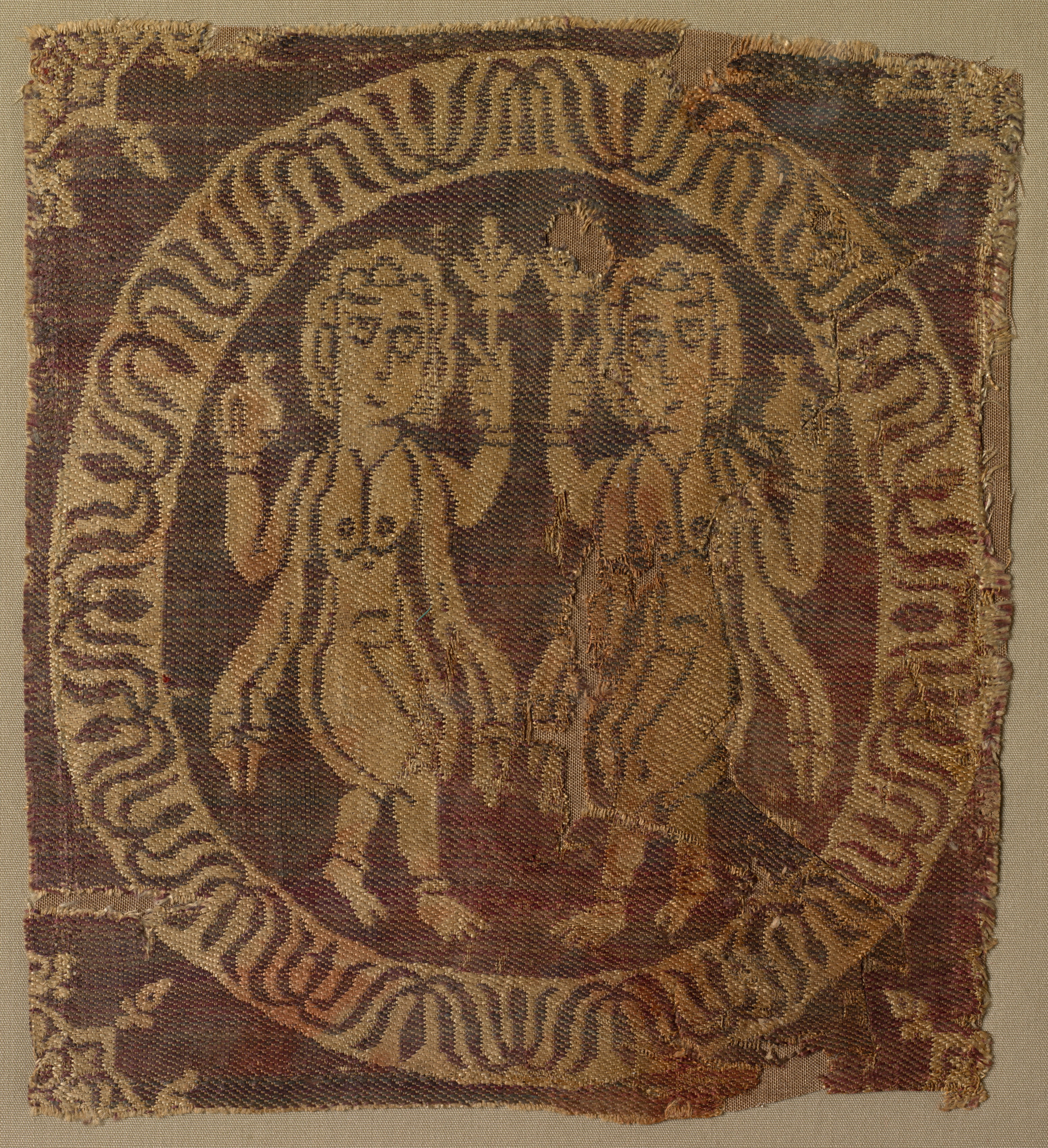
The artifact is a masterclass in early medieval textile engineering. The specification of a complementary weft-faced twill weave with inner warps identifies it definitively as samite, the most luxurious and technically sophisticated silk fabric of its era. For Zoey Fashion Lab, this is not merely historical data; it is a blueprint for innovation. The structure is inherently robust and brilliantly designed for complex imagery. The "inner warps" are the hidden armature, the unseen foundation over which the colorful weft threads are floated and interlocked to create the design. This creates a dense, velvety surface where the imagery is formed entirely by the wefts, allowing for curvilinear, detailed patterns impossible in simpler weaves.
This technical architecture is our "New DNA Strand." We deconstruct it not to replicate, but to re-engineer. Imagine applying this principle of a hidden structural layer with a expressive, fluid surface layer to modern materials. Could a base layer of sustainable, shape-memory polymer (the inner warp) be combined with a surface of laser-cut bio-filaments or recycled polyester threads (the complementary wefts) to create textiles that change texture or opacity? The samite's structure is a lesson in controlled complexity—a rigid grid enabling artistic freedom. Our avant-garde interpretations might manifest as jacquard knits with integrated smart threads, or laminated fabrics where a sheer overlay interacts with a structured underlayer, creating moiré and movement effects that echo the depth of the original weave.
Narrative Unwoven: The Iconography of Embodied Form
The subject—nude female dancers liberated from the confines of a tunic—is profoundly radical within its historical context. Emerging from the Umayyad or Abbasid empires, this imagery exists in a complex dialogue between pre-Islamic artistic traditions, burgeoning Islamic aesthetics, and cosmopolitan courtly life. These are not crude depictions; they are celebratory, rhythmic, and embedded within the symmetrical, paradisiacal motifs of vines and medallions common to the period. The dancers are the embodied spirit of luxury, music, and poetic transcendence.
For our avant-garde lens, this iconography transcends historical exoticism. It speaks to core themes of revelation, constraint, and movement. The "tunic" can be read as a metaphor for societal form, garment structure, or even the human skin itself. Our design process asks: What wants to be revealed? How do we design a garment that celebrates the body's kinematics not through exposure, but through articulation? The dancers' nudity is about pure, unadorned movement. This translates to designs that prioritize the body's lines and motion. Think of garments with strategic cut-outs that trace scapula movement, mesh panels that map respiratory expansion, or seamless knitwear that moves with a dancer's extension. The "figure" becomes not a printed image, but the living body itself, revealed and enhanced by architectural construction.
The Avant-Garde Synthesis: A Collection Blueprint
Fusing the technical "DNA" with the potent narrative, we propose a collection concept titled "Unwound: The Samite Dancer." This line would manifest the analysis into tangible, avant-garde fashion statements.
Silhouette & Structure: Garments will play with the concept of the "inner warp" as a second skin. This could be achieved through bonded techniques—a rigid, sculpted bodice (the inner structure) seemingly giving way to, or releasing, fluid, twirling panels of lighter fabric (the complementary weft imagery). Draped silk georgette or chiffon might erupt from the structured confines of a technical canvas corset, visualizing the dancer emerging from the tunic. Asymmetric hemlines and spiral seams will emulate dynamic movement frozen in cloth.
Surface & Materiality: We will reinterpret the samite's dense pictorial surface through modern means. Devoré velvet could be used to "dissolve" areas of a fabric, leaving sheer, dancer-like forms in the positive or negative space. Digital prints could mimic the twill's depth, but on technical fabrics like neoprene or bonded scuba, creating a tension between the ancient motif and modern, almost athletic material. Embroidery would not be mere decoration but a topographic mapping of the body's musculature and motion paths, using threads with varying reflectivity to catch light differently with movement.
Color & Philosophy: While the original likely boasted rich dyes like saffron, madder, and indigo, our palette would evolve this concept. We propose a base of mineral and bone tones—whites, clays, ochres, referencing the archaeological fragment—accented with sudden, luminous strands of bio-luminescent pigment or electroluminescent wire (the "New DNA"). This introduces the concept of the pattern being activated or revealed only in movement or darkness, a direct translation of the dancer's kinetic energy into light. The garment becomes a living, responsive canvas.
Conclusion: The Fragment as Future
This Umayyad/Abbasid textile fragment is far more than a relic. For Zoey Fashion Lab, it is a progenitor text. Its technical sophistication provides a structural philosophy for innovation. Its daring iconography provides a timeless narrative of revelation and liberation. The avant-garde opportunity lies in synthesizing these elements—embedding ancient intelligence into future-facing design. By treating the samite weave as a mutable algorithm and the dancer motif as a core humanist theme, we can develop a collection that is intellectually rigorous, visually stunning, and deeply connected to the enduring dialogue between the body, its adornment, and its freedom. The goal is not to produce historical costume, but to allow this DNA strand from the 8th century to replicate and evolve into a wholly new species of fashion for the 21st.