Deconstructing the Silk Road: An Avant-Garde Analysis of Ilkhanid Velvet with Gold Discs
Introduction: The Artifact as a Genetic Blueprint
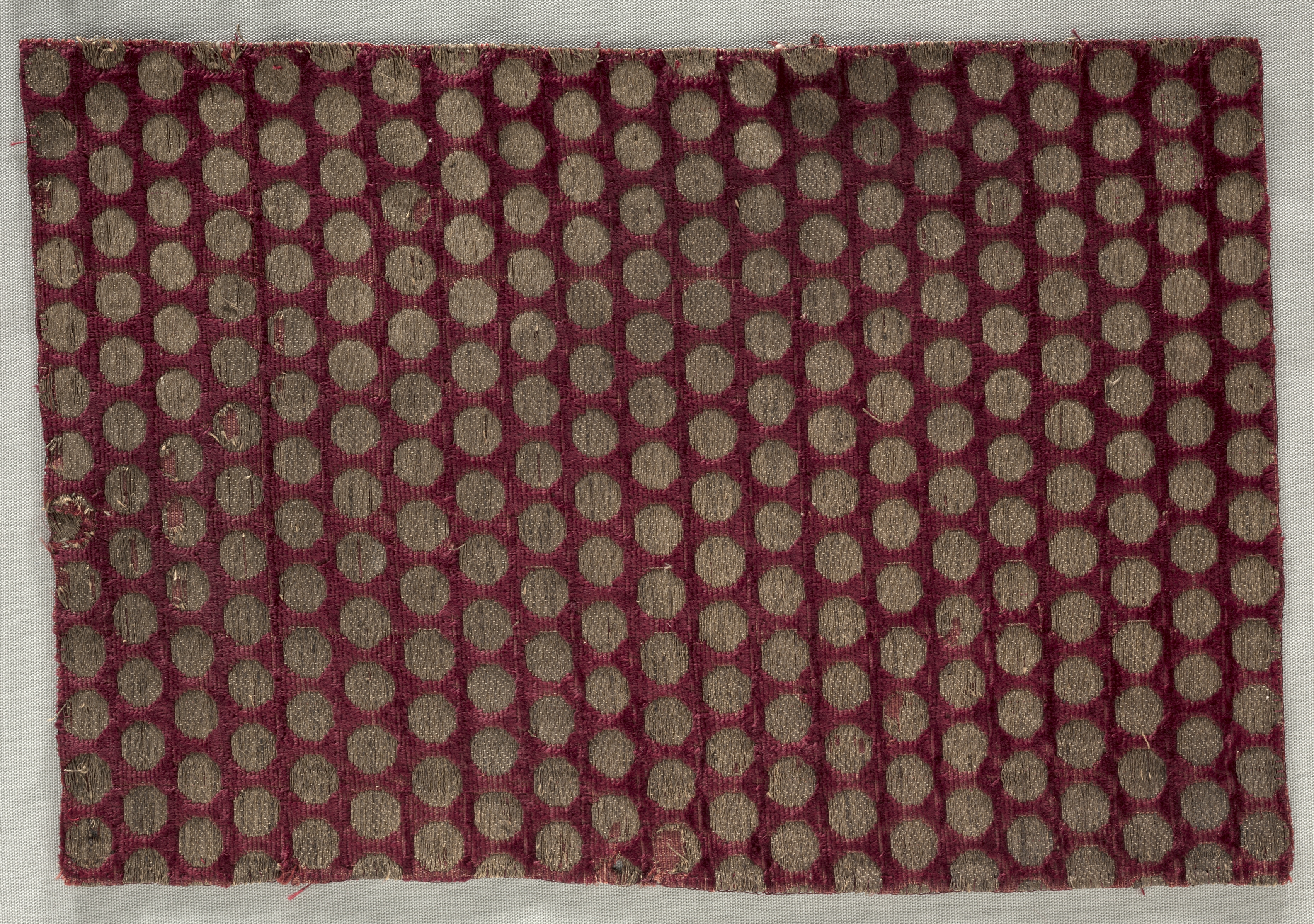
At Zoey Fashion Lab, we approach historical textiles not as relics, but as living DNA strands—complex codes of material, technique, and cultural memory that can be spliced into contemporary avant-garde expression. The subject of this analysis is a fragment of brocaded velvet from the Ilkhanid period, likely originating in Tabriz, Iran. Composed of silk and gilt-metal thread, its surface is punctuated by gold discs that shimmer against a deep, plush pile. This piece is not merely decorative; it is a structural and conceptual provocation. For the avant-garde designer, it offers a vocabulary of texture, weight, and historical tension that can be recontextualized into a new sartorial language—a "New DNA Strand" that fuses ancient opulence with radical futurism.
Materiality and Technique: The Physics of Opulence
The technical construction of this velvet is a masterclass in contrast. The base is a silk velvet, whose cut pile creates a dense, absorbent surface that plays with light and shadow. This soft, tactile field is then interrupted by brocaded gilt-metal thread, a technique where supplementary wefts of gold-wrapped silk are woven into the fabric to create raised, metallic patterns. The gold discs themselves are likely formed by compressed or coiled metal thread applied in circular motifs, creating a rhythmic, almost architectural punctuation.
From an avant-garde perspective, this material pairing is a study in tactile dissonance. The velvet’s softness invites touch, while the gold discs repel it with their rigid, reflective surface. This duality is central to the garment’s potential as a "New DNA Strand." The designer can amplify this tension by isolating the discs—perhaps through laser-cut appliqué or deconstruction—to create armor-like panels that float over a fluid velvet base. The weight of the gilt thread also introduces a gravitational quality; the fabric does not drape neutrally but pulls downward, suggesting a deliberate, sculptural heaviness that challenges the ephemeral nature of fashion.
Historical Context: The Ilkhanid Synthesis
To understand the avant-garde potential of this velvet, we must first decode its origins. The Ilkhanid period (1256–1353) in Iran was a crucible of cultural fusion. The Mongol Ilkhanate, having conquered Persia, absorbed and transformed local artistic traditions. Tabriz, as a major trading hub on the Silk Road, became a center for luxury textile production, where Chinese motifs (like cloud bands and dragons) merged with Persian floral and geometric patterns. The use of gilt-metal thread itself was a technological import from Central Asia, while the velvet technique was refined in the Islamic world.
This synthesis is the fabric’s genetic code. For the avant-garde designer, it offers a model for hybridization: the disc motifs can be read as both astrological symbols (common in Ilkhanid cosmology) and proto-industrial elements (suggesting gears, coins, or digital pixels). By stripping the velvet of its original narrative—perhaps by cutting the discs into abstract, fragmented shapes—the designer can create a garment that speaks to cultural memory disrupted by technology. The gold discs become interfaces: ancient screens that reflect the wearer’s environment, merging the past with the present.
Avant-Garde Recontextualization: The New DNA Strand
Zoey Fashion Lab’s "New DNA Strand" methodology proposes that historical textiles are not static but can be mutated through deconstruction, reconstruction, and digital intervention. For this Ilkhanid velvet, the following avant-garde strategies are proposed:
1. Deconstruction of the Disc: The gold discs are the fabric’s most potent element. In an avant-garde context, they can be removed from the velvet and reattached as floating, kinetic elements on a sheer base. Imagine a dress where the discs are suspended on fine chains, clinking with movement, creating a soundscape that recalls the jangle of coins or the resonance of a metallic loom. This transforms the discs from static decoration to acoustic and visual actuators.
2. Texture as Armor: The velvet’s pile can be selectively sheared or burned away using laser technology, revealing the underlying silk structure. This creates a topographical map of the original pattern, where the gold discs remain as raised, untouchable islands. The resulting garment resembles a digital ruin—a fabric that has been partially erased by time or technology. This aligns with avant-garde themes of decay, memory, and the fragility of luxury.
3. Structural Inversion: The traditional hierarchy of velvet (pile on top, ground weave underneath) can be inverted. By constructing a garment with the wrong side facing out, the designer exposes the metallic thread’s reverse, which may appear tarnished or matte. This subverts the original opulence, presenting a de-glamorized version of the Ilkhanid aesthetic. The gold discs, when viewed from the back, become cryptic, abstract shapes—a hidden code only the wearer knows.
4. Digital Augmentation: The gold discs are inherently reflective. In an avant-garde digital context, they can be treated as conductive surfaces for embedded LEDs or sensors. Imagine a velvet coat where the discs light up in response to the wearer’s heartbeat or ambient sound. This merges the historical gilt-metal thread (a pre-industrial technology) with contemporary smart textiles, creating a "New DNA Strand" that is both ancient and futuristic.
Stylistic Implications: From Tabriz to the Runway
The avant-garde garment derived from this velvet should not mimic the original. Instead, it should channel its essence through abstraction. The silhouette could be architectural and asymmetric, with the velvet used as a sculptural element—perhaps a single sleeve or a dramatic collar that cascades like a broken column. The gold discs could be clustered asymmetrically, creating a constellation effect that draws the eye across the body.
Color is also critical. The deep, jewel-toned velvet (likely crimson, indigo, or black) should be preserved, but the gold discs can be oxidized or patinated to a tarnished, lunar silver. This introduces a sense of age and entropy, aligning with avant-garde fashion’s fascination with the imperfect and the ephemeral. The overall effect should be one of controlled chaos—a garment that feels both heavy and weightless, precious and decaying, ancient and alien.
Conclusion: The Fabric as a Portal
This Ilkhanid velvet with gold discs is far more than a historical curiosity. For Zoey Fashion Lab, it is a portal—a material that contains within its threads the entire cosmology of the Silk Road, the Mongol Empire, and Persian artistry. By deconstructing and recontextualizing it through an avant-garde lens, we do not destroy its history; we activate it. The "New DNA Strand" is not a copy but a mutation: a velvet that breathes with digital light, a gold disc that chimes with every step, a garment that carries the weight of centuries into the future. In the hands of the avant-garde, this fabric becomes a statement on cultural synthesis, technological evolution, and the eternal tension between opulence and decay.