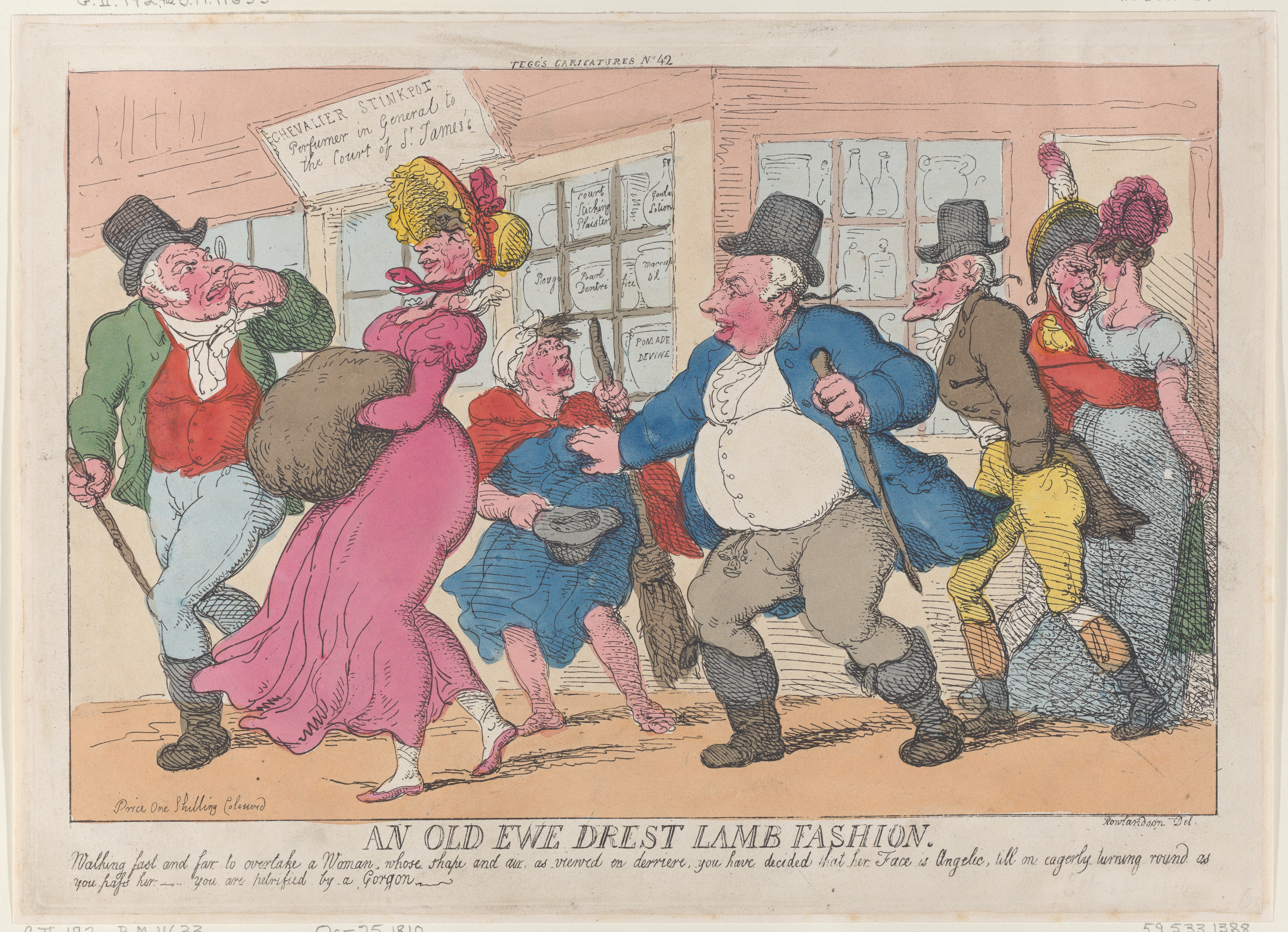
Deconstructing the Pastoral: An Old Ewe Drest Lamb and the SS26 Avant-Garde Imperative
In the rarefied atmosphere of Zoey Fashion Laboratory, where the lexicon of fashion is perpetually rewritten through the lens of structural audacity and conceptual rigor, the SS26 season demands a radical departure from the quotidian. Our latest study, An Old Ewe Drest Lamb Fashion, emerges from the Global Frontier—a liminal space where textile tradition meets digital deconstruction. This is not a mere collection; it is a standalone avant-garde thesis that interrogates the very notion of heritage, materiality, and silhouette. Through the medium of hand-colored etching, we have captured a fleeting, almost spectral vision of fashion’s future: a lamb, garbed in the wisdom of an ewe, yet reborn through futuristic architecture.
The title itself is a paradox—an old ewe, a symbol of maturity and woolly utility, drest as a lamb, the archetype of innocence and newness. This dialectic forms the core of our inquiry. In the SS26 context, we are not simply reinterpreting pastoral motifs; we are re-engineering them for a post-humanist wardrobe. The hand-colored etching, a technique of deliberate imperfection, becomes a blueprint for garments that defy gravity, time, and expectation. Each stroke of pigment on paper translates into a three-dimensional garment that exists as both sculpture and skin.
Futuristic Silhouettes: The Architecture of the Fleece
The silhouette of An Old Ewe Drest Lamb is a study in controlled chaos. Our design team has deconstructed the traditional lamb’s fleece—once a symbol of softness and warmth—into geometric exoskeletons that echo the structural innovations of Zaha Hadid and the biomimicry of Neri Oxman. The hand-colored etching reveals a lamb whose wool is not a uniform mass but a series of interlocking, carbon-fiber-reinforced panels, each one a hand-painted tessellation of muted ochres, deep charcoals, and iridescent silvers. These panels are not sewn; they are magnetically bonded, allowing for kinetic movement and reconfigurable forms. The silhouette is simultaneously massive and ethereal—a cocoon that expands and contracts with the wearer’s breath, a living architecture that challenges the static nature of traditional couture.
Key to this futuristic aesthetic is the inversion of volume. Where a lamb’s natural form suggests rounded, soft contours, our etching presents sharp, angular shoulders that taper to a waist cinched by a lattice of laser-cut leather, reminiscent of a corset from a cybernetic pastoral. The hemline is asymmetrical, slicing diagonally from the left hip to the right ankle, revealing a single leg encased in a translucent, bioplastic boot that appears to grow from the garment itself. This is not fashion as adornment; it is fashion as a prosthetic extension of the body, a second skin that redefines human proportion for the Anthropocene era.
Structural Innovation: The Hand-Colored Etching as a Construction Manual
The choice of hand-colored etching as the foundational medium is a deliberate provocation against the digital homogeneity of contemporary design. In an age dominated by 3D modeling and algorithmic pattern-making, we have returned to the tactile, imperfect, and labor-intensive process of manual printmaking. Each etching is a unique artifact, its color applied by hand in washes that bleed and overlap, creating a surface that resists reproducibility. This imperfection is the key to our structural innovation: the garments themselves are constructed with seams that are deliberately visible, asymmetrical, and often unfinished, as if the etching’s ink has bled through the fabric.
For SS26, we have developed a proprietary technique called “Etch-Weave”, where the hand-colored etching is not merely a print but a structural layer. The paper is treated with a biodegradable resin, then laser-cut into interlocking tiles that are woven into a base fabric of recycled metallic yarns. This creates a garment that is both rigid and flexible, capable of holding its shape while accommodating movement. The etching’s imagery—a lamb’s face, a ewe’s horn, a fragment of a shepherd’s crook—becomes a narrative code embedded in the garment’s architecture. The wearer becomes a walking gallery, a living etching that invites close inspection and intellectual engagement.
The construction process itself is a performance. Our atelier, located on the Global Frontier—a floating platform in the North Sea—operates as a zero-waste laboratory. Every offcut from the etching tiles is repurposed into textile jewelry: earrings that mimic the curve of a ram’s horn, necklaces that resemble the weft of a fleece. The hand-coloring is done by a collective of artists who work in shifts, their hands stained with pigment, their movements choreographed to a soundscape of industrial drones and pastoral field recordings. This is not just fashion; it is a ritual of transformation, where the old ewe’s wisdom is distilled into the lamb’s new form.
The Context of SS26: A Standalone Avant-Garde Study
As a standalone study, An Old Ewe Drest Lamb exists outside the seasonal frenzy of the fashion calendar. It is a manifesto for SS26, a season we define not by trends but by tectonic shifts in material culture. The Global Frontier context is critical: we are operating at the edge of the known, where climate change, digital saturation, and geopolitical flux demand a new sartorial language. The lamb, traditionally a symbol of sacrifice and renewal, becomes a cyborgian entity, its fleece a mesh of sensors that monitor the wearer’s biometrics and the environment’s toxicity. The hand-colored etching is a counter-narrative to fast fashion, a slow, deliberate process that honors the time and skill required to create a single garment.
The structural innovations here are not merely aesthetic; they are functional responses to the SS26 zeitgeist. The magnetic bonding system allows for modular dressing, where the wearer can reconfigure the garment into a coat, a dress, or a cape in seconds. The bioplastic boots are compostable and nutrient-rich, designed to be planted after use, their pigments nourishing the soil. The etching tiles are UV-reactive, shifting color in response to sunlight, a living canvas that evolves throughout the day. This is fashion as biotechnology, as performance art, as political statement.
In conclusion, An Old Ewe Drest Lamb Fashion is not a collection to be consumed but a provocation to be experienced. It challenges the fashion industry to abandon its obsession with the new for the sake of the new and instead embrace a cyclical, regenerative approach that honors the past while engineering the future. The hand-colored etching is the perfect metaphor: a medium that is both ancient and avant-garde, its colors bleeding into the future. For SS26, Zoey Fashion Laboratory invites you to wear the etching, embody the paradox, and become the architecture of tomorrow.