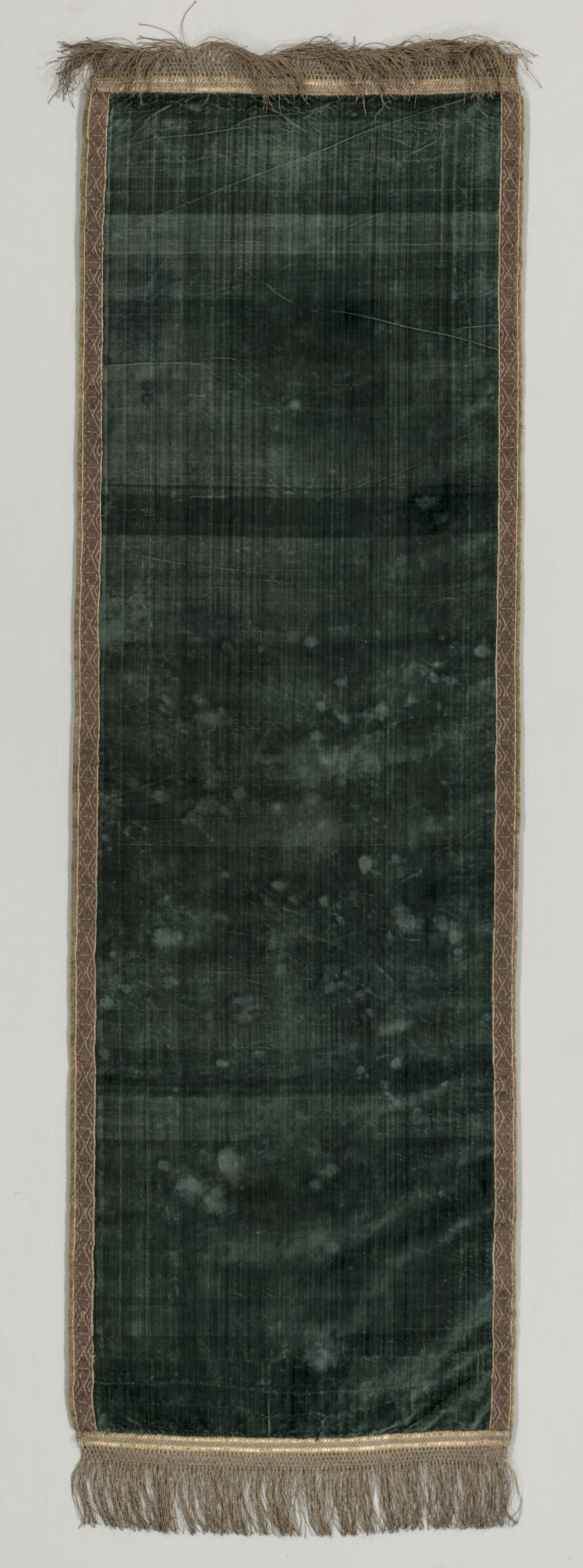
Deconstructing the Length of Velvet: A 17th-Century Italian Silk Strand Reimagined
At Zoey Fashion Lab, the role of the Chief Fabric Deconstructionist is to dissect not merely the physical weave of a textile, but its historical, tactile, and conceptual DNA. The subject before us—a length of velvet from 17th-century Italy, composed of pure silk—presents a paradox. It is a relic of opulence and power, yet its very structure holds the key to a radical, avant-garde future. This analysis will deconstruct the fabric’s technical and historical identity, then reconstruct its potential as a new biological and aesthetic strand for the contemporary fashion landscape.
Technical and Historical Deconstruction: The Silk Velvet of the 17th Century
The term "velvet" in the 17th century was synonymous with wealth, status, and ecclesiastical or aristocratic power. The technical construction of this specific length is rooted in the pile weave, a method that requires two sets of warp threads: a ground warp and a pile warp. The pile, in this case, is pure silk—a protein fiber renowned for its luster, strength, and unparalleled drape. The 17th-century Italian velvet, likely from Venice, Genoa, or Florence, was characteristically woven on a drawloom, a complex machine that allowed for intricate patterns, often incorporating metallic threads or supplementary wefts to create brocaded effects. The length of velvet is not merely a measurement; it is a narrative of labor, trade, and artistic mastery. The deep, rich colors—crimson, emerald, or midnight blue—were achieved using natural dyes like cochineal, indigo, and madder, which bonded chemically with the silk, creating a depth and luminosity that synthetic dyes struggle to replicate.
The historical context is critical. This velvet was a tool of political and religious propaganda. It adorned the thrones of Medici dukes, the altars of Counter-Reformation cathedrals, and the garments of Venetian doges. The fabric’s physical properties—its ability to absorb and reflect light, its soft yet structured hand—were engineered to convey permanence and divine right. Yet, within this very permanence lies the seed of deconstruction. The velvet’s pile is inherently fragile; it can be crushed, worn, or shorn. This fragility is the first point of entry for the avant-garde designer. The New DNA Strand we propose is not a literal genetic modification of the silk worm, but a conceptual and technical re-engineering of the fabric’s identity. We are extracting the core elements—the silk protein, the pile structure, the historical weight—and splicing them with contemporary digital and material processes.
The New DNA Strand: Avant-Garde Reconstruction
The concept of a New DNA Strand for this velvet involves a three-phase deconstruction: Physical, Digital, and Conceptual. The goal is to transform the static, historical artifact into a dynamic, responsive, and deconstructed garment that challenges the very definition of luxury and wearability.
1. Physical Deconstruction: The Shorn and the Re-Woven
The first step is to physically dissect the length of velvet. We will employ laser-cutting technology to selectively remove portions of the pile, creating a topographical map of the original pattern. This is not destruction, but revelation. By removing the pile in specific areas, we expose the ground weave—the structural skeleton of the fabric. The remaining pile becomes an island of historical opulence against a field of raw, utilitarian silk. This technique creates a textural dichotomy: the soft, plush velvet against the flat, almost paper-like ground cloth. The edges of the cuts will be left raw, allowing the silk threads to fray slightly, introducing an element of entropy and time. This echoes the 17th-century understanding that all material is subject to decay, a counterpoint to the era’s obsession with permanence.
Further, we will introduce bio-engineered silk—a recombinant protein fiber produced in a lab, not by silkworms. This new silk will be dyed with thermochromic pigments, allowing the fabric to change color in response to body heat. The 17th-century velvet’s static color is replaced by a dynamic, living palette. The New DNA Strand is thus a hybrid: the historical silk provides the structural memory, while the bio-engineered silk introduces a new functional and aesthetic vocabulary. The garment constructed from this material will be a deconstructed coat—asymmetrical, with one sleeve fully velvet and the other a lattice of shorn pile and thermochromic panels. The collar will be a sculptural element, a remnant of the original fabric’s drape, but re-stitched with conductive thread that can interface with a smartphone, allowing the wearer to control the color shifts.
2. Digital Deconstruction: The Algorithmic Pattern
The second phase involves digitizing the velvet’s pattern and translating it into algorithmic code. Using high-resolution 3D scanning, we capture every thread, every variation in pile height, every subtle imperfection. This digital twin becomes a generative design tool. We apply a parametric algorithm that mimics the growth patterns of a biological organism—a new DNA strand—to create a pattern that is both a homage to and a departure from the original. The algorithm will generate a series of unfolded garment panels that are not symmetrical, but organic, like a leaf or a coral. These panels will be printed onto the deconstructed velvet using a digital jacquard loom, which can weave the new silk and the historical silk together in real-time, creating a seamless blend of old and new.
The result is a garment that is site-specific to the wearer’s body. The algorithm adjusts the pattern based on the wearer’s measurements and movement data, creating a dress that is literally grown for them. The 17th-century velvet’s rigid, hierarchical structure is replaced by a fluid, adaptive, and personal architecture. The length of velvet is no longer a fixed measurement; it is a variable, a potentiality that unfolds in response to its environment.
3. Conceptual Deconstruction: The Wearable Artifact
The final phase is conceptual. The garment is not a product; it is a wearable artifact that questions the value systems embedded in historical textiles. The 17th-century velvet was a symbol of exclusion and power. The new garment, by contrast, is a statement of democratic luxury. The deconstruction process—the laser cuts, the exposed ground weave, the thermochromic shifts—makes visible the labor and materiality that were once hidden. The wearer becomes a participant in the fabric’s ongoing narrative, not a passive consumer.
The avant-garde style is not just about shock; it is about critical engagement. This garment will feature detachable components—a collar that can be removed and worn as a separate accessory, sleeves that can be zipped off and exchanged for a different textile. The velvet is no longer a monolithic length; it is a kit of parts, a modular system. The New DNA Strand is the conceptual thread that connects all these elements: the historical silk, the bio-engineered fiber, the digital algorithm, and the wearer’s body. It is a strand that evolves, mutates, and adapts, just as fashion itself must do in the 21st century.
Conclusion: From Relic to Revolution
The 17th-century Italian silk velvet is not a dead object; it is a living document. By deconstructing its technical, historical, and material DNA, Zoey Fashion Lab can re-engineer it into a platform for avant-garde expression. The length of velvet becomes a metaphor for the continuum of textile history—a line that can be broken, twisted, and re-spliced. The New DNA Strand is our tool for this transformation, allowing us to create garments that are simultaneously ancient and futuristic, luxurious and critical, static and dynamic. This is not a resurrection of the past, but a radical re-birth. The velvet is no longer a relic; it is a revolution, worn on the body as a statement of what fashion can become when it dares to deconstruct its own foundations.