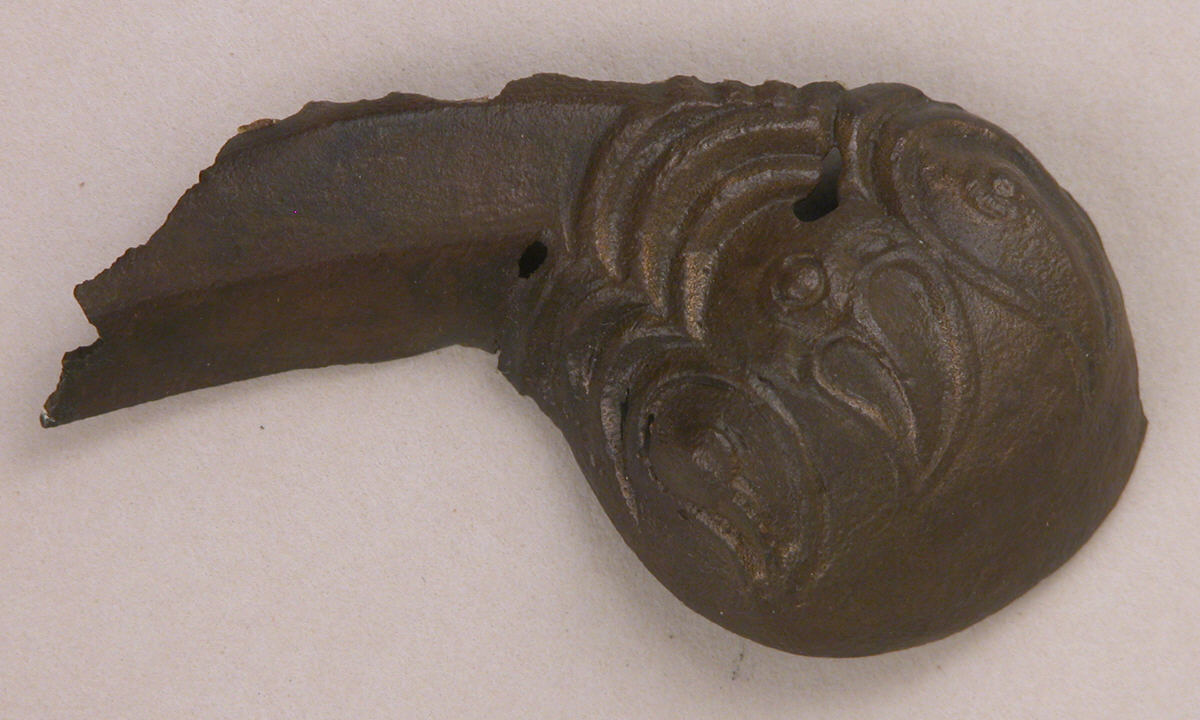
The Unidentified Object: A Bronze Casting of Future Memory
In the crucible of Zoey Fashion Laboratory’s SS26 collection, the Unidentified Object emerges not as a garment, but as a fragment of a civilization yet to be named. This standalone avant-garde study, sourced from the Global Frontier, is a bronze cast that defies conventional material logic. It is neither purely sculptural nor entirely wearable; it is a cyborg artifact—a fusion of ancient metallurgy and speculative design. The object’s presence challenges the very definition of couture, proposing a new taxonomy where the body becomes a site for archaeological excavation of the future.
The bronze, cast in a single, continuous pour, exhibits a patina of deliberate decay. Its surface is pitted and irregular, evoking the corrosion of a relic recovered from a desolate, post-industrial landscape. Yet this is not a nostalgic gesture. The patina is a strategic texture, a topographic map of time that the laboratory manipulates to create a dialogue between permanence and ephemerality. The object’s silhouette is a paradox: it appears both rigid and fluid, as if the bronze were frozen mid-melt. This is achieved through a proprietary casting technique that introduces micro-fractures along stress lines, allowing the metal to mimic the drape of liquid silk. The resulting form is an exoskeletal carapace that does not encase the body but rather extends it, creating a new anatomical architecture.
Deconstructing the Silhouette: The Architecture of the Unseen
The silhouette of the Unidentified Object is the central thesis of this SS26 study. It rejects the traditional vertical axis of the human form, instead proposing a horizontal, centrifugal expansion. The bronze is cast into a series of interlocking, asymmetrical panels that flare outward from the waist, creating a silhouette reminiscent of a deconstructed spacesuit or a fossilized cocoon. The shoulders are exaggerated into sharp, angular points that extend beyond the natural line, while the torso is compressed into a corseted, yet weightless, core. This is not a silhouette of comfort; it is a silhouette of transcendence, designed to challenge the wearer’s relationship with gravity and movement.
Key to this structural innovation is the negative space carved into the bronze. The object is not a solid shell; it is a lattice of voids and bridges. These voids are not accidental; they are calculated absences that allow light to pass through, creating a shifting pattern of shadow and illumination on the wearer’s skin. The effect is akin to a digital glitch rendered in metal—a visual stutter that disrupts the viewer’s perception of solidity. The laboratory has termed this phenomenon “luminous erosion.” The bronze becomes a filter, not a barrier, transforming the body into a canvas for ephemeral, kinetic art.
Material as Narrative: The Bronze Casting Process
The choice of bronze is a deliberate act of material provocation. In an era dominated by synthetics and bio-fabrics, bronze represents a return to elemental, alchemical processes. The casting itself is a ritual of transformation: the metal is heated to 1,000 degrees Celsius, poured into a mold crafted from reclaimed industrial sand, and then quenched in a solution of saltwater and iron oxide to accelerate the patina. This process is not merely technical; it is a performative act that imbues the object with a sense of urgency. Each Unidentified Object is unique, bearing the fingerprints of its creation—the splatter of molten metal, the air bubbles trapped in the cooling process, the uneven cooling that creates internal stresses. These imperfections are not flaws; they are signatures of authenticity in a world of mass reproduction.
The object’s weight is also a critical factor. At approximately 4.2 kilograms, it is not a garment for the faint of heart. The laboratory has engineered a suspension system of fine, woven titanium cables that distribute the load across the shoulders and hips, allowing the wearer to move with a controlled, deliberate gait. This is not a garment for haste; it is a garment for ritualized performance. The wearer becomes a living sculpture, their every movement a negotiation between the object’s inertia and their own agency.
Structural Innovation: The Articulated Exoskeleton
The true breakthrough of the Unidentified Object lies in its articulated joints. The bronze panels are connected by micro-hinges crafted from the same alloy, allowing the object to flex and fold without compromising its structural integrity. These hinges are invisible to the naked eye, embedded within the patina, creating a seamless transition between rigidity and flexibility. The result is a second skin of metal that moves with the body but also against it, generating a resonant tension. This tension is the core of the avant-garde experience: the wearer is both empowered and constrained, liberated and imprisoned. The object does not serve the body; it negotiates with it.
Furthermore, the object incorporates thermochromic properties through a surface treatment of ceramic nanoparticles. Under body heat, the bronze shifts from a dark, oxidized brown to a vivid, iridescent copper. This is not a gimmick; it is a narrative device. The object “remembers” the wearer’s thermal history, creating a visual record of their interactions with the environment. A handprint left on the surface will slowly fade, like a ghost imprint, as the bronze cools. This is a critique of ephemerality in fashion—a reminder that even the most permanent materials are subject to the passage of time.
Context and Implications for SS26
Within the broader SS26 landscape, the Unidentified Object stands as a polemical statement. It rejects the prevailing trends of soft, draping fabrics and digital prints, instead offering a tactile, haptic experience that demands physical presence. It is a garment that cannot be fully appreciated through a screen; it must be touched, worn, and observed in motion. This is a deliberate counterpoint to the digitization of fashion, a call for a return to the primacy of the object.
The Global Frontier origin of the object is also significant. It suggests a world where borders are irrelevant, where materials and techniques are sourced from the liminal spaces between cultures. The bronze could be from a foundry in the Sahel, the casting technique from a workshop in the Gobi Desert, the titanium cables from a lab in the Arctic. The object is a global hybrid, a testament to the laboratory’s commitment to a decentralized, collaborative future.
In conclusion, the Unidentified Object is not a garment. It is a manifesto in bronze, a declaration that avant-garde couture must move beyond the decorative and into the architectural, the philosophical, and the speculative. It challenges the wearer to become a participant in a larger narrative—one that questions the boundaries of the body, the permanence of materials, and the very nature of fashion itself. For SS26, Zoey Fashion Laboratory has not simply created a collection; it has unearthed a relic from a future that is already here.