Deconstructing the Divine: An Avant-Garde Analysis of the Portable Altar of Countess Gertrude
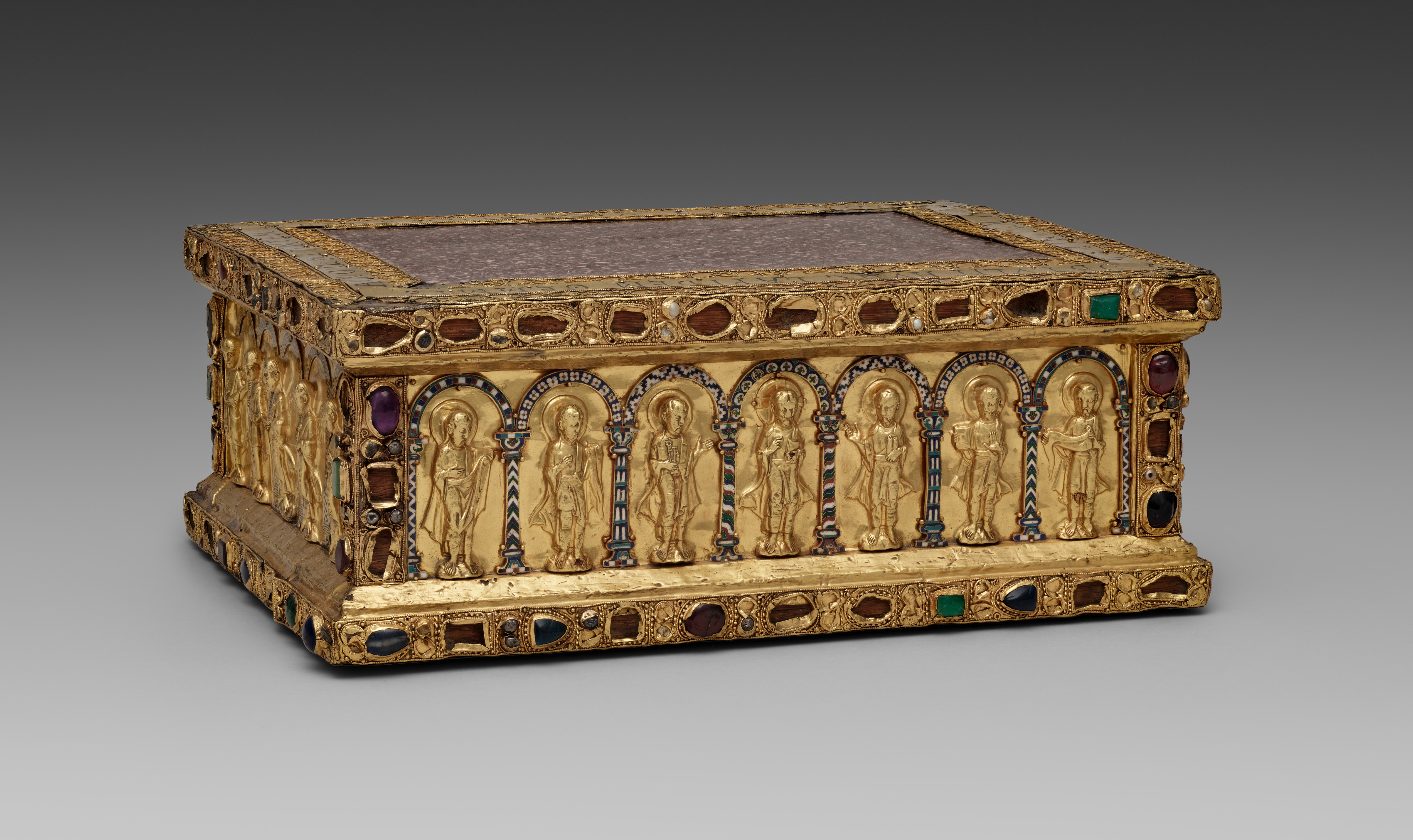
At Zoey Fashion Lab, our mission is to dismantle the historical, technical, and symbolic DNA of artifacts, extracting their core aesthetic principles to inform a new, avant-garde language for fashion. The Portable Altar of Countess Gertrude, a masterwork of Romanesque goldsmithing from 11th-century Lower Saxony, presents a uniquely potent substrate for this deconstruction. This object is not merely a religious relic; it is a portable manifesto of power, piety, and materialist transcendence. Its technical arsenal—gold, cloisonné enamel, porphyry, gems, pearls, niello, and a wood core—functions as a complex codex of surface, structure, and light. For the avant-garde, this altar offers a radical template for reimagining the body as a sacred, armored, and technologically enhanced site of personal ritual.
I. The Structural DNA: The Body as a Portable Sanctuary
The altar’s fundamental innovation is its portability. It is a miniaturized, wearable architecture designed to contain the sacred within a mobile frame. This concept directly challenges the static, monumental tradition of ecclesiastical art. The wood core provides a lightweight, structural integrity, while the gold overlay acts as an impermeable, luminous skin. In avant-garde fashion, this translates to garments that are not draped but constructed—rigid, architectural shell-suits that encase the wearer in a personal, protective aura. Imagine a jacket with a hidden, internal frame of carbon fiber (the wood core) sheathed in liquid-metal gold lamé. The garment becomes a mobile reliquary for the wearer’s own identity, a sanctuary against the mundane. The altar’s hinged wings, which open to reveal the central space, inspire transformable silhouettes: a coat that folds into a cape, a skirt that expands into a train, or a collar that rises into a protective cowl. The body is no longer a passive canvas but an active, sacred architecture.
II. The Surface as Narrative: Cloisonné, Niello, and the Grid of Power
The cloisonné enamel on this altar is not mere decoration; it is a technological and narrative grid. Thin gold wires (the cloisons) are soldered onto the gold base, creating precise compartments filled with vibrant, vitreous enamel. This process is a form of controlled chaos—molten glass contained within a rigid, linear framework. The resulting panels depict biblical scenes, transforming the surface into a readable, didactic skin. For the avant-garde, this inspires a textile of data. Imagine a fabric where conductive threads (the cloisons) are woven into a grid, with micro-LEDs or thermochromic pigments (the enamel) programmed to display shifting patterns, symbols, or even personal biometric data. The garment becomes a living narrative, a wearable manuscript that communicates the wearer’s status, mood, or beliefs in real-time.
The niello technique—an inlay of black metallic sulfide into engraved lines—adds a contrasting, graphic depth. It creates a negative space that defines the positive forms of the gold and enamel. This interplay of light and dark, of positive and negative, is a core avant-garde principle. It translates into laser-cut leather or perforated metal meshes worn over sheer, luminous fabrics, creating a dynamic, layered surface that reveals and conceals. The niello’s matte, shadowy quality against the brilliant gold suggests a dichotomy of the sacred and the profane—a tension that avant-garde fashion exploits through juxtapositions of matte and shine, opaque and transparent, heavy and light.
III. The Materialist Theology: Gems, Pearls, and Porphyry as Power Signifiers
The altar’s lavish use of gems, pearls, and porphyry is not ostentatious in the modern sense; it is a theological and political statement. In the 11th century, these materials were believed to possess apotropaic and healing properties. Porphyry, a rare purple stone reserved for imperial use, signified divine and earthly authority. Gems and pearls were seen as fragments of the celestial realm, captured light. For the avant-garde, this redefines the concept of luxury. It is not about cost but about symbolic weight and material agency. A garment might incorporate synthetic sapphires embedded in a resin exoskeleton, not for adornment but as energy conduits or light-fracturing prisms. Pearls, traditionally associated with purity and tears, could be reinterpreted as bioluminescent capsules that pulse with the wearer’s heartbeat. The porphyry, a stone that is both hard and polished, inspires the use of lacquer or ceramic finishes on fabric, creating a surface that is simultaneously ancient and futuristic.
IV. The Avant-Garde Synthesis: A New Ritual for the Body
The Portable Altar of Countess Gertrude is a complete system: a structure, a surface, a narrative, and a material theology. The avant-garde fashion it inspires is not about historical pastiche but about extracting and re-coding its core principles. The resulting collection would be a ritualistic armor for the contemporary self. Garments would be modular, allowing the wearer to add or remove panels of enamel-like circuitry. Silhouettes would be geometric and severe, echoing the altar’s rectangular, box-like form, but softened by the organic curves of the body. The color palette would be drawn from the altar: the deep, luminous blues and greens of the enamel, the burnished gold, the black of niello, the purples of porphyry, and the white of pearls.
This is fashion as personal liturgy. The act of dressing becomes a ritual of empowerment, a portable altar for the individual’s own beliefs, aspirations, and defenses. The wearer is not just adorned; they are encased in a system of meaning, a living artifact that bridges the medieval and the futuristic. The Portable Altar of Countess Gertrude, deconstructed, reveals that the most profound fashion is not merely worn—it is inhabited. It is a sanctuary you carry with you, a testament to the enduring human need to render the invisible visible, and to make the sacred portable.