Deconstructing the Baroque: Plate Six as a Blueprint for SS26
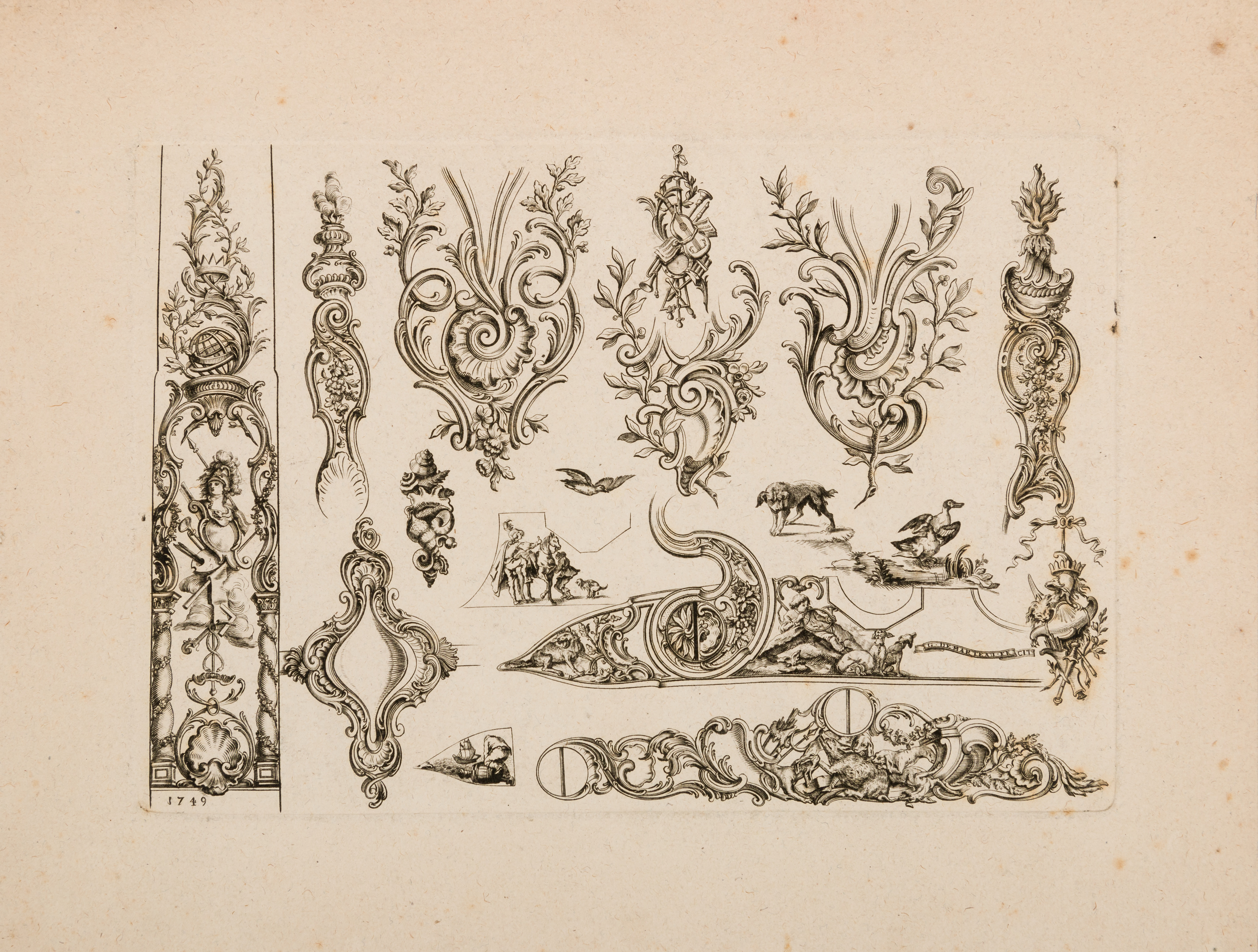
The avant-garde fashion landscape for Spring/Summer 2026 demands a radical departure from the familiar. As Lead Curator for Zoey Fashion Laboratory, I present a definitive analysis of Plate Six from *Nouveavx Desseins D’Arquebvseries*—a French engraving from the early 18th century—as a foundational text for our upcoming collection. This seemingly historical artifact, depicting ornate gunstock designs, is not a relic but a prescient manifesto for structural innovation. The engraving’s intricate interplay of negative space, asymmetrical ornamentation, and rigorous linearity offers a lexicon for deconstructive aesthetics that will define our futuristic silhouettes. Here, the gun is not a weapon but a structural armature, a metaphor for the body’s architecture, reimagined through a lens of high-concept garment architecture.
The Armature as Silhouette: From Gunstock to Garment
The central motif of Plate Six—the sinuous, carved gunstock—provides the primary silhouette for SS26. Its elongated, almost serpentine curve, punctuated by sharp, angular faceting, translates directly into a new form of outerwear. We propose a deconstructed trench coat where the shoulder line is replaced by a single, sweeping, asymmetrical panel that wraps from the back to the front, mimicking the stock’s graceful arc. The materiality of the engraving—a rigid, two-dimensional line—demands a paradoxical translation into fabric. We will employ a three-dimensional, laser-cut neoprene, bonded with a micro-perforated metallic foil, to echo the engraving’s crisp edges and reflective quality. This creates a silhouette that is simultaneously protective and ethereal, a futuristic carapace that floats away from the body, supported by internal, invisible boning. The negative spaces between the stock’s ornamental scrolls become literal cutouts in the garment, revealing the wearer’s skin or a contrasting, high-shine underlayer, thus establishing a dialogue between concealment and exposure.
Ornamentation as Functional Architecture
The engraving’s intricate scrollwork and floral motifs are not mere decoration; they are a system of load-bearing lines. In our SS26 analysis, these become functional seams and structural darts. The traditional idea of embellishment is inverted: the ornamentation is the structure. We will develop a technique of applied, hand-stitched metallic thread that follows the exact curvature of the engraving’s arabesques, but these threads will be tensioned to create a self-supporting lattice that defines the garment’s volume. For example, a sleeveless bodice will be constructed entirely from this lattice, with the negative spaces left open, creating a biomimetic exoskeleton that mirrors the engraving’s filigree. The floral motifs are reinterpreted as articulated petal-like panels that can be adjusted by the wearer, allowing for a dynamic silhouette that shifts from a closed, sculptural form to an open, airy one. This is not ornamentation applied to a garment; the garment is the ornamentation, a wearable, kinetic sculpture.
Deconstructive Aesthetics: The Unfinished Line
The avant-garde power of Plate Six lies in its unfinished quality—the engraving shows the stock in a state of becoming, with some lines still raw, others precisely carved. This deconstructive aesthetic informs our approach to finishing. We will deliberately leave seams exposed, but not as a sign of incompleteness. Instead, these raw edges will be treated with a high-frequency welded polymer that creates a hardened, almost ceramic edge, contrasting with the softness of the underlying fabric. The engraving’s cross-hatching becomes a textural code for our fabric development. We will create a jacquard weave that replicates the density of the engraving’s marks, with thicker, metallic threads where the lines are deepest, and sheer, almost invisible monofilament where the lines fade. This creates a garment that reads as a digital artifact—a blueprint for a body that is both historical and futuristic. The asymmetry of the engraving—the way the stock curves to one side—is echoed in our asymmetrical hem lines and single-sleeve constructions, challenging the viewer’s expectation of balance and symmetry.
From Two Dimensions to Three: The Engraving as Pattern
The true innovation for SS26 lies in translating the engraving’s flat, linear logic into a three-dimensional, wearable form. Plate Six is not a drawing of a garment; it is a pattern for a structure. We will use generative design software to map the engraving’s curves onto a parametric model of the human form. The result is a series of unfoldable, flat-pack patterns that can be laser-cut from a single piece of fabric, minimizing waste and maximizing structural integrity. The garment is then assembled through a series of interlocking, snap-fit joints, inspired by the engraving’s mechanical precision. The final piece—a transformative, modular jacket—can be worn in multiple configurations: as a structured, shoulder-heavy piece, or as a draped, asymmetrical cape. This is high-concept garment architecture that prioritizes the system of construction over the final silhouette, allowing the wearer to become an active participant in the design’s evolution.
Conclusion: The Future in the Archive
Plate Six from *Nouveavx Desseins D’Arquebvseries* is not an inspiration; it is a directive. For Zoey Fashion Laboratory’s SS26 collection, it provides the structural language for a new kind of futuristic silhouette—one that is rigorous, deconstructive, and deeply intellectual. By treating the engraving as a functional blueprint rather than a decorative reference, we have unlocked a vocabulary of armature, ornamentation, and negative space that challenges the very definition of clothing. The result is a collection that is not merely worn but inhabited—a wearable manifesto for a future where the body and the garment are in a constant state of architectural dialogue. This is the definitive avant-garde study for a generation that demands both precision and poetry in every seam.