Deconstructing the Brescia Half-Suit: An Avant-Garde DNA Analysis for Zoey Fashion Lab
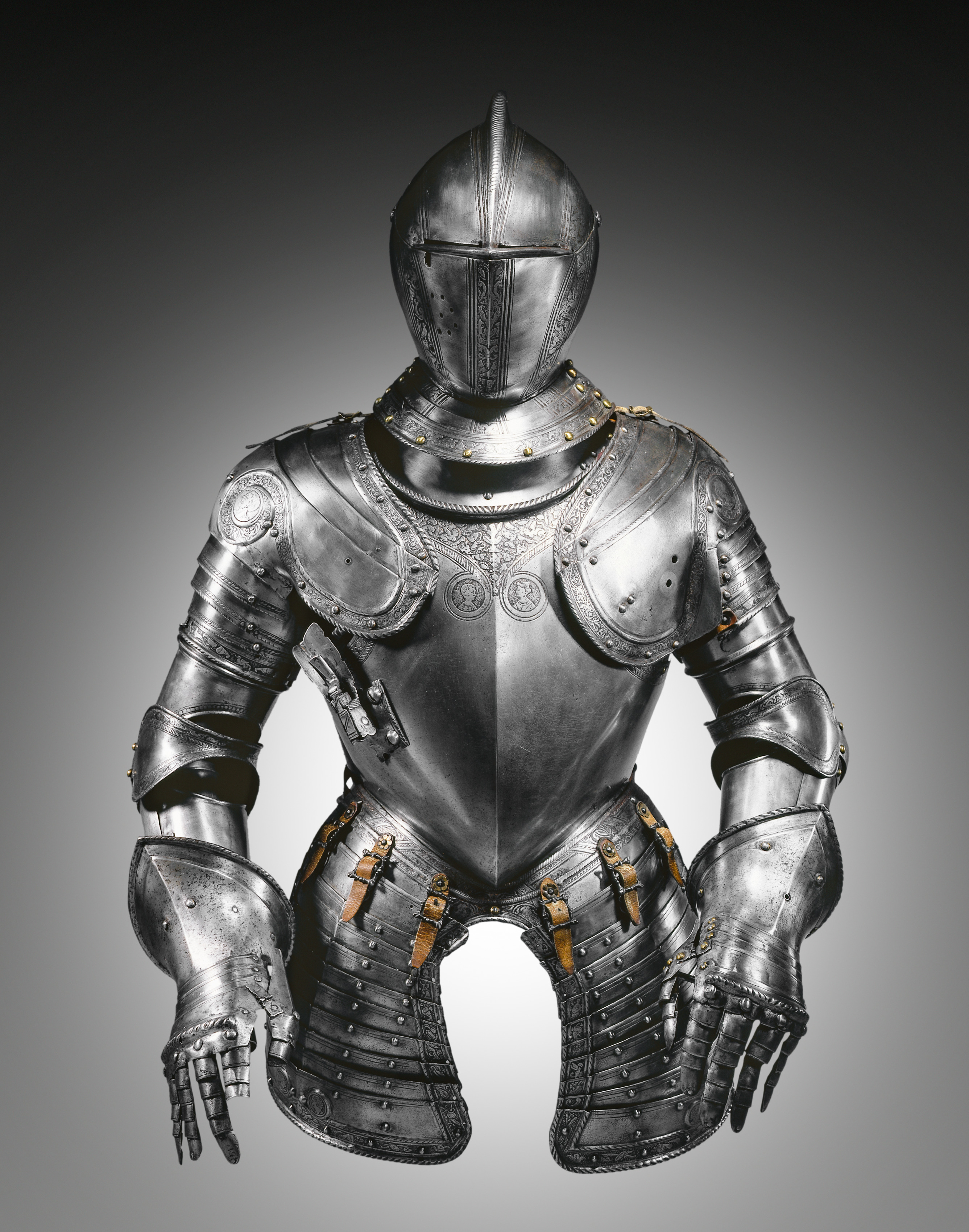
As Chief Fabric Deconstructionist at Zoey Fashion Lab, I am tasked with interrogating historical artifacts not as relics, but as living DNA strands—genetic codes that can be spliced, mutated, and re-expressed through an avant-garde lens. The subject of this analysis is a Half-Suit of Armor for the Field, attributed to North Italy, possibly Brescia, circa 16th century. This piece, crafted from steel with etched decorative bands and roundels, represents a pivotal moment in the evolution of protective wear. Its technical and aesthetic DNA is remarkably compatible with our lab’s mission to deconstruct and reimagine fashion as a form of wearable architecture. This report will dissect the armor’s structural, decorative, and conceptual elements, proposing a framework for its transformation into a contemporary, avant-garde collection.
Structural DNA: The Exoskeleton as Second Skin
Anatomy of the Half-Suit
The half-suit, designed for mounted combat, typically includes a breastplate, backplate, pauldrons (shoulder guards), and a gorget (neck defense). Its primary function was to deflect and absorb kinetic energy from bladed weapons. From a deconstructionist perspective, this is not merely armor; it is an exoskeletal garment—a rigid, articulated shell that dictates the wearer’s posture, movement, and silhouette. The steel plates are not fabric, but they perform the same role as a tailored jacket or corset: they shape the human form into a weaponized ideal.
Articulation and Mobility
The genius of Brescian armorers lies in their riveted joints and overlapping lames (sliding plates). These allow for a surprising range of motion in the shoulders and elbows. For Zoey Fashion Lab, this is a critical DNA sequence: the concept of hardware as hinge. We can translate this into avant-garde garments using laser-cut metal or polymer components that articulate over softer textiles. Imagine a deconstructed blazer where the shoulder pads are replaced with polished steel petals, each riveted to a flexible leather base, allowing the wearer to move while encased in a metallic carapace. The half-suit’s structural logic—protection through segmentation—is a blueprint for future collections that explore the tension between vulnerability and invulnerability.
Decorative DNA: Etching as Narrative Skin
The Etched Bands and Roundels
The etched decorative bands and roundels on this suit are not mere ornamentation. They are a form of surface narrative, a visual language that communicates status, allegiance, and mythology. In 16th-century Brescia, etching was achieved by applying acid-resistant wax to the steel, then carving designs before immersion in acid. The resulting bands often depict classical motifs, foliage, or heraldic symbols. The roundels—circular medallions—serve as focal points, drawing the eye to key structural nodes like the center of the breastplate or the shoulder joints.
Deconstructionist Reinterpretation
For our lab, these etched elements represent a textile-agnostic pattern. We can replicate the visual rhythm of bands and roundels using non-metallic materials: laser-engraved leather, heat-pressed vinyl on technical fabrics, or even hand-embroidered metallic threads on organza. The key is to preserve the contrast between polished and matte surfaces. In the original armor, the etched areas are darker, creating a chiaroscuro effect against the burnished steel. We can achieve this with bonded fabrics, where a satin-finish panel is juxtaposed against a matte, rubberized substrate. The roundels, in particular, can be reimagined as detachable, magnetic armature points—places where the wearer can attach additional elements like chains, pockets, or digital displays, transforming the garment from static armor into an interactive interface.
Conceptual DNA: The Field as Runway
From Battlefield to Catwalk
The term “for the Field” in the artifact’s description grounds it in the reality of combat—mud, blood, and the chaos of the pike square. Yet, the avant-garde fashion runway is itself a field of symbolic conflict: a space where identity is contested, and garments become armor for the self. The half-suit’s DNA carries a profound duality: it is both protective and aggressive, both functional and ceremonial. For Zoey Fashion Lab, this duality is the core of our design philosophy. We are not creating armor for literal warfare, but for the psychological and social battles of contemporary life—the boardroom, the red carpet, the digital arena.
Deconstructing the Silhouette
The 16th-century half-suit projects a silhouette of exaggerated shoulders and a tapered waist, echoing the ideal of the martial male form. In our avant-garde recontextualization, we can fragment and reassemble this silhouette. Consider a gown where the bodice is a single, sculpted steel breastplate (fabricated from lightweight aluminum or 3D-printed resin), while the skirt is a cascade of deconstructed pauldron lames—each piece hinged and overlapping, creating a rustling, metallic train. The etched bands can be reinterpreted as laser-cut slits that reveal a second layer of iridescent fabric beneath, suggesting the vulnerability beneath the armor. The roundels might become oversized, asymmetrical buttons or clasps that fasten the garment in unexpected places, subverting the original’s symmetrical logic.
Technical Translation: Material and Process
Steel to Soft Tech
The original steel is heavy, rigid, and unforgiving. For an avant-garde collection, we must translate its properties into wearable, dynamic materials. Options include:
- Chainmail-inspired knits using metallic yarns and stainless steel rings, offering flexibility with a metallic sheen.
- Thermoformed plastics like PETG or polycarbonate, which can be shaped into armor-like panels that are lightweight and translucent.
- Laser-sintered nylon for complex, organic forms that mimic the etched roundels but with a futuristic, porous texture.
Conclusion: The New DNA Strand
The Brescian half-suit is not a fossil; it is a living blueprint. Its DNA—structural articulation, etched narrative, and battlefield duality—provides Zoey Fashion Lab with a rich vocabulary for avant-garde expression. By deconstructing its form, we can create garments that are not merely clothing, but wearable statements of resilience and reinvention. The etched bands become our patterns; the roundels, our focal points; the articulated lames, our engineering challenges. In this new strand, the half-suit is reborn as a collection that speaks to the modern warrior—the individual who navigates a field of social, digital, and personal combat, armored in beauty, intelligence, and art.