Deconstructing the Seat: A Structural Lexicon for SS26
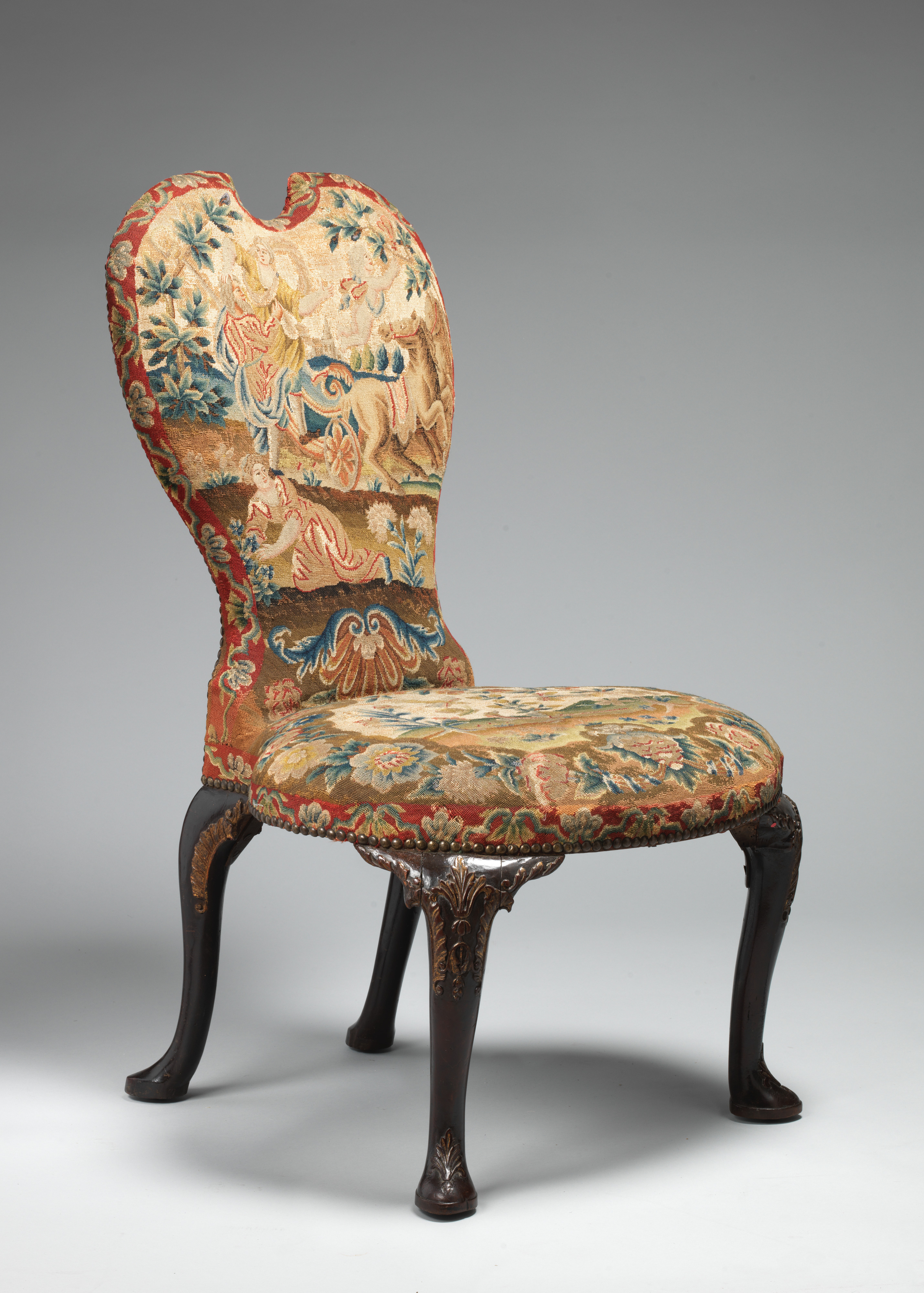
The side chair, a relic of domestic utility, is reimagined not as an object of repose but as a generative armature for avant-garde couture. Within the Global Frontier, where cultural boundaries dissolve into a singular aesthetic horizon, the materials of walnut, mahogany, parcel-gilt, and needlework converge to articulate a new vocabulary of silhouette. This analysis for Zoey Fashion Laboratory dissects the side chair’s architectural grammar, translating its static geometry into a dynamic, futuristic garment system for SS26. The chair becomes a manifesto: a study in tension, adornment, and the erasure of function in favor of pure form.
The Walnut Frame: A Skeletal Exoskeleton
The walnut’s deep, organic grain is not merely a surface finish but a structural blueprint for a deconstructed exoskeleton. In SS26, the chair’s backrest is extracted and re-scaled into a rigid, asymmetrical shoulder cage. The walnut’s natural curvature is exaggerated, creating a cantilevered spine that extends beyond the body, defying gravity. This is not a garment to be worn; it is a second skeleton—a prosthetic of posture. The legs of the chair, turned and tapered, are reinterpreted as elongated, articulated panels that sweep from the waist to the floor, mimicking the chair’s support system. Here, the body becomes the seat, the garment the frame. The walnut’s warmth is preserved through a matte, barely-there finish, allowing the grain to read as a topographical map of the body’s new architecture. The silhouette is aggressive yet elegant—a futuristic carapace that prioritizes structural integrity over comfort.
Mahogany’s Duality: Rigidity and Flow
Mahogany, with its rich, reddish-brown depth, introduces a dialectical tension between rigidity and fluidity. The chair’s front stiles are deconstructed into segmented, jointed panels that articulate at the hip and shoulder, allowing for controlled movement. These panels are not static; they are engineered to pivot and lock, creating a transformable silhouette that shifts from a sharp, architectural profile to a softer, cascading line. The mahogany is carved into a series of interlocking scales, reminiscent of medieval armor but rendered with a glossy, almost liquid finish. This finish catches light in unpredictable ways, creating a moiré effect that destabilizes the viewer’s perception of mass. The garment’s hem is a direct quote from the chair’s seat rail—a continuous, sweeping curve that wraps around the body, suggesting a perpetual state of levitation. The mahogany’s density is leveraged to create negative space, with cutouts that reveal the skin or underlayers, a nod to the chair’s open back and pierced splats.
Parcel-Gilt: The Alchemy of Light and Shadow
Parcel-gilt, the selective application of gold leaf, transforms the garment into a luminous device. The chair’s original gilding, likely confined to carved details, is here exploded into a randomized pattern across the walnut and mahogany surfaces. Gold is applied in fine, calligraphic strokes that follow the grain, creating a digital-age filigree that appears both ancient and hypermodern. The gilt is not decorative; it is a functional element that interacts with ambient light, projecting fragmented shadows onto the wearer and surrounding space. This technique evokes the concept of wearable architecture, where the garment becomes a mobile installation. The gold is strategically placed at stress points—shoulders, elbows, hips—to draw the eye to the garment’s structural logic. The effect is a tension between opulence and austerity, a deliberate subversion of the chair’s original domestic luxury into a futuristic, almost alien aesthetic.
Needlework: The Digital Tapestry of the Body
Needlework, traditionally the chair’s upholstery, is recontextualized as a second skin—a narrative surface that bridges the organic and the synthetic. The original needlepoint patterns, likely floral or geometric, are digitized and then hand-embroidered onto a sheer, high-tenacity mesh that floats over the rigid panels. This creates a layered transparency, where the chair’s structural elements are visible beneath a shimmering, tactile membrane. The stitches are not uniform; they vary in density and tension, forming a topography of touch that maps the body’s pressure points. The needlework incorporates metallic threads that echo the parcel-gilt, creating a conversation between the chair’s decorative past and its functional future. The pattern is a fractal—a repeating motif that scales from microscopic to macroscopic, suggesting infinite expansion. This textile is not merely decorative; it is a dynamic interface that reacts to movement, its threads shifting to reveal or conceal the underlying exoskeleton.
Silhouette and Innovation: The Global Frontier’s New Form
The synthesis of these materials yields a silhouette that defies categorization. The garment is neither a dress nor a suit; it is a wearable sculpture that redefines the human form. The walnut and mahogany panels create a geometric, almost robotic profile, while the needlework and gilt introduce a soft, organic counterpoint. The overall shape is an inversion of the chair: the backrest becomes a high, flared collar; the seat becomes a draped, asymmetric skirt; the legs become articulated, almost mechanical limbs. This is a post-human garment, one that suggests a future where clothing is not about covering the body but about extending its capabilities. The chair’s original function—to support—is subverted; the garment now supports the wearer’s identity as a mobile monument.
Structural Innovation: The Chair as a Pattern
The side chair’s construction methods are translated directly into the garment’s pattern. The mortise-and-tenon joints become modular fasteners—magnetic or mechanical connections that allow the garment to be assembled and disassembled. The chair’s turned legs inform the use of rotational elements at the joints, enabling the wearer to adjust the garment’s silhouette in real-time. The needlework’s warp and weft are echoed in the garment’s internal structure, creating a tensile grid that distributes weight evenly across the body. This is not a garment for passive wear; it is an active system that requires the wearer to engage with its mechanics. The innovation lies in the fusion of craft and engineering, where traditional materials are pushed to their limits through digital design and precision fabrication.
Conclusion: The Seat of Power
In this avant-garde study, the side chair is not a source of inspiration but a partner in creation. The Global Frontier demands a dissolution of boundaries—between object and body, past and future, function and art. The walnut, mahogany, parcel-gilt, and needlework are not mere materials; they are agents of transformation. The resulting garment is a testament to the power of deconstruction: by dismantling the chair, we rebuild the human form. For SS26, Zoey Fashion Laboratory presents a vision where furniture becomes fashion, where the seat of power is no longer a place to sit but a statement to stand in. This is the new avant-garde: a rigorous, intellectual, and deeply material exploration of what it means to wear the world around us.