Deconstructing the Leopard d'Or: A Study in Gothic Gold and Avant-Garde Resonance
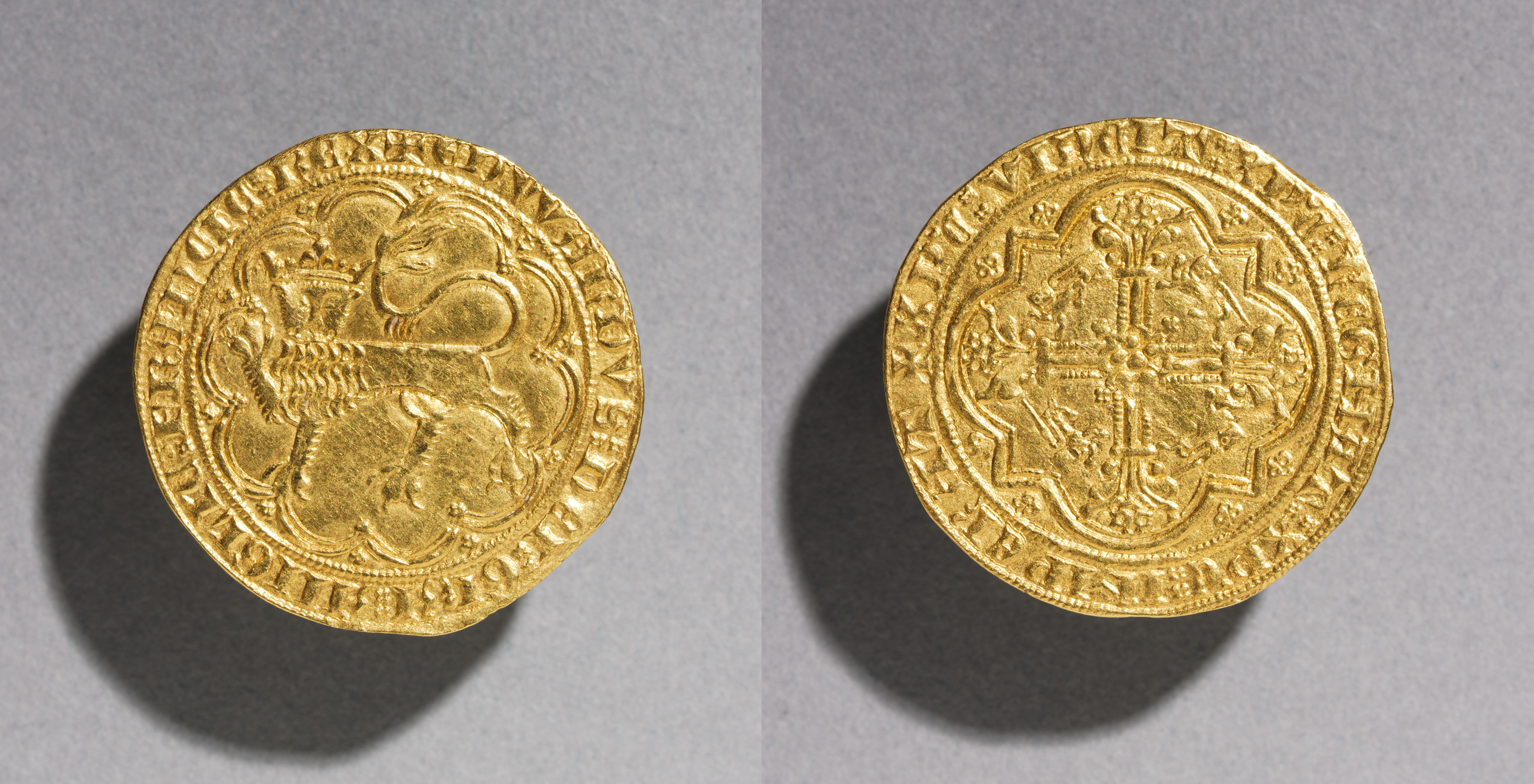
At Zoey Fashion Lab, the act of deconstruction is not merely about taking apart; it is about recontextualizing historical artifacts into a new language of avant-garde expression. The Leopard d'Or of Edward III, a gold coin struck in the 14th century during the Anglo-Gallic phase of the Gothic period, serves as a profound archaeological specimen. Its material—pure gold—and its iconography—a heraldic leopard—are not static relics but dynamic narratives. When viewed through the lens of your provided Archive Resonance, which juxtaposes a polished silver mirror with intricate gold palm-leaf inlay against a cold stone sarcophagus bearing a relief of life's story, the coin transforms into a dualistic talisman. It is both a gleaming surface of royal propaganda and a heavy, engraved monument to mortality and power.
Materiality as a Narrative Device: Gold as Both Mirror and Tomb
The Leopard d'Or is, first and foremost, a metallic declaration of sovereignty. Its gold content is not incidental; it is a deliberate choice that aligns Edward III with the divine right of kings and the eternal value of his claim to the French throne. In the context of your Archive Resonance, the "光洁银镜" (polished silver mirror) represents the coin's obverse—a surface that reflects the idealized image of the king's authority. Yet, the "纷繁棕叶纹" (intricate palm-leaf patterns) in gold suggest a deeper, more organic complexity. The leopard, rendered in high relief, is not a static beast but a dynamic emblem of vigilance and ferocity. For an avant-garde fashion lab, this gold is not a precious metal to be revered; it is a fabric to be unraveled. We see its luster as a surface tension—a reflection of a world order that is both brilliant and brittle. The coin's weight in the hand is the weight of history, but its shimmer is the deceptive calm of a mirror that can shatter.
Conversely, the reverse side of the coin, or its conceptual "underside," aligns with the "冰冷石棺板" (cold stone sarcophagus). Here, the gold is not a mirror but a relief-carved narrative. The leopard is not merely a symbol; it is a character in a story of conquest, lineage, and mortality. The 14th century was an era of plague, war, and feudal upheaval. The coin, as a portable object, carried the weight of these realities. Its gold, while eternal in color, was minted for circulation—a medium of exchange that passed through hands that would soon be cold. This duality is the core of our deconstruction: gold as both a mirror of present power and a tombstone of future decay. In the avant-garde context, we do not choose one over the other; we wear both simultaneously, creating garments that are simultaneously reflective and funerary.
Iconographic Deconstruction: The Leopard as a Fractured Emblem
The heraldic leopard of Edward III is a potent symbol, but its meaning is not monolithic. In Gothic heraldry, the leopard (often a lion passant guardant) represents courage, nobility, and the king's claim to Aquitaine. However, in the avant-garde framework, we see this leopard as a fractured identity. The coin's design is a product of the Anglo-Gallic period—a hybrid culture that was neither fully English nor fully French. This hybridity is a template for deconstruction. The leopard is not a pure lion; it is a composite creature, a symbol of contested sovereignty. For Zoey Fashion Lab, this translates into pattern cutting that defies symmetry, where a single motif is repeated but never identical, echoing the leopard's presence on multiple coins, each slightly worn, each with a unique patina.
Furthermore, the "split-leaf" reference in your Archive Resonance—"Mirror with Split-Lea..."—suggests a fragmentation of natural form. The palm-leaf patterns on the mirror are not whole; they are split, divided, and reassembled. Similarly, the leopard on the coin is not a natural animal; it is a heraldic abstraction, with its tongue protruding, claws bared, and tail curled in an unnatural S-shape. This is a Gothic distortion of reality, a precursor to the avant-garde's deliberate deconstruction of the human form. In our analysis, we treat the leopard as a pattern block that can be sliced, layered, and reconstructed. Its gold body becomes a metallic textile, its claws become structural seams, and its heraldic posture becomes a silhouette that challenges the wearer's own posture.
Avant-Garde Application: From Coin to Couture
Translating the Leopard d'Or into an avant-garde garment requires a radical reinterpretation of its technical and symbolic components. The gold is not a color to be printed; it is a material philosophy. We propose a gold lamé base that is deliberately distressed, creating a surface that is both reflective and pitted—a mirror that has been scarred by time. The "palm-leaf" patterns from the mirror are reimagined as laser-cut appliqués, applied asymmetrically to evoke the randomness of historical wear. The leopard itself is deconstructed into a modular motif: its head becomes a shoulder pauldron, its body a corset panel, and its tail a dramatic train that drags like a heraldic banner.
The "stone sarcophagus" element is equally critical. We incorporate rigid, sculptural elements into the garment—perhaps 3D-printed resin panels that mimic the texture of carved stone, painted in matte gold to contrast with the lamé's shine. These panels are not decorative; they are functional armor, echoing the coin's role as a symbol of military and economic power. The "life narrative" of the sarcophagus relief is translated into embroidered micro-narratives along the hemline—tiny scenes of courtly life, battle, and death, stitched in gold thread that catches the light differently from every angle. This creates a garment that is simultaneously a mirror and a tomb, a surface that reflects the wearer's present while carrying the weight of a 700-year-old story.
Conclusion: The Leopard d'Or as a Blueprint for Temporal Disruption
The Leopard d'Or of Edward III is more than a historical coin; it is a blueprint for temporal disruption. By deconstructing its materiality, iconography, and cultural context, Zoey Fashion Lab transforms it into a wearable artifact that collapses past and present. The gold is not a precious metal to be preserved; it is a narrative to be torn apart and reassembled. The leopard is not a heraldic beast; it is a fractured identity that reflects the hybridity of the Anglo-Gallic period and the avant-garde's own obsession with fragmentation. The mirror and sarcophagus of your Archive Resonance are not opposites; they are two sides of the same coin—a coin that, in our hands, becomes a garment that is both a reflection and a burial shroud. This is the essence of deconstruction at Zoey Fashion Lab: not to destroy history, but to wear it as a second skin, with all its brilliance and its weight.