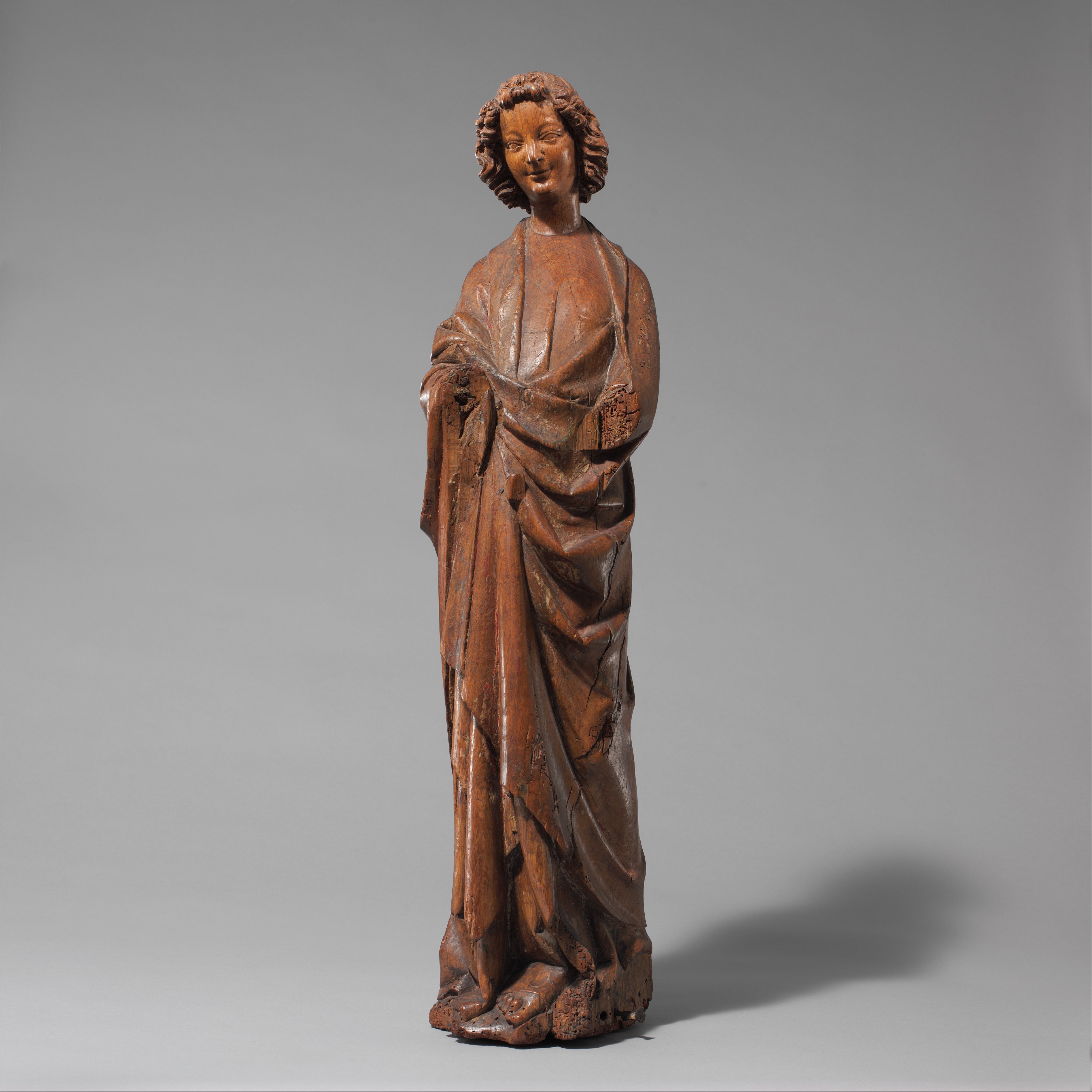
The Altar Angel: A Deconstructive Precedent for SS26 Silhouette Architecture
In the hallowed corridors of Zoey Fashion Laboratory, where the past is perpetually deconstructed to forge the future, the Altar Angel—a singular, one-of-a-pair French artifact in chestnut with traces of paint—emerges not as a relic, but as a radical blueprint for SS26 avant-garde couture. This standalone study transcends its ecclesiastical origins, offering a profound lexicon of structural innovation that challenges the very ontology of garment architecture. The angel, carved from wood and imbued with residual pigment, becomes a metaphor for the transitory nature of form: a static object that whispers motion, a sacred icon that invites profane reinterpretation. For the avant-garde designer, it is a catalyst to reimagine the human silhouette as a site of tension, fragility, and futuristic transcendence.
1. The Chestnut Core: Materiality as a Tactile Manifesto
The choice of chestnut wood—a material historically reserved for robust, enduring objects—is the first provocation. In the context of SS26, this organic medium challenges the hegemony of synthetic fabrics and digital fabrication. The Altar Angel’s wood grain, with its intricate, irregular patterns, suggests a biomorphic surface that can be translated into couture through laser-cut leathers or resin-infused textiles. The traces of paint, faded yet present, evoke a palimpsest of color—a layered narrative that designers can echo via reactive dyes or hand-painted gradients on sculptural silks. This materiality demands a departure from flat, two-dimensional draping. Instead, it advocates for volumetric construction: garments that mimic the angel’s carved folds, where fabric is not draped but carved through strategic pleating, boning, and heat-set manipulations. The chestnut’s density inspires a new weightiness in couture—a deliberate heaviness that grounds the silhouette while allowing for unexpected lightness in negative spaces.
2. Deconstructive Anatomy: Translating Winged Proportions
The Altar Angel’s wings, though absent in this singular piece, are implied through its structural balance. The asymmetrical torsion of the figure—a slight tilt of the head, a shift in the torso—becomes a template for kinetic silhouettes. For SS26, Zoey Fashion Laboratory envisions garments that dismantle the classical shoulder-to-hem line. Instead, we propose a fractured shoulder architecture: one side exaggerated into a cantilevered wing-like extension (constructed from carbon-fiber-reinforced organza), the other reduced to a bare, exposed collarbone. This binary echoes the angel’s celestial duality—earthbound yet aspirational. The torso, inspired by the angel’s carved ribcage, can be reimagined as a corseted exoskeleton with open latticework, allowing glimpses of the body as a living canvas. The lower half, conversely, becomes a voluminous train that mimics the angel’s flowing robe, but deconstructed into asymmetrical panels that float and catch light—a nod to the traces of paint that once adorned the wood.
3. Traces of Paint: Chromatic Storytelling in Structural Innovation
The traces of paint on the Altar Angel are not mere decay; they are a chromatic manifesto for SS26. These residual pigments—faded vermillion, ochre, and gesso white—suggest a futuristic palette of decay. In avant-garde couture, this translates to color as a structural element. Consider a garment where paint is embedded into the fabric through resin casting or 3D-printed color gradients, creating a surface that appears to erode and reconfigure with movement. The angel’s paint traces also inspire a layered transparency: sheer panels of tinted silicone or laser-cut mylar that overlay opaque, sculpted forms, allowing color to emerge only in specific light angles. This approach challenges the traditional garment’s static color application, instead embedding chromatic dynamism into the silhouette’s very architecture. The result is a piece that evolves as the wearer moves, echoing the angel’s own history of pigment loss and exposure.
4. The Singularity of the Pair: Negative Space and Absence as Design
The Altar Angel’s designation as “one of a pair” is its most subversive element. In this standalone context, the absence of its counterpart becomes a design principle. SS26 couture must embrace negative space as a structural necessity. Garments are no longer complete forms but fragments that imply a larger whole. For instance, a jacket may feature a single, exaggerated sleeve that terminates in a sculpted hand, while the opposite side remains bare, inviting the viewer to mentally complete the silhouette. This asymmetric incompleteness mirrors the angel’s lonely existence, creating a dialogue between presence and void. The materiality of chestnut—a wood that can be polished to a mirror-like sheen or left raw—further inspires contrasting finishes: one panel of a skirt polished to a high gloss (reflecting the viewer), another left matte (absorbing light). This duality echoes the angel’s painted and unpainted surfaces, turning the garment into a tactile narrative of loss and preservation.
5. Futuristic Silhouettes: The Altar Angel as a Blueprint for SS26
Drawing from this analysis, Zoey Fashion Laboratory proposes a capsule collection of three archetypal silhouettes, each derived from the Altar Angel’s structural DNA:
- The Cantilevered Wing Silhouette: A one-shouldered top with a rigid, wing-like extension crafted from carbon-fiber mesh and hand-painted resin. The opposite side is a bare, sculpted armature that reveals the collarbone, creating a visual imbalance that demands attention.
- The Carved Torso Silhouette: A corset-like bodice with laser-cut chestnut wood inserts (or wood-grained synthetic alternatives) that form an open lattice over the ribcage. The underlayer is a sheer, reactive-dye fabric that shifts from ochre to vermillion with body heat, mimicking the angel’s paint traces.
- The Asymmetric Train Silhouette: A floor-length skirt with a single, exaggerated train that mimics the angel’s flowing robe. The train is constructed from layered, heat-set organza panels that are painted with a gradient of gesso white to faded red, while the front of the skirt is a stark, unadorned black—a nod to the angel’s missing counterpart.
These silhouettes are not mere replicas but deconstructive reimaginings that prioritize structural innovation over ornament. They challenge the wearer to inhabit a space between sacred and profane, static and kinetic, past and future. The Altar Angel, in its solitary wooden glory, becomes a testament to the power of absence as a design force—a reminder that true avant-garde couture is not about filling space, but about carving it with intention.
Conclusion: The Angel as a Catalyst for Transcendence
The Altar Angel, with its chestnut core and painted traces, is more than a historical artifact; it is a provocation for SS26. It demands that designers abandon the safety of symmetry and embrace the fractured, the incomplete, the ephemeral. For Zoey Fashion Laboratory, this piece is a call to arms: to treat fabric as wood, to carve rather than drape, to let absence speak as loudly as presence. The result is a couture that is architecturally audacious, chromatically volatile, and conceptually profound—a future where garments are not worn but inhabited, where each piece is a standalone study in the art of becoming. The Altar Angel, in its singular glory, offers a path forward: to deconstruct the sacred and rebuild it as the ultimate avant-garde silhouette.