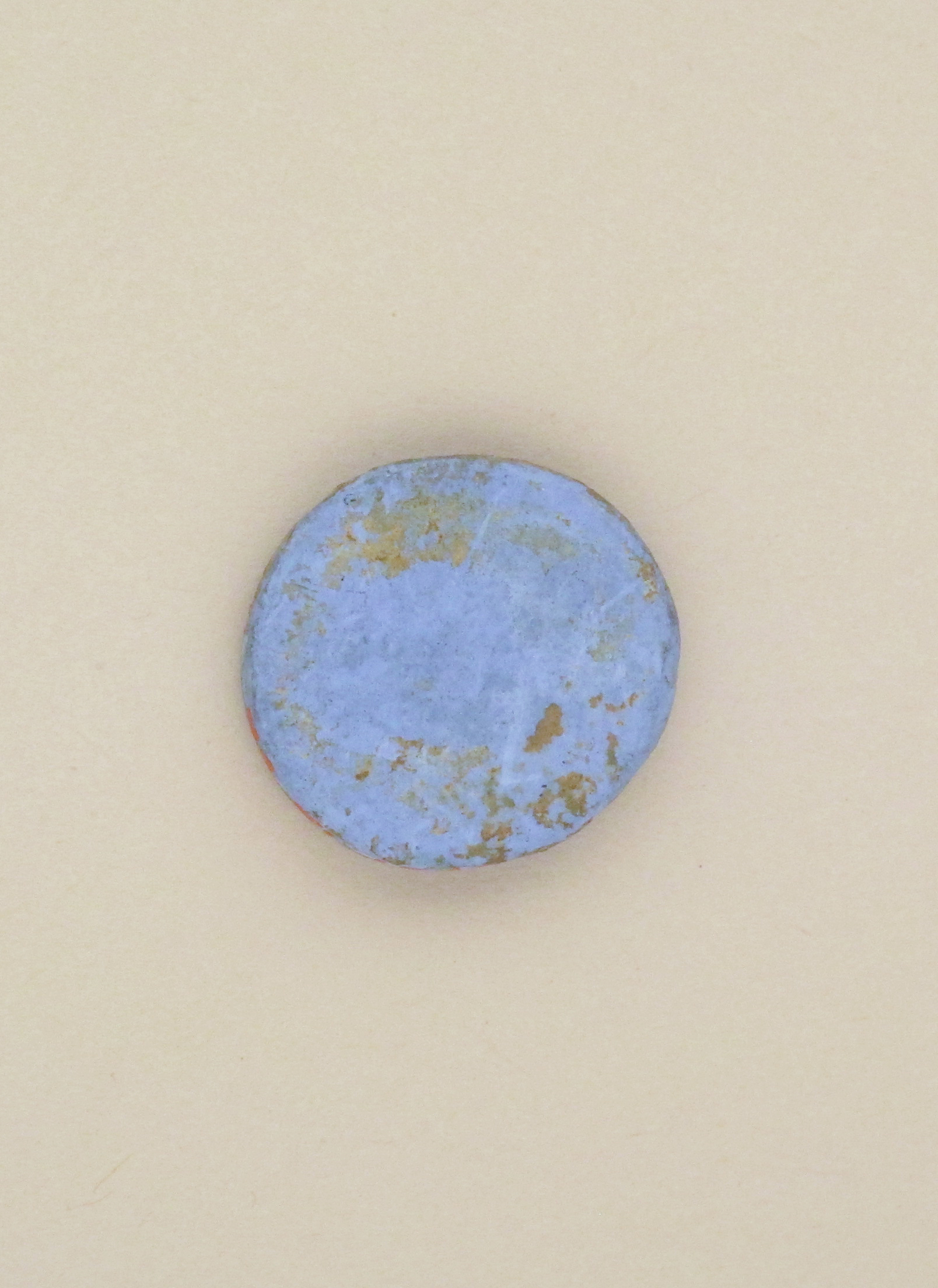
The Bead: A Standalone Avant-Garde Study for SS26
In the lexicon of avant-garde couture, the bead has historically been relegated to the periphery—a decorative afterthought, a shimmering embellishment, a nod to craft heritage. For Zoey Fashion Laboratory’s SS26 collection, we dismantle this hierarchy. The bead, rendered in glazed clay from the Global Frontier, is no longer an accent; it is the architecture itself. This analysis posits the bead as a structural protagonist, a modular unit of futuristic silhouettes, and a material vehicle for deconstructive reinvention. Through a rigorous lens of high-concept garment engineering, we explore how this humble, earth-born object can be elevated into a paradigm of sartorial innovation.
Material Dissonance: Clay as Futuristic Substrate
The choice of glazed clay is a deliberate act of material subversion. In an era dominated by high-tech synthetics, metallic alloys, and bio-fabricated textiles, clay offers a primal, almost archaeological counterpoint. Yet, its transformation through glazing—a process that vitrifies the surface at extreme temperatures—imbues it with a glassy, refractory quality that defies its humble origins. Each bead, fired and polished, becomes a miniature sculpture: a sphere, a cylinder, a truncated cone, or an irregular, organic shard. The glaze, ranging from matte obsidian to iridescent cerulean, creates a chromatic lexicon that shifts under light, evoking both ancient pottery shards and extraterrestrial mineral deposits. This dissonance—between the raw, tactile earthiness of the clay and the reflective, almost digital sheen of the glaze—is the foundational tension of the collection. The bead is not just a unit; it is a material statement of temporal collapse, where the prehistoric meets the post-human.
Structural Innovation: The Bead as Load-Bearing Element
Traditional beadwork relies on thread, string, or wire to create flexible, draping surfaces. For SS26, we reject this paradigm. Instead, the glazed clay beads are mechanically interlocked through a system of custom-fabricated metallic nodes and tension cables. Each bead features a precisely drilled axial channel, allowing for rigid, articulated connections. The result is a garment that functions as a wearable exoskeleton—a lattice of bead modules that can compress, expand, and lock into predetermined silhouettes. This is not draping; it is structural assembly. The beads become load-bearing elements, akin to vertebrae or geodesic nodes, capable of supporting the garment’s form without a fabric substrate. A jacket, for instance, is composed of hundreds of bead units arranged in a honeycomb pattern, with each bead acting as a pivot point. The wearer can adjust the tension, transforming a sculpted cocoon into a flared, aerodynamic shape. This modularity redefines the relationship between body and garment, turning the act of dressing into an engineering process of parametric configuration.
Futuristic Silhouettes: From Modular Armor to Fluid Architecture
The SS26 silhouettes emerge from this bead-based structural system. Three key archetypes define the collection:
The Geodesic Cocoon: A form-fitting bodice and skirt constructed from interlocked spherical beads. The glaze creates a continuous, mirror-like surface that reflects and distorts the surrounding environment. The silhouette is both armored and organic, evoking a chrysalis or a satellite dish. The beads are arranged in a gradient of sizes, from 5mm at the waist to 15mm at the hem, creating a subtle, sweeping volume that mimics the flare of a bell skirt. This is not a soft drape; it is a rigid, self-supporting architecture that stands away from the body, creating negative space and a sense of suspended animation.
The Tension Membrane: A series of elongated, cylindrical beads are strung on elastic cables, forming a web-like structure that wraps the torso. The beads are spaced at precise intervals, allowing the cables to stretch and snap back, creating a dynamic, second-skin silhouette. When the wearer moves, the beads shift, creating a moiré pattern of light and shadow. This silhouette is kinetic and reactive, a living surface that responds to the body’s gestures. The glaze’s reflective quality amplifies this effect, making the garment appear to shimmer and pulse like a digital screen.
The Fractured Column: An asymmetric gown built from irregular, shard-like beads. These are not uniform; each is a unique, hand-sculpted form, glazed in a gradient from deep charcoal to translucent white. They are mounted on a hidden, flexible spine of carbon fiber rods, allowing them to tilt and rotate independently. The silhouette is a deconstructed column—a series of broken, vertical lines that suggest both classical statuary and post-apocalyptic debris. The beads clatter and shift with each step, creating an auditory layer of sonic architecture, a percussive counterpoint to the visual form.
Deconstructive Aesthetics: The Bead as Disruption
Avant-garde deconstruction often involves cutting, fraying, and exposing the garment’s inner workings. Here, the bead itself embodies deconstruction. Each bead is a discrete unit, a fragment of a larger whole. The garment is never fully complete; it is always in a state of assembled dislocation. The joints between beads are left visible, the metallic nodes and tension cables exposed as functional ornament. This transparency reveals the garment’s anatomy, turning the engineering into the aesthetic. The glaze, with its glossy surface, reflects the wearer’s skin and the surrounding space, creating a visual fragmentation that dissolves the boundary between body, garment, and environment. The bead, in its multiplicity, becomes a tool for disrupting the monolithic silhouette, replacing it with a constellation of discrete, interacting forms.
Global Frontier: Clay as Cultural and Planetary Signifier
The origin of the material—the Global Frontier—is not a geographical location but a conceptual space where traditional craft and speculative futures converge. The clay is sourced from multiple regions—terra-cotta from the Mediterranean, porcelain from East Asia, earthenware from the Americas—each with its own firing and glazing heritage. Yet, the beads are not cultural artifacts; they are transcultural modules, stripped of their original context and reimagined as elements of a new, globalized aesthetic. The glazing process, inspired by both ancient Raku techniques and industrial ceramic engineering, creates a surface that is simultaneously ancient and futuristic. This duality positions the bead as a bridge between the human hand and the machine, between the earth’s crust and the digital ether. The collection is not about representing a culture; it is about abstracting material knowledge into a universal, avant-garde language.
Conclusion: The Bead as Paradigm Shift
In SS26, Zoey Fashion Laboratory proposes a radical redefinition of the bead. No longer a mere embellishment, it becomes a structural unit of futuristic couture, a material system that enables modularity, tension, and dynamic silhouette. The glazed clay bead, with its interplay of earth and light, offers a new vocabulary for garment architecture—one that is simultaneously primal and post-human, tactile and reflective, fragmented and coherent. This is not a collection about decoration; it is a manifesto for bead-based structuralism, where every unit is a load-bearing element in a wearable, ever-evolving sculpture. The bead, in its singularity and its multiplicity, is the future of form.