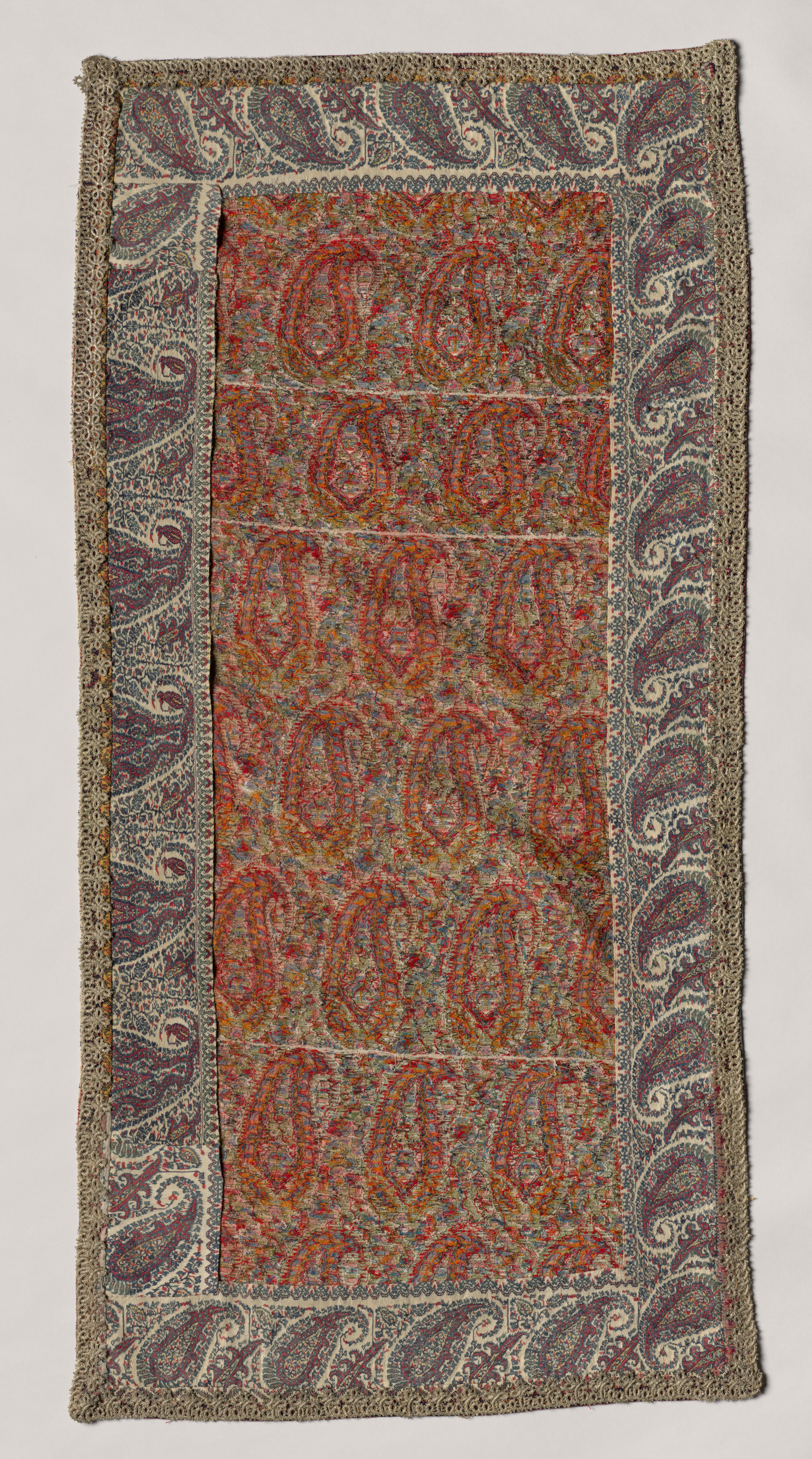
Deconstructing the Avant-Garde: A Technical and Stylistic Analysis of the Isfahan Silk Tapestry Lining
At Zoey Fashion Lab, the act of deconstruction is not merely about dismantling garments—it is about unearthing the latent narratives woven into every fiber. The subject of this analysis is a rare Silk Textile with Goatherds in a Landscape, originating from Isfahan, Iran. This piece, executed in twill tapestry with a double-locked structure, presents a unique challenge and opportunity. Referenced under the code "New DNA Strand," this lining material is destined for an Avant-garde collection. We will dissect its technical construction, cultural DNA, and stylistic potential to reveal how a pastoral Iranian landscape can be reborn as a radical, contemporary design element.
Technical Mastery: The Twill Tapestry and Double-Locked Structure
The foundation of this textile’s significance lies in its sophisticated weave. The twill tapestry technique is a hallmark of sophisticated Persian silk weaving, particularly from the Safavid-era workshops of Isfahan. Unlike simple tapestry weaves that use a plain-weave ground, twill tapestry introduces a diagonal ribbing effect. This is achieved by passing the weft threads over one warp and under two (or a similar staggered pattern), creating a fabric that is not only visually rich but also possesses enhanced drapability and a subtle, shifting surface luster.
More critical to its avant-garde application is the double-locked joinery. In conventional tapestry, where color blocks meet, the weft threads are often left as slits, requiring later stitching. The double-locked technique, however, interlaces the weft threads of adjacent color areas at their meeting point. This creates a seamless, interlocking boundary that is structurally robust and visually crisp. For a lining intended to be seen and experienced, this means the intricate scene of goatherds and landscape will maintain its integrity without fraying or distortion, even under the stress of movement. This technical precision allows the fabric to function as a structural element rather than mere decoration, a core principle in avant-garde construction.
Cultural and Visual DNA: The Pastoral Narrative
The imagery itself—goatherds in a landscape—is a window into the Persian cultural psyche. This is not a static, idealized landscape; it is a dynamic scene of pastoral life, reflecting a deep connection to nature, nomadic traditions, and the cyclical rhythms of the seasons. The goatherd, a figure of humble authority, guides his flock through a terrain that is both bounteous and untamed. The silk medium elevates this everyday scene into a luxurious, almost mythical tableau.
For the New DNA Strand reference, we must view this imagery as genetic code. The landscape is not a backdrop but a living system of lines, colors, and textures. The undulating hills become geometric waves; the clustered goats form organic, repeating motifs; the goatherd’s staff is a vertical accent. The color palette—likely featuring deep indigos, verdant greens, warm ochres, and cream—holds the key to its radical reinterpretation. This is not a nostalgic relic; it is a data set of pattern, rhythm, and hue that can be extracted, mutated, and recombined.
Stylistic Application: The Avant-Garde Lining as a Revealed Secret
The decision to use this textile as a lining is a masterstroke of avant-garde strategy. In traditional fashion, lining is hidden, functional, and often plain. Here, we invert that logic. The lining becomes the primary narrative, the secret revealed only through movement or deliberate exposure. This aligns with the avant-garde principle of détournement—the act of turning a familiar object or technique against its original purpose to create a new, critical meaning.
Consider the following design vectors for this material:
1. Structural Exposure: The outer garment—perhaps a deconstructed blazer or a sculptural coat—is cut with asymmetric seams, slashes, or transparent panels that deliberately expose the silk lining. The pastoral scene is not hidden but framed, like a fragment of a lost world displayed in a contemporary gallery. The double-locked tapestry ensures that these exposed edges are clean, finished, and durable, turning the cut line into a design feature.
2. Inversion of Hierarchy: The outer fabric is deliberately austere—perhaps a raw, unbleached linen or a technical black nylon. This creates a stark contrast. The opulent silk, with its intricate narrative, becomes the true luxury, hidden within a shell of apparent simplicity. This challenges the wearer and observer to question what is valuable and where meaning resides.
3. Kinetic Narrative: As the wearer moves, the lining is glimpsed—a flash of a goatherd’s robe, the curve of a hill, the texture of a goat’s fleece. The garment becomes a cinematic experience, revealing its story in fragments. This aligns with the avant-garde fascination with time, motion, and the incomplete. The double-locked weave ensures that these fleeting images are sharp and legible, not blurred by loose threads.
4. Deconstruction of the Pastoral: The landscape itself can be abstracted. By cutting the lining into radical shapes—a curved yoke, a trailing hem, a detached sleeve—the idyllic scene is fragmented. The goatherd is separated from his flock; the hills are spliced. This mirrors the avant-garde critique of nostalgia and authenticity. The pastoral is not preserved but reconstructed as a commentary on our fractured relationship with nature and tradition.
Material and Sensory Considerations
From a practical standpoint, the silk twill tapestry offers exceptional hand feel and breathability, making it ideal for a lining that will be in direct contact with the skin. The double-locked structure provides the necessary tensile strength to withstand the stress of being sewn into a garment with unconventional seams. However, the fabric’s weight and drape must be balanced with the outer material to avoid bulk. The avant-garde designer should consider cutting on the bias to maximize the fluidity of the silk, allowing the landscape to flow organically around the body.
Furthermore, the color fastness of the natural dyes used in historical Persian silks is generally excellent, but care must be taken in construction to prevent abrasion against darker outer fabrics. A lightweight, breathable interlining between the tapestry and the outer shell may be advisable to protect the silk’s surface and maintain its luster.
Conclusion: The Lining as a Manifesto
The Silk Textile with Goatherds in a Landscape from Isfahan is far more than a decorative remnant. Under the New DNA Strand reference, it becomes a foundational element for a radical design philosophy. Its technical excellence—the twill tapestry and double-locked weave—provides the structural integrity required for avant-garde construction. Its cultural imagery offers a rich, complex narrative that can be fragmented, inverted, and recontextualized. By positioning this masterpiece as a lining, Zoey Fashion Lab subverts expectations, turning the hidden into the revealed, the traditional into the transgressive. This is not a garment; it is a wearable manifesto, where the pastoral past is spliced into the DNA of a future that is both critical and beautiful.