The Sampler Reconfigured: Deconstructive Cartography for SS26
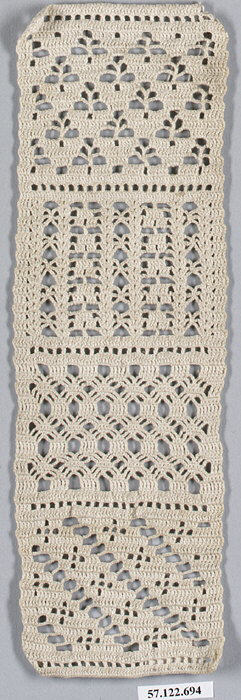
The sampler, a historical artifact of feminine domesticity and meticulous handcraft, undergoes a radical transmutation in the hands of Zoey Fashion Laboratory. No longer a mere practice square or a sentimental keepsake, the Global Frontier Sampler emerges as a cartographic tool for the post-human body. This 800-word analysis deconstructs how cotton and crochet—materials tethered to tradition—become the primary agents of a futuristic silhouette characterized by structural innovation and deconstructive aesthetics. The SS26 collection positions the sampler not as a nostalgic relic, but as a blueprint for wearable architecture that interrogates the boundaries between the organic and the synthetic, the handmade and the hypermodern.
Material Dialectics: Cotton as Digital Canvas, Crochet as Structural Code
The choice of cotton is a deliberate provocation. In an era dominated by bio-fabricated polymers and smart textiles, cotton’s natural, breathable, and biodegradable properties are recontextualized as a luddite luxury. However, this is not a retreat into pastoralism. The cotton is treated with a micro-ceramic finish that grants it a subtle, iridescent sheen, mimicking the screen of a digital device. Each stitch becomes a pixel, and each sampler square becomes a data cell. The crochet technique, historically rooted in lace-making and doilies, is weaponized as a structural exoskeleton. The loops and chains are not decorative; they are load-bearing. By varying the tension and gauge—from ultra-fine thread to chunky, rope-like yarn—the crochet creates zones of transparency and opacity, density and void. This is not mere texture; it is a topographical map of the garment’s internal logic. The sampler’s grid, traditionally a uniform square, is distorted into asymmetrical polygons, echoing the fractured geometries of digital glitch art. The cotton’s softness is tempered by the crochet’s rigidity, producing a dialectic of comfort and armor.
Silhouette as Algorithm: The Deconstructed Sampler Dress
The cornerstone of the SS26 study is the Deconstructed Sampler Dress, a piece that subverts the human form through algorithmic draping. The silhouette is neither A-line nor sheath; it is a non-linear trajectory. The garment begins as a series of individual sampler squares—each 10x10 cm—that are not sewn together but crocheted into place using a single, continuous thread. This thread acts as a structural spine, allowing the squares to rotate and pivot independently. The result is a silhouette that shifts with every movement, creating a kinetic, fractal-like form. The dress’s hemline is not a straight line but a Bézier curve that rises sharply on one side and trails into a train on the other, mimicking the path of a stylus on a digital tablet. The waistline is eliminated; instead, the crochet grid creates a negative space corset, where the body is defined by the absence of fabric. The sleeves are asymmetrical: one is a full-length, tightly crocheted tube that encases the arm like a second skin, while the other is a series of dangling sampler fragments that flutter like digital ticker tape. This asymmetry is not random; it is a data visualization of the global frontier—a map of migration patterns, trade routes, and cultural cross-pollination.
Structural Innovation: The Crochet Exoskeleton and Pneumatic Pockets
Beyond silhouette, the structural innovation lies in the integration of pneumatic pockets within the crochet matrix. These pockets, woven directly into the sampler squares, are inflated with a micro-compressor hidden in the garment’s lining. When activated, they expand the crochet grid into a rigid, architectural shell. This transforms a soft, draped dress into a standalone exoskeleton capable of standing without a wearer. The inflation is controlled by a sensor that reads the wearer’s biometric data—heart rate, temperature, movement—and adjusts the pressure accordingly. In a state of rest, the pockets deflate, and the garment collapses into a flat, foldable square. This is transformative fashion as performance art. The crochet itself is re-engineered using a double-loop stitch that creates a honeycomb-like structure, distributing tension evenly and allowing for extreme flexibility without losing shape. The cotton threads are twisted with a fine, biodegradable polymer filament, giving them a memory effect—the garment returns to its pre-set silhouette after being crumpled. This is not just clothing; it is a living structure that breathes, expands, and contracts.
The Global Frontier Narrative: Samplers as Cultural Cartography
The Global Frontier origin is not a geographical location but a conceptual space—the liminal zone between the physical and the digital, the local and the planetary. Each sampler square is embroidered with a binary code that translates a folk pattern from a different culture—Andean, Berber, Celtic, Japanese—into a sequence of 0s and 1s. The crochet threads are dyed with natural pigments sourced from these regions: indigo from West Africa, cochineal from Mexico, madder root from Europe. The palette is intentionally muted—dusty blues, rust reds, ochre yellows—to emphasize the materiality over spectacle. The garment’s construction is a collaborative algorithm: the wearer can rearrange the squares by unclipping the crochet loops, effectively reprogramming the silhouette. This is a direct critique of fast fashion’s rigid, pre-determined forms. The sampler becomes a decentralized system, a metaphor for the global frontier where no single culture dominates. The garment’s final form is never fixed; it is an ongoing negotiation between the wearer, the material, and the digital code embedded within.
Conclusion: The Sampler as Futuristic Ruin
In this standalone avant-garde study, the sampler is no longer a nostalgic artifact but a futuristic ruin—a relic of a yet-to-come civilization that values craft as code and tradition as technology. The cotton-crochet dialectic produces a silhouette that is both ancient and alien, soft and structural, static and kinetic. The SS26 collection does not propose a new uniform for the future; it proposes a new grammar for making form. The sampler, in its deconstructed state, becomes a portable architecture that maps the body onto the landscape of the global frontier. Zoey Fashion Laboratory has not merely designed a garment; it has engineered a philosophical object that challenges the very definition of clothing. The sampler is dead; long live the sampler.