Deconstructing the Shōji: A Structural Blueprint for SS26
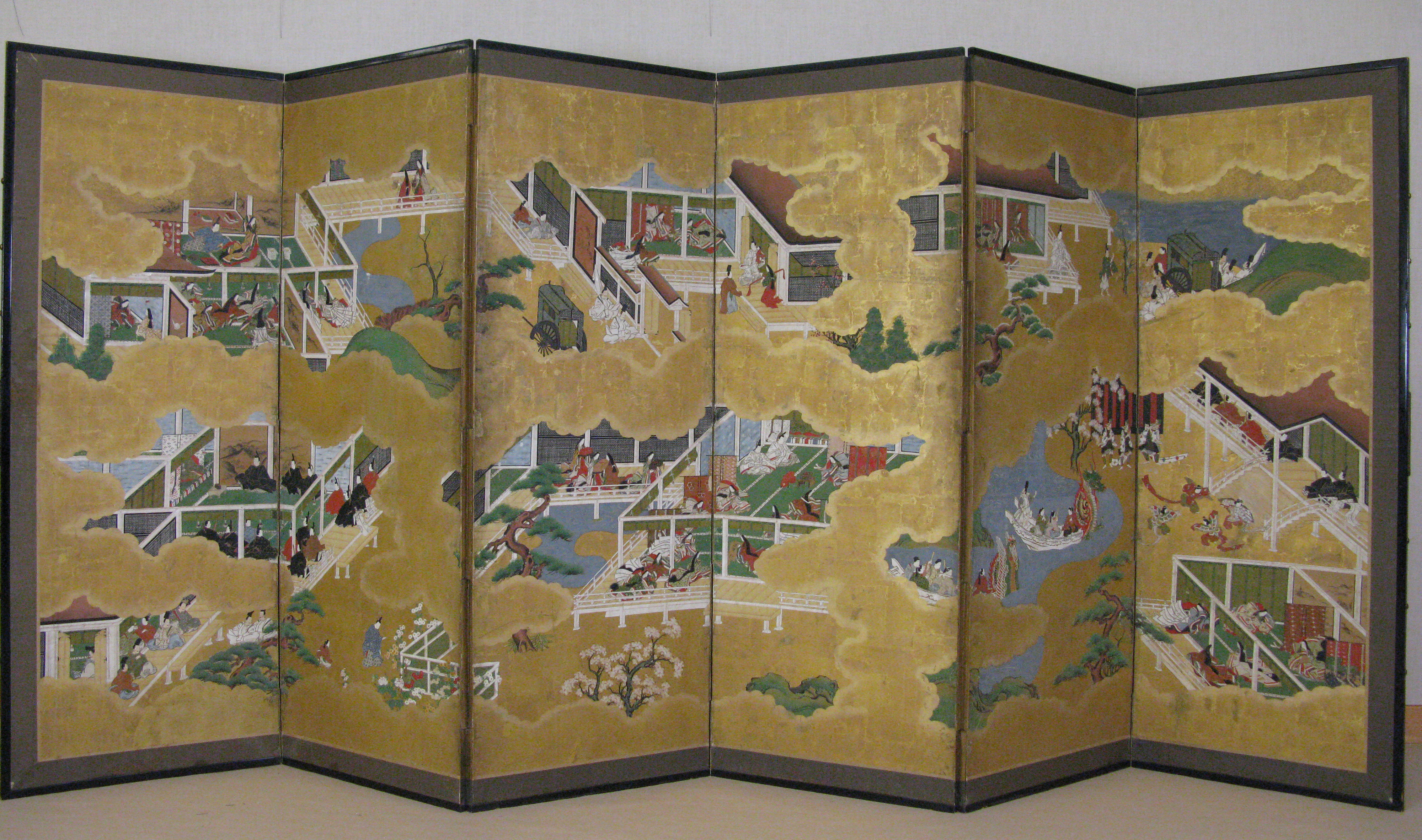
The seminal Genji Monogatari Emaki (Tale of Genji Scrolls), and their later screen interpretations, present not merely narrative but a radical philosophy of space and perception. For Zoey Fashion Laboratory’s SS26 inquiry, these artifacts are not inspiration but a direct architectural schematic. The six-panel byōbu (folding screen) is our foundational matrix. Its operation—simultaneously a barrier, a revealer, a connector, and a spatial organizer—informs our core silhouette principle: articulated planar construction. We move beyond the garment as a singular form to conceive it as a series of interconnected planes, akin to screen panels, hinged and articulated at the body’s own architectural points—shoulder, spine, hip, knee.
The Silhouette as Shinden-zukuri: Layered Volumes and Negative Space
The Heian-era aesthetic, characterized by miyabi (refined elegance) and mono no aware (the pathos of things), was expressed through immense, layered robes (jūnihitoe) that created a horizontal, flowing silhouette, obscuring the human form. Our SS26 deconstruction inverts this. The layers are not soft textiles but engineered planes of technical mesh, laser-sintered polymer, and metallic memory cloth. Each layer is a "room" in the shinden-zukuri (palace architecture) of the body, defining negative space as deliberately as the screens and curtains (kichō) defined space in Genji's world. A gown may feature a rigid, outward-flaring polymer hip structure—a modern mo (train)—that creates a dynamic, floating volume, while the torso is defined by sheer, minimal mesh, creating a stark contrast between density and void, opacity and revelation.
The concept of kakushi (the hidden) is paramount. In the screens, narrative climaxes occur behind blinds, with only a sleeve or a corner of a robe hinting at the scene. Our structural innovation employs kinetic paneling and parametric apertures. Garments feature rigid exoskeletal elements that, with movement, slide or pivot to reveal glimpses of skin, an underlayer of iridescent foil, or biometric data patterns projected onto a base layer. The wearer controls the narrative of reveal, becoming both the subject and the curator of the gaze.
Material Alchemy: Ink, Gold, and Paper as Technological Prophecy
The source material’s medium—ink, color, gold on paper—is a triad we transmute into futuristic material science. "Ink" translates as liquid-absorbent, color-shifting smart textiles that react to body temperature or atmospheric humidity, creating the blurred, emotive washes (bokashi) of the original. A sleeve may graduate from indigo to silver as the day progresses, a living document of wear.
"Gold" is not mere embellishment but a functional, conductive element. We employ gold-leaf-laminated circuits embedded within garments, capable of emitting low-level illumination or capturing ambient sound to translate it into subtle vibrational patterns—a haptic representation of "hearing" a scene from the tale. This gold traces seams and panel edges like the kiri-kane (cut gold leaf) technique, outlining our architectural forms with luminous data.
Most critically, "paper" is reimagined as shape-memory alloys and bio-polymers engineered to possess a paradoxical memory and fragility. Pieces are designed with precise, origami-like folds that can be "collapsed" for transit and spring back into their intended, formidable silhouette. This embodies the screen itself—foldable, portable, yet defining a majestic, temporary space.
Thematic Code: Emotion as Structural Variable
The Genji is a study in emotional climate. Our SS26 collection encodes these climates into structural variables. The "Aware" (Pathos) Silhouette utilizes asymmetrical, gravity-defying forms that appear to melt or soften at one edge, achieved through graded laser-cutting and thermo-forming. The "Kōdō" (Incense) Fragrance-Release System involves micro-encapsulated scent pods within layered textiles, activated by friction between moving panels, making the garment an olfactive performance. The "Yūgen" (Mysterious Depth) Proposition employs deep, recessed layers and optical fabrics that create illusions of infinite depth within a garment's void spaces, much like the obscured gardens behind screen panels.
This analysis posits the Zoey Fashion Laboratory SS26 collection not as clothing but as wearable, speculative architecture. It is an inhabitable critique of form, narrative, and privacy, derived from the planar logic and emotional intelligence of a millennia-old masterpiece. We do not recreate Heian dress; we extract its spatial and philosophical DNA to engineer a future where garments are intimate, kinetic environments. The body does not merely wear the piece; it activates and completes its narrative circuit, becoming the final, essential panel in a living, folding screen.