Deconstructing the Msimsim: A Technical and Aesthetic Analysis for Zoey Fashion Lab
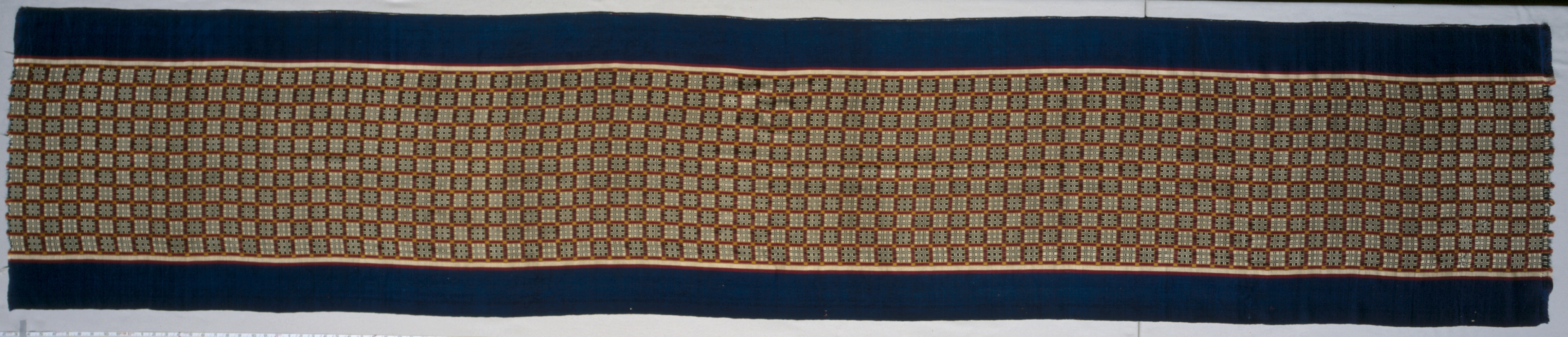
The subject of this analysis is a wall hanging, locally referred to as a “msimsim,” originating from the weavers of Tétouan, Morocco. This piece, rendered in silk and natural dye, presents a unique opportunity for Zoey Fashion Lab. It is not merely a textile artifact; it is a New DNA Strand for avant-garde design. This deconstruction examines the material, technical, and stylistic elements that define this piece, and proposes how these elements can be re-coded for a contemporary, high-fashion context.
Material Provenance and the Silk-Dye Nexus
The primary material, silk, is a defining characteristic of Tétouan’s luxury weaving tradition. Unlike the wool or cotton common in other Moroccan regions, silk denotes status, ritual, and a connection to trans-Saharan trade routes. For Zoey Fashion Lab, the silk’s intrinsic luster and drape are not merely aesthetic; they are structural. The weave’s density, likely a compound weave or a variant of a double-cloth, creates a fabric that is both rigid enough for a wall hanging and fluid enough to suggest garment construction. The dye is equally critical. Natural dyes—derived from madder (red), indigo (blue), saffron (yellow), and pomegranate (black)—are not fixed in the modern sense. They are living. They shift in hue with light, age, and humidity. This instability is not a flaw; it is a design asset. For avant-garde application, this means the garment or installation piece will evolve over time, developing a patina that tells a story. The chemical interaction between the silk’s protein structure and the mordants used (often alum or iron) creates a unique chromatic depth that synthetic dyes cannot replicate. This is a New DNA Strand because it introduces a temporal, organic element into a static design.
Technical Weave Analysis: The Msimsim as Structural Blueprint
The term “msimsim” in Moroccan weaving often refers to a small, intricate pattern, frequently a repeating diamond or lozenge motif. However, in this avant-garde context, we must deconstruct the weave itself. The Tétouan weaver employs a warp-faced or weft-faced technique, creating a surface where one set of threads dominates. The pattern is not printed; it is woven into the very structure. This is a critical distinction for Zoey Fashion Lab. The negative space between the motifs is as important as the motifs themselves. In the wall hanging, the weaver has likely used a supplementary weft technique to create the pattern, leaving the ground weave unadorned. This creates a tactile topography—raised areas of silk against a flat, lustrous background. For a garment, this suggests a new kind of 3D surface design. Imagine a coat where the pattern is not appliqué but integral to the fabric’s structure, creating pockets of light and shadow that shift with the wearer’s movement. The New DNA Strand here is the concept of structural patterning—where the design is not an overlay but the fabric’s skeleton.
Avant-Garde Stylistic Re-coding: From Wall to Body
The wall hanging, by its nature, is a static, two-dimensional object. The avant-garde intervention is to transform it into a wearable sculpture. The key is to preserve the rigidity and tension of the hanging while introducing the fluidity and volume of the body. The pattern’s symmetry, typical of Islamic geometric design, can be deconstructed. A Zoey Fashion Lab garment might take the central motif of the msimsim and fracture it, using the silk’s natural dye to create a gradient that appears to bleed from one panel to the next. The fringe often found at the bottom of such hangings is not a decorative afterthought; it is a structural release. In a garment, this fringe could become a dramatic hemline, a sleeve edge, or a series of dangling threads that mimic the weaver’s own warp ends. This is a direct translation of the weaving process into the garment’s finish.
The New DNA Strand: A Conceptual Framework
To frame this wall hanging as a New DNA Strand is to recognize that its value lies not in its preservation but in its mutation. The original piece is a double helix of material (silk, dye) and technique (warp/weft, supplementary patterning). Zoey Fashion Lab’s role is to unzip this helix and recombine its elements. For example:
- Silk + Structural Rigidity: Use the silk’s natural stiffness (achieved through the weave density) to create architectural shoulders or a stand-up collar that mimics the wall hanging’s flat plane.
- Natural Dye + Temporal Shift: Design a garment that is intentionally unstable. The dye will fade or shift in specific areas (e.g., under the arms, at the neckline) over time, creating a personalized, living garment.
- Pattern + Negative Space: Use laser-cutting or hand-slashing to remove the ground weave, leaving only the supplementary weft motifs. This creates a lattice that is both transparent and structural—a direct descendant of the wall hanging’s pattern.
Practical Application for Zoey Fashion Lab
The wall hanging should be digitally scanned at a high resolution to capture the weave’s density and the dye’s colorimetry. However, the tactile data—the hand-feel, the weight, the tension—must be documented through physical samples. The New DNA Strand is not a digital replica; it is a material translation. The weaver’s technique can be replicated on a modern jacquard loom, but with modifications. For instance, the supplementary weft can be replaced with a metallic thread or a recycled plastic filament, creating a dialogue between tradition and sustainability. The natural dye can be stabilized or left to age, depending on the desired narrative.
In conclusion, the Tétouan msimsim wall hanging is not a relic. It is a blueprint for a new kind of fashion—one that values process over product, structure over surface, and time over trend. For Zoey Fashion Lab, this piece offers a New DNA Strand that can be woven into the very fabric of avant-garde design, creating garments that are not just worn, but inhabited. The weaver’s hand is still present, but it now guides a new generation of makers.