Deconstructing the Mummy Bundle "Mask": A Paracas Textile Analysis for Zoey Fashion Lab
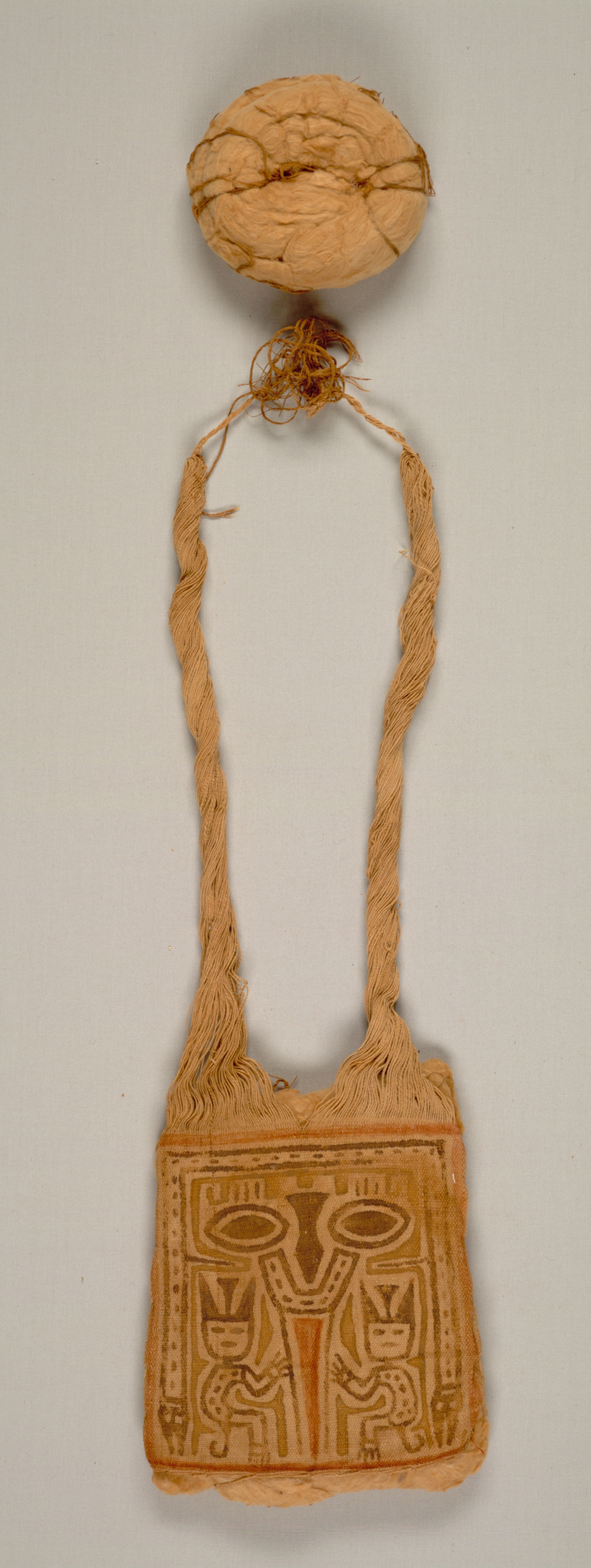
As the Chief Fabric Deconstructionist for Zoey Fashion Lab, I present this technical and conceptual analysis of the Mummy Bundle "Mask" from the Paracas culture of Peru’s South Coast, Ica Valley, Ocucaje site. This artifact, a cotton and pigment plain-weave textile dating from approximately 300–100 BCE, represents a pivotal intersection of ancient craftsmanship and avant-garde design potential. The reference, "Archive Resonance," frames this object as a silent witness to cultural collision and aesthetic fusion—a concept that aligns with Zoey Fashion Lab’s mission to excavate historical textiles for radical reinterpretation. Below, I dissect the mask’s materiality, construction, and symbolic resonance, proposing how its Paracas style can inform a deconstructed, avant-garde fashion narrative.
Materiality and Technical Construction
The mask is constructed from native Peruvian cotton, a material that predates the Inca and Moche civilizations, cultivated in the Ica Valley’s arid coastal environment. The cotton fibers are naturally pigmented in shades of cream, tan, and brown, reflecting the region’s limited dye palette. The plain weave—a simple over-under interlacing—creates a dense, durable fabric that served both funerary and ceremonial purposes. However, the mask’s technical significance lies in its pigment application. Mineral and plant-based pigments, including ochre, carbon black, and indigo-derived blues, were applied post-weave, likely through resist-dyeing or direct painting. The pigment is not fully integrated into the fibers; rather, it sits on the surface, creating a fragile, textured layer that flakes with age. This ephemeral quality is critical for deconstruction: the mask’s visual identity is as much about loss as it is about presence.
From a deconstructionist perspective, the plain weave becomes a canvas for disruption. Zoey Fashion Lab can exploit the tension between the fabric’s structural integrity and the pigment’s fragility. By isolating the cotton base from its painted surface, we can expose the weave’s raw geometry—its warp and weft threads, its subtle irregularities from hand-spinning. The mask’s original function as a funerary covering, meant to preserve the identity of the deceased, is subverted when the pigment is allowed to crack, peel, or be partially removed. This process mirrors the avant-garde technique of “unmaking,” where a garment’s decay becomes its aesthetic statement.
Paracas Style and Cultural Resonance
The Paracas style, particularly from the Ocucaje site, is characterized by geometric abstraction, stylized anthropomorphic figures, and symbolic motifs representing feline, avian, and serpentine deities. The mask likely featured a central face—perhaps a shaman or warrior—with concentric eyes, stepped noses, and radiating headdresses. These motifs were not merely decorative; they encoded cosmological beliefs about death, rebirth, and the spirit world. The mask served as a portal, connecting the living community with the ancestors. For Zoey Fashion Lab, this symbolic layering offers a rich vocabulary for avant-garde expression. The mask’s abstraction—its reduction of human features to geometric forms—anticipates modernist and postmodernist art movements. By extracting these motifs and recontextualizing them as textile patterns, we can create a dialogue between ancient Andean cosmology and contemporary fashion’s obsession with identity and fragmentation.
Archive Resonance’s reference to “cultural collision” is particularly apt here. The Paracas culture emerged from earlier Chavín traditions, but its isolation on the arid South Coast fostered a distinct visual language. When Spanish colonizers encountered such textiles in the 16th–17th centuries, they were often repurposed or destroyed, their meanings lost or overwritten. The mask thus becomes a palimpsest—a surface inscribed with multiple histories. Zoey Fashion Lab can amplify this collision by juxtaposing Paracas motifs with industrial materials like synthetic mesh, metallic threads, or recycled plastics. The result is a garment that embodies temporal dissonance: the ancient handwoven cotton against the machine-made, the organic pigment against the chemical dye.
Avant-Garde Applications: Deconstruction as Narrative
For Zoey Fashion Lab, the Mummy Bundle “Mask” is not a relic to be preserved but a source code for radical garment construction. The avant-garde approach demands that we deconstruct the mask’s form, function, and materiality to generate new meanings. Consider the following applications:
1. Fragmented Silhouettes: The mask’s original shape—a rectangular or oval textile folded to cover the face—can be reimagined as a modular garment component. By cutting the plain weave into irregular geometric panels, we can create a deconstructed hood, cape, or bodice that references the mask’s protective function while exposing the wearer’s body. The pigment’s flaking pattern becomes a design element, with intentional “wear” marks mimicking archaeological decay.
2. Motif Extraction and Distortion: The Paracas stepped eye and serpentine line can be digitized and printed onto modern fabrics using reactive dyes. However, true deconstruction requires distortion: overlapping motifs at oblique angles, scaling them beyond recognition, or rendering them as negative spaces cut from the fabric. This process mirrors the cultural erasure and reinterpretation that Archive Resonance describes, where original meanings are lost but new ones emerge.
3. Material Hybridity: The mask’s cotton and pigment combination is inherently unstable. Zoey Fashion Lab can exploit this by bonding the ancient cotton with contemporary materials like latex, silicone, or heat-sensitive films. When the garment is worn, the bonded layers shift, crack, or reveal hidden textures, creating a kinetic surface that changes with movement. This instability becomes a metaphor for cultural memory—always present but never fixed.
4. Ritual and Performance: The mask’s funerary context suggests a ritualistic use. Avant-garde fashion can reclaim this by designing garments that are activated through performance. For example, a dress made from plain-weave cotton panels, painted with Paracas motifs, can be “unveiled” during a runway show by tearing away outer layers to reveal the mask’s geometric core. The act of deconstruction becomes a narrative of discovery and loss.
Conclusion: From Archive to Avant-Garde
The Mummy Bundle “Mask” from the Ocucaje site is a testament to the Paracas people’s technical mastery and cosmological depth. For Zoey Fashion Lab, it offers a blueprint for deconstructing not just a textile, but the very idea of cultural heritage. By isolating the plain weave, fragmenting the pigment, and recontextualizing the motifs, we can create garments that speak to the fragility of identity and the persistence of memory. Archive Resonance’s framing of “cultural collision” is not a loss but an opportunity—a chance to weave ancient Andean aesthetics into the avant-garde’s ongoing dialogue with history, materiality, and the human form. As Chief Fabric Deconstructionist, I recommend that Zoey Fashion Lab pursue this analysis as a foundation for a capsule collection that honors the mask’s origins while propelling it into a future of radical, deconstructed fashion.