Deconstructing the Portative Organ: A Futuristic Silhouette Analysis for SS26
Introduction: The Organ as Architectural Armature
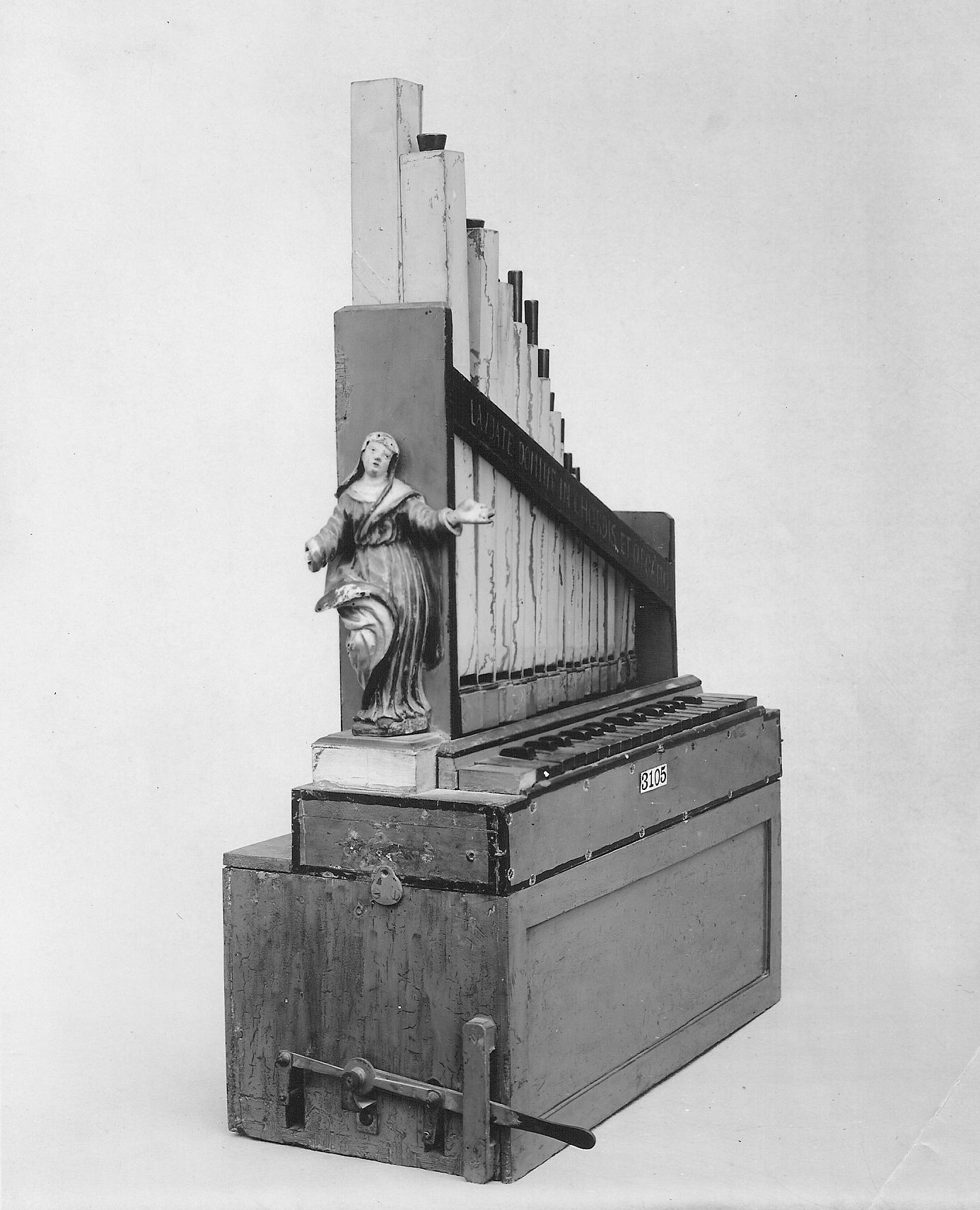
The portative organ, a diminutive yet sonorous instrument of medieval and Renaissance provenance, has long been relegated to the annals of historical musicology. Yet, for the discerning avant-garde curator, its structural logic—a vertical, hand-carried chassis of pipes, bellows, and keys—presents a profound opportunity for sartorial translation. In the context of Zoey Fashion Laboratory’s SS26 collection, the portative organ is not a literal costume but a generative architectural armature. Its German and French origins (the *Portativ* and *orgue portatif*, respectively) offer a dialectic of precision and lyricism, which we shall deconstruct into a lexicon of futuristic silhouettes and structural innovation.
This analysis posits that the portative organ’s core components—the vertical pipe array, the manual keyboard, and the bellows—can be abstracted into wearable, kinetic forms that challenge the static nature of conventional garments. The resulting pieces are not merely clothing; they are portable soundscapes, where silhouette becomes a visual score for the body’s movement in space.
Structural Innovation I: The Pipe Array as Vertical Exoskeleton
The most immediate visual analog in the portative organ is the vertical pipe system. In traditional instruments, these pipes are arranged in a graduated, tiered formation, creating a dynamic interplay of height and mass. For SS26, we propose a futuristic exoskeleton that reinterprets this arrangement through modular, lightweight materials. Imagine a garment where carbon-fiber rods, sheathed in iridescent silicone or liquid-crystal-infused polymers, rise from a central spinal chassis. These “pipes” are not uniform; they vary in length and diameter, mimicking the organ’s graduated pitch.
The structural innovation lies in their articulation. Each vertical element is connected via magnetic or pneumatic joints, allowing the wearer to adjust the silhouette in real-time. A static, columnar form can be reconfigured into an asymmetric, cantilevered fan—a direct reference to the organ’s variable wind pressure. The materiality is critical: we recommend a composite of aerogel-infused textiles for the base, providing thermal regulation and near-weightlessness, while the exoskeletal pipes are crafted from 3D-printed titanium alloys, anodized in spectral gradients from deep violet to electric cyan. This chromatic shift references the French tradition’s emphasis on ornamentation, while the German precision of the engineering ensures structural integrity.
Structural Innovation II: The Keyboard as Digital Interface
The manual keyboard of the portative organ, typically a single row of keys, offers a second layer of structural innovation. In the avant-garde context, this becomes a tactile, interactive surface embedded into the garment’s architecture. We propose a wearable digital interface integrated into a waistband or shoulder harness, where each “key” is a pressure-sensitive capacitive sensor. These are not functional for sound production in the traditional sense; instead, they control the garment’s kinetic elements—adjusting the angle of the pipe exoskeleton, modulating the opacity of smart fabrics via electrochromic layers, or even triggering subtle vibrations through haptic feedback motors.
The silhouette here shifts from static to performative. A garment with a keyboard interface allows the wearer to choreograph their own silhouette in real-time, transforming from a rigid, architectural form into a fluid, undulating second skin. The materiality of the keyboard itself must be both durable and sensorial: we propose etched brass or copper keys set into a flexible, woven circuit board substrate, reminiscent of the organ’s metallic resonance. This fusion of the tactile and the digital echoes the German organ-building tradition’s emphasis on mechanical precision, while the French aesthetic adds a layer of decorative finesse through hand-painted enamel details on each key.
Structural Innovation III: The Bellows as Pneumatic Silhouette
The bellows, the organ’s lifeblood, are perhaps the most radical source of inspiration. In the portative organ, the bellows are operated by one hand while the other plays, creating a constant negotiation of pressure and release. For SS26, we translate this into a pneumatic garment system that inflates and deflates to alter the silhouette dynamically. Imagine a cape or a series of pleated panels connected to a miniature, wearable air pump (concealed in a belt or backpack). The bellows are no longer a functional tool but a sculptural volume that can expand into a dramatic, cocoon-like shape or collapse into a sleek, streamlined form.
The structural challenge is in the material selection. We recommend a multilayered laminate of ripstop nylon and thin, flexible polyurethane bladders, with internal baffles to control airflow and prevent overinflation. The seams are reinforced with laser-welded thermoplastic polyurethane, ensuring airtight integrity. The aesthetic effect is one of controlled chaos: as the wearer moves, the bellows panels pulse and shift, creating a visual rhythm that mimics the organ’s breath. The German influence is evident in the engineering precision, while the French sensibility manifests in the organic, almost Baroque curves of the inflated forms. The palette for these pneumatic elements should be monochromatic—matte black or ivory—to emphasize the play of light and shadow across the expanding surfaces.
Silhouette Synthesis: The Body as Instrument
The synthesis of these three structural innovations—the exoskeletal pipes, the interactive keyboard, and the pneumatic bellows—results in a radically new silhouette for the avant-garde body. The wearer is no longer a passive canvas but an active performer, controlling volume, shape, and visual rhythm. The overall form is both architectural and organic: a vertical core (the pipes) is softened by the expanding bellows, while the keyboard interface provides a focal point for interaction. The silhouette can be reconfigured from a sharp, angular column (pipes fully extended, bellows deflated) to a rounded, biomorphic cocoon (pipes retracted, bellows inflated).
This duality echoes the portative organ’s own history: a portable instrument that could be carried from court to cathedral, adapting to its acoustic environment. In the SS26 context, the garment adapts to the social and spatial environment, creating a dialogic relationship between the wearer and the space. The futuristic imperative is clear: we are moving beyond static, decorative fashion into a realm of responsive, kinetic couture. The portative organ, in its humble historical form, has provided the blueprint for this evolution.
Conclusion: A New Lexicon for Avant-Garde Couture
The portative organ, when stripped of its musical function and reimagined through the lens of structural innovation, offers a definitive paradigm for SS26. Its German and French lineages converge in a design language that marries precision engineering with lyrical, organic forms. The resulting garments are not mere homages but functional, futuristic instruments in their own right—portable architectures that redefine the relationship between body, garment, and environment. Zoey Fashion Laboratory’s avant-garde mandate is to push the boundaries of what clothing can be; the portative organ, in this analysis, becomes a catalyst for that transformation. The future of couture is not silent—it breathes, it pulses, and it plays.