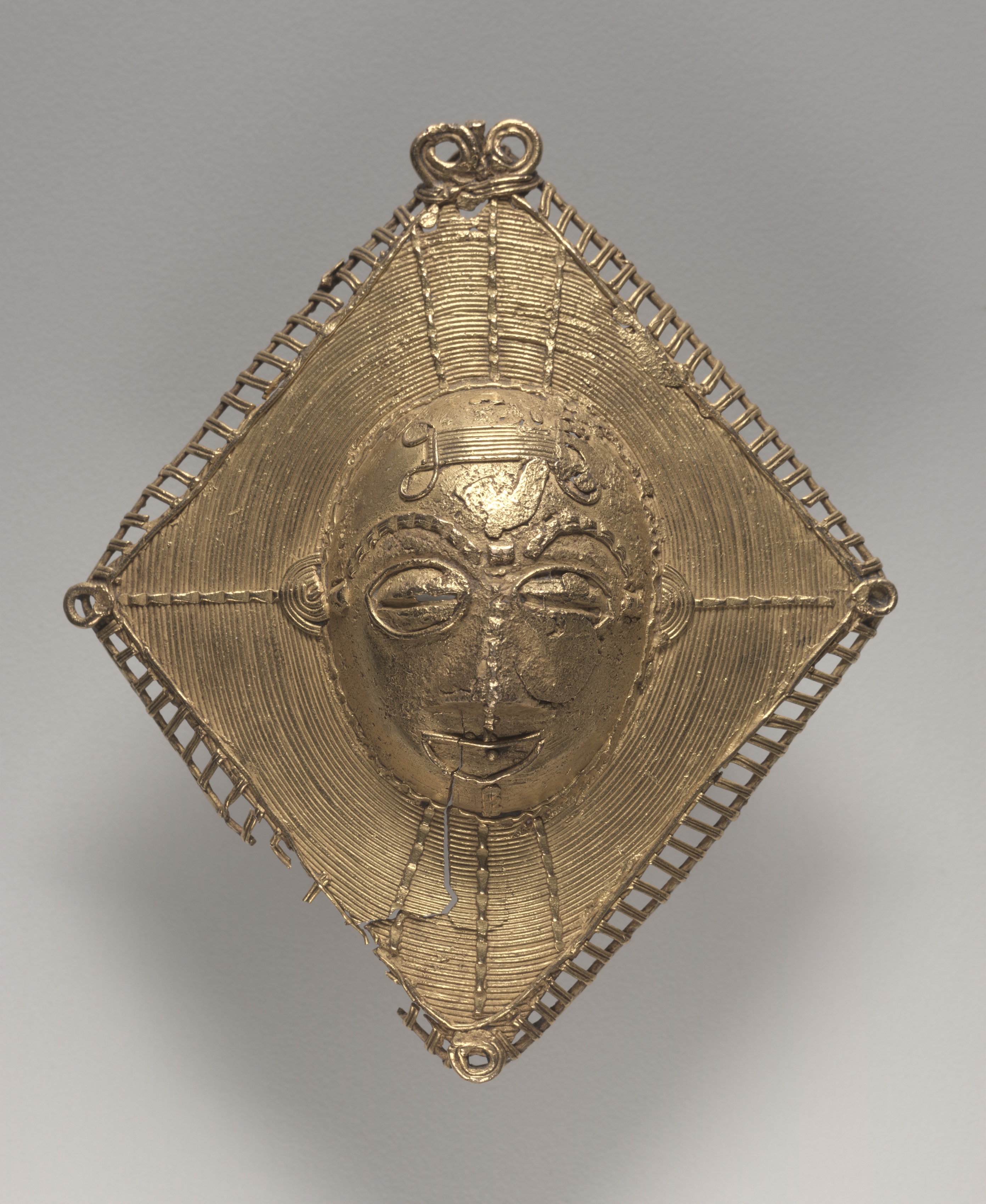
Deconstructing the Avant-Garde: The Baule Face in Diamond Pendant
At Zoey Fashion Lab, the act of deconstruction is not merely an analytical exercise; it is a creative methodology. We dismantle artifacts to understand their material, cultural, and symbolic architecture, only to reassemble them as avant-garde statements. The subject of this analysis—a pendant featuring a Face in Diamond, originating from West Africa, specifically Côte d'Ivoire, and attributed to a Baule-style goldsmith—presents a profound challenge. This is not a simple ornament. It is a compressed archive of identity, power, and spiritual resonance, rendered in gold. Our deconstruction will navigate its technical execution, its cultural lineage, and its radical potential within the context of the Archive Resonance fragment: “一面是光洁银镜上以黄金镶嵌的纷繁棕叶纹,另一面是冰冷石棺板上以浮雕诉说的生命叙事——《Mirror with Split-Lea....” This duality—the mirror’s reflective surface versus the sarcophagus’s narrative depth—forms the conceptual framework for our analysis.
Technical Precision: The Goldsmith’s Avant-Garde Hand
The pendant’s technical execution is a masterclass in lost-wax casting and granulation, techniques perfected by Baule artisans over centuries. The Face in Diamond is not a literal portrait but an abstraction: a stylized visage set within a geometric, diamond-shaped frame. The goldsmith’s hand has rendered the face with minimal lines—a sharp nose, elongated eyes, and a small mouth—yet the effect is intensely expressive. This is a form of minimalist maximalism, where the preciousness of gold is subverted by the economy of form. The diamond shape itself is a deliberate choice; it echoes the Baule preference for geometric purity, but also introduces a tension. In Western avant-garde jewelry, the diamond cut often signifies structural rigor, but here, it cradles a face that is both mask and mirror. The surface is burnished to a high polish, yet the texture of the gold—slightly granular from the casting process—retains a tactile, almost organic quality. This is a pendant that demands to be touched, its story felt as much as seen.
The technical process also reveals a dialogue with the Archive Resonance fragment. The “光洁银镜” (bright silver mirror) is inverted here: the gold surface acts as a reflective plane, but one that absorbs rather than returns a clear image. The face becomes a distorted reflection, a ghost in the metal. The “纷繁棕叶纹” (intricate palm leaf patterns) are absent in this piece, but their absence is telling. The Baule goldsmith has chosen to focus on the human face, not the natural world, suggesting a shift from decorative abundance to existential inquiry. The pendant’s back, likely left unfinished or with a simple loop, mirrors the “冰冷石棺板” (cold sarcophagus slab) of the reference—a flat, unadorned surface that grounds the piece in mortality. This duality is the key to its avant-garde power: it is both a living mask and a funerary plaque.
Cultural Resonance: The Baule Soul as Archive
To understand the pendant’s avant-garde potential, we must decode its cultural DNA. The Baule people of Côte d’Ivoire are renowned for their goldwork, which historically served as a marker of status, wealth, and spiritual protection. The Face in Diamond is likely a representation of a goli or blolo bla/blolo bian spirit spouse—a supernatural partner that guides the living. This is not a portrait of a mortal; it is a threshold figure, a being that exists between worlds. The diamond shape reinforces this liminality: it is a container for the sacred, a geometric vessel for the soul. In Baule cosmology, gold is not merely decorative; it is a conductor of nyama (life force). The pendant, worn close to the chest, would have acted as a talisman, mediating between the wearer and the spirit realm.
This cultural function resonates with the Archive Resonance’s “生命叙事” (life narrative). The pendant is a frozen story—a face that has witnessed generations, rituals, and transitions. Yet, it is also a cold archive, like the sarcophagus. The Baule goldsmith has encoded a narrative of belonging, but one that is now displaced. For Zoey Fashion Lab, this displacement is not a loss but an opportunity. The avant-garde thrives on dislocation. The pendant, removed from its original context, becomes a symbolic fragment that can be recontextualized. It is no longer a spirit spouse but a commentary on identity in the globalized age. The face, abstracted and framed in diamond, challenges the viewer to see beyond the exotic. It asks: Whose face is this? Whose story is being told?
Avant-Garde Synthesis: The Mirror and the Sarcophagus
The Archive Resonance fragment provides the perfect lens for synthesis. The “一面是光洁银镜” (one side is a bright silver mirror) represents the surface of fashion—the polished, the reflective, the consumable. The pendant, with its high-gold finish, fits this description. It is an object of desire, a luxury item that catches the light. But the “另一面是冰冷石棺板上以浮雕诉说的生命叙事” (the other side is a life narrative told in relief on a cold sarcophagus slab) reveals the pendant’s deeper function. The face, carved in gold, is a relief that speaks of life, death, and continuity. The pendant is a portable sarcophagus, carrying the memory of a culture that is both alive and endangered. The Baule people continue to produce goldwork, but the global art market has commodified their symbols. The pendant, as an avant-garde object, must acknowledge this tension.
Zoey Fashion Lab proposes a radical reinterpretation: the pendant as a critical talisman. We would deconstruct its form by introducing a split—a literal or conceptual fracture. Imagine the diamond shape halved, one side polished to a mirror finish, the other left rough, with the face emerging from the raw gold. This would literalize the Archive Resonance’s duality. The mirror side reflects the wearer, making them complicit in the object’s story. The rough side reveals the process, the hand of the goldsmith, the cultural weight. Alternatively, we might encase the pendant in a transparent resin block, turning it into a specimen—a fossil of a living tradition. This would evoke the “冰冷石棺板” while preserving the face’s vitality. The pendant would no longer be worn but observed, forcing the viewer to confront the ethics of adornment.
Conclusion: The Face as Threshold
The Face in Diamond pendant is a threshold object. It stands at the intersection of Baule spirituality, Western materialism, and avant-garde deconstruction. For Zoey Fashion Lab, it is not a relic to be revered but a catalyst for inquiry. Its technical mastery reminds us that the avant-garde is not about novelty alone; it is about recontextualizing mastery. Its cultural resonance challenges us to honor origins while embracing transformation. And its dialogue with the Archive Resonance—the mirror and the sarcophagus—offers a blueprint for fashion that is both reflective and profound. In wearing or displaying this pendant, one does not simply accessorize. One becomes a custodian of a narrative that is both ancient and urgently contemporary. The face in the diamond is not a decoration; it is a question. And in the avant-garde laboratory, questions are the most precious materials of all.