Deconstructing the Tilting Suit: A 16th Century Armor Reimagined as Avant-Garde DNA
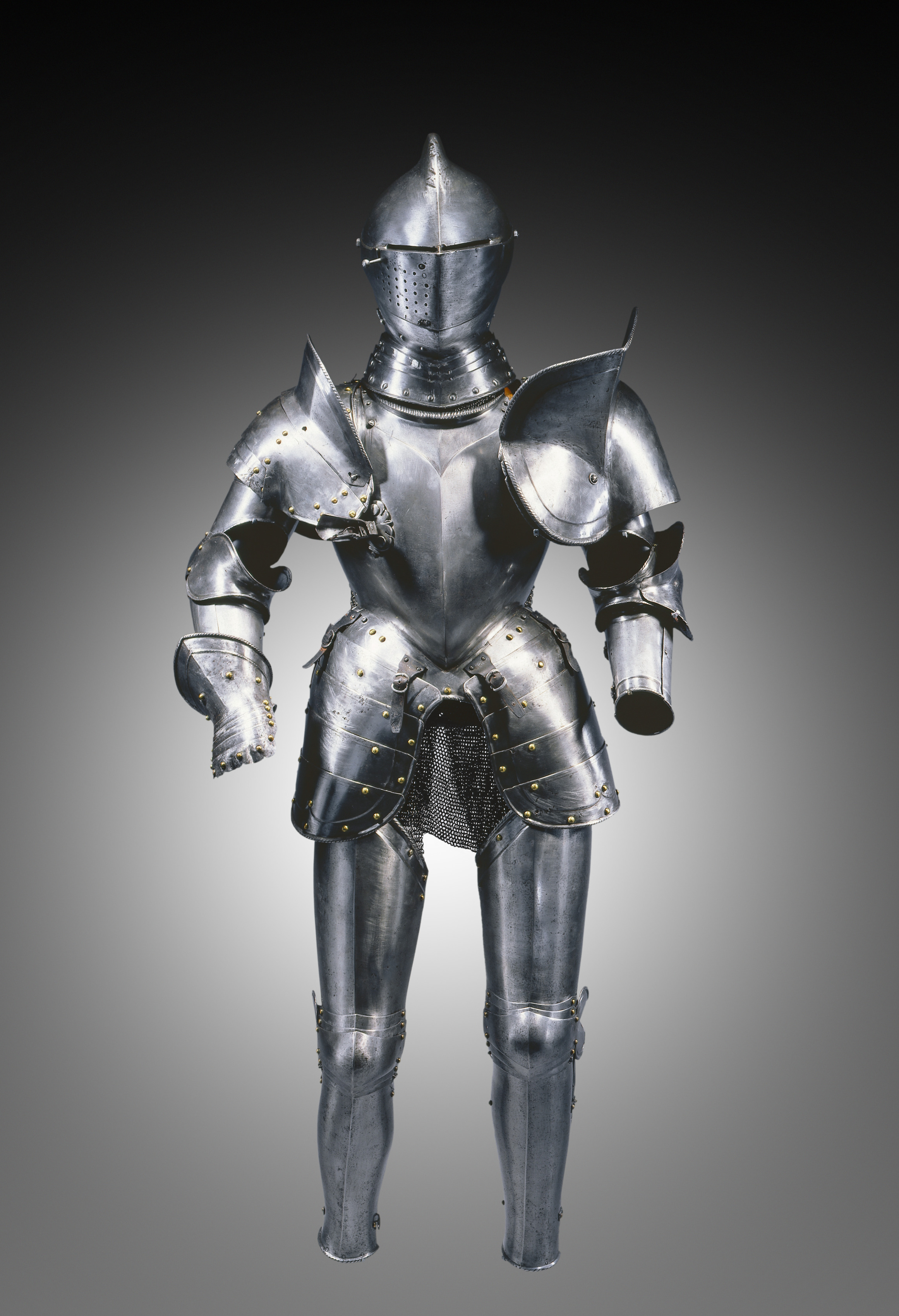
At Zoey Fashion Lab, the role of the Chief Fabric Deconstructionist is to interrogate the very essence of materiality, form, and historical context. The subject before us—a composite Tilting Suit from 16th century South Germany, constructed from steel, leather straps, and brass rivets—presents a unique challenge. This object is not merely a relic of martial history; it is a fossilized gesture of protection, status, and kinetic power. By framing this artifact as a New DNA Strand, we unlock its potential for avant-garde reinterpretation. This analysis will dissect the suit’s technical anatomy, historical semantics, and structural logic, proposing a radical re-fabrication that preserves its genetic code while mutating it into a contemporary, wearable narrative.
I. The Historical Anatomy: Steel as Second Skin
The 16th century South German tilting suit was a masterpiece of ergonomic engineering. Unlike field armor designed for combat, the tilting suit was specialized for the joust—a sport of controlled, violent spectacle. Its defining features include a heavy, asymmetrical breastplate (often reinforced on the left side to absorb lance impacts), a fixed helm with narrow vision slits, and articulated joints that allowed for limited, powerful movements. The materials—steel (for impact resistance), leather straps (for adjustable tension and suspension), and brass rivets (for structural integrity and decorative flourish)—form a symbiotic system. The steel plates are the exoskeleton; the leather is the connective tissue; the brass rivets are the DNA base pairs, holding the entire sequence together.
From a deconstructionist perspective, this suit is a paradox. It is both a cage and a catalyst. It restricts the wearer’s field of vision and range of motion, yet it enables an act of extreme physical risk and social performance. The asymmetry is not a flaw but a deliberate code—a single-sided vulnerability that dictates the wearer’s posture and narrative. The polished steel reflects light and status, while the leather, darkened by sweat and age, tells a story of use. The brass rivets, often stamped with maker’s marks, are signatures of a guild system that prized both function and artistry.
II. The New DNA Strand: Translating Steel into Textile
To treat this tilting suit as a New DNA Strand is to view its components as genetic markers that can be isolated, amplified, and recombined. In biological terms, DNA is a sequence of instructions. Here, the instructions are: protection, asymmetry, tension, spectacle, and limitation. The avant-garde challenge is to translate these instructions from rigid steel into flexible, tactile, and conceptually charged materials.
1. Steel → Structural Weaves and Metallic Polymers
The steel breastplate’s curvature and weight can be reimagined through three-dimensional weaving using high-tensile metallic threads or carbon fiber filaments. Instead of a solid plate, we propose a lattice exoskeleton—a web of interlocking, laser-cut steel elements bonded to a flexible polyurethane base. This preserves the visual and protective DNA of the original while allowing for articulation. The left-side reinforcement becomes a sculptural, asymmetrical overlay of woven brass and steel fibers, reminiscent of chainmail but with a modern, skeletal transparency.
2. Leather Straps → Tension Systems and Second-Skin Harnesses
The original leather straps were functional, cinching the armor to the body. In our avant-garde strand, these become adjustable, architectural harnesses made from vegetable-tanned leather bonded with memory-foam cores. They are not merely fasteners but active structural elements that create a dynamic silhouette. The straps can be tightened or loosened to alter the garment’s shape, echoing the jousting suit’s ability to adapt to the wearer’s body. The brass rivets are replaced with magnetic or modular brass couplings, allowing the wearer to reconfigure the harness in real-time—a literal expression of mutable DNA.
3. Brass Rivets → Biometric Fasteners and Light-Emitting Nodes
The rivets are the punctuation marks of the suit. In our re-fabrication, they become smart, programmable nodes—small brass capsules containing LED fibers or bio-sensors. These nodes can pulse with light in response to the wearer’s heartbeat or motion, transforming the armor from a static object into a responsive interface. The rivet pattern is preserved but now serves as a circuit board, connecting the steel lattice and leather harness into a single, living garment. This is the DNA strand’s coding region—where history meets technology.
III. Avant-Garde Silhouette: The Asymmetry of Power
The avant-garde interpretation of this tilting suit must honor its most radical feature: asymmetry. In traditional fashion, symmetry often equates to balance and harmony. But the tilting suit’s asymmetry is a statement of purpose—a declaration of a specific, violent action. Our design amplifies this by creating a one-shouldered, sculptural form that drapes over the left side of the torso, leaving the right side exposed or wrapped in a sheer, metallic organza. This is not a flaw but a deliberate provocation: the wearer becomes a living sculpture, half-armored, half-vulnerable.
The helm, traditionally a closed visor, is reimagined as a transparent polycarbonate mask with a single, horizontal slit. This slit is lined with micro-LEDs that project a beam of light, referencing the jousting lance’s trajectory. The leather straps extend down the back, forming a harness that suspends a train of steel-linked fabric, mimicking the horse’s caparison of the original tournament. The brass rivets are clustered at the shoulder and hip, creating focal points of weight and tension.
IV. The Garment as Performative Narrative
In the context of Zoey Fashion Lab, this tilting suit is not a costume but a wearable performance piece. The wearer becomes a protagonist in a narrative of power, risk, and transformation. The steel lattice catches light differently with every movement; the leather harness creaks and adjusts; the brass nodes pulse with biometric data. This is the New DNA Strand in action—a living archive of a 16th century code, expressed through 21st century materials and technology.
The deconstruction process has revealed that the tilting suit’s true DNA is not in its materials but in its relationship to the body and space. It is a tool for altering human capability and perception. Our avant-garde re-fabrication preserves this core while discarding the literal steel. The result is a garment that is simultaneously armor, art, and interface—a mutation that honors its origin while evolving into something unrecognizable.
V. Conclusion: The Code of the Tilting Suit
The 16th century South German tilting suit, when viewed as a New DNA Strand, offers a blueprint for avant-garde fashion that is both historically grounded and radically forward. Its steel, leather, and brass are not dead materials but living instructions for protection, asymmetry, and spectacle. By deconstructing these elements and recombining them through weaving, smart textiles, and modular design, Zoey Fashion Lab can produce a garment that is a true genetic mutation—a tilting suit for the modern body, ready to joust with the future. This is not nostalgia; it is evolution. The code is written, and we are the ones to read it.