The Byzantine Paradox: Silk as a Structural Vector for Avant-Garde Couture
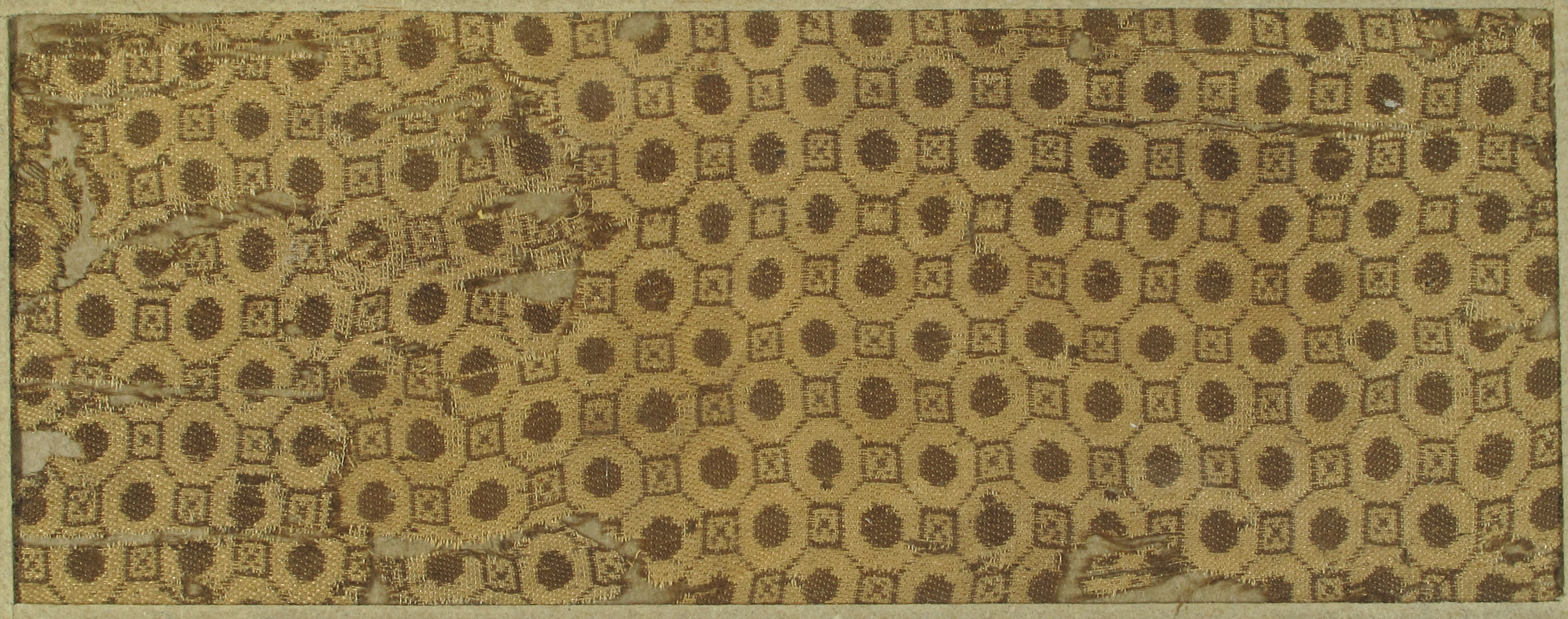
In the lexicon of haute couture, silk has long been synonymous with drape, fluidity, and a certain classical sensuality. Yet, for Zoey Fashion Laboratory’s SS26 collection, we reject this historical passivity. We propose a radical recalibration of Byzantine silk—not as a fabric of surrender to the body, but as a dynamic, load-bearing architectural membrane. The Byzantine empire’s mastery of sericulture, with its rigidly patterned silks and gold-wrapped threads, offers a profound starting point for deconstructive innovation. By extracting the structural logic of Byzantine iconography—its verticality, its hieratic symmetry, its tension between opulence and austerity—we can engineer silhouettes that exist in a state of perpetual futurity. This is not a revival; it is a transmutation. Silk, in our hands, becomes a material of controlled chaos, a substrate for volumetric defiance and kinetic architecture.
Deconstructing the Sacred: From Tesserae to Tension
The Byzantine aesthetic is fundamentally a mosaic of fragments—gold tesserae, lapis lazuli, and vermilion glass arranged to form a transcendent whole. For SS26, we translate this logic into a micro-architectural approach to silk. Traditional Byzantine silk, often woven with intricate geometric and floral patterns, is here deconstructed into its elemental threads and recombined as a tensile grid. We employ a technique of laser-cut tension panels and strategic voiding, where silk is layered over a substructure of bioplastic or carbon-fiber armatures. The result is a silhouette that appears to float, suspended between the physical and the ethereal. A sleeveless tunic, for instance, is not a garment but a spatial cage—a series of silk-wrapped hoops that hover millimeters from the skin, creating a negative space that breathes with the wearer’s movement. The Byzantine icon’s halo becomes a literal structural ring, a circular yoke of tensioned silk and lightweight metal, radiating outward to define the shoulders and upper torso. This is not ornament; it is engineering.
Futuristic Silhouettes: The Vertical Imperative
Byzantine art is characterized by an emphatic verticality—figures are elongated, hieratic, and weightless, as if reaching toward the divine. For SS26, we harness this vertical imperative through compressed-bustle structures and asymmetric volumetric draping. Silk, typically associated with horizontal folds, is here manipulated into spiraling, gravity-defying columns. Consider a floor-length gown constructed from a single, continuous length of Byzantine-patterned silk. Rather than falling to the ground, it is anchored at the waist and then twisted into a helical scaffold that rises to the shoulder, creating a silhouette reminiscent of a DNA helix or a baroque column. The fabric’s natural luster is amplified by embedded micro-LED filaments that pulse with a low, ambient light, referencing the mosaics’ gold leaf while hinting at a digital future. The hemline is not a line but a fractal edge—scalloped, asymmetrical, and laser-frayed to mimic the tessellation of a mosaic. The body becomes a living icon, but one that is constantly shifting, dissolving, and reforming.
Structural Innovation: Silk as a Tensegrity System
The most radical departure in this analysis is the reimagining of silk as a component of a tensegrity system. Tensegrity—where isolated compression elements are held in tension by a continuous network of cables—is a principle more commonly found in architecture and aerospace engineering. For SS26, we apply this to a garment’s internal skeleton. Silk ribbons, dyed in Byzantine purples and ochres, serve as the tensile cables, while 3D-printed, lattice-like nodes (inspired by the geometry of Byzantine crosses) act as compression struts. The result is a jacket that does not sit on the shoulders but floats around them, held in place by a web of silk and resin. The sleeves are not attached; they are suspended, capable of independent motion. This creates a silhouette that is both rigid and fluid, a paradox that defines the avant-garde. The back panel of a coat, for instance, is a tension grid of silk and carbon rods, forming a butterfly-like exoskeleton that expands and contracts with the wearer’s breath. This is not merely a garment; it is a kinetic sculpture, a wearable algorithm of balance and force.
Material Alchemy: The Future of Byzantine Silk
To achieve these futuristic silhouettes, we must also innovate at the material level. Traditional Byzantine silk, while sumptuous, lacks the structural integrity required for our deconstructive ambitions. For SS26, we collaborate with textile engineers to develop hybrid silk composites. These are created by electrospinning silk fibroin with a conductive polymer, resulting in a fabric that is both lightweight and responsive. The silk is then thermoformed into permanent, sculptural folds—a technique that mimics the drape of marble but retains the softness of fiber. We also introduce reactive dyes that shift color with temperature or ambient light, referencing the way Byzantine mosaics change hue depending on the angle of candlelight. A single garment might transition from deep Tyrian purple to a luminous gold as the wearer moves from shadow to sun, creating a living surface that is both ancient and hyper-modern. The finishing process involves laser-etching of micro-patterns—repeating crosses, interlocking circles, and stylized leaves—that serve as structural perforations, reducing weight while adding visual complexity.
Conclusion: The Silhouette as Icon
In this standalone avant-garde study for Zoey Fashion Laboratory, Byzantine silk is not a relic to be preserved but a material to be deconstructed and re-encoded. The SS26 collection proposes a future where couture is a form of wearable architecture, where the body is a node in a tensegrity network, and where the sacred geometries of the past are repurposed for a speculative tomorrow. The futuristic silhouette is not about exaggeration for its own sake; it is a structural necessity born from the tension between history and innovation. By treating silk as a load-bearing element, we challenge the very definition of fabric. The Byzantine icon’s static, frontal gaze becomes a dynamic, multi-axial presence. The garment is no longer a second skin; it is a spatial intervention, a kinetic mosaic, and a prophecy of form. This is couture as a laboratory for the possible, where every thread is a line of code, and every silhouette is a manifesto.