Deconstructing the Bishop's Mantle: An Avant-Garde Analysis for Zoey Fashion Lab
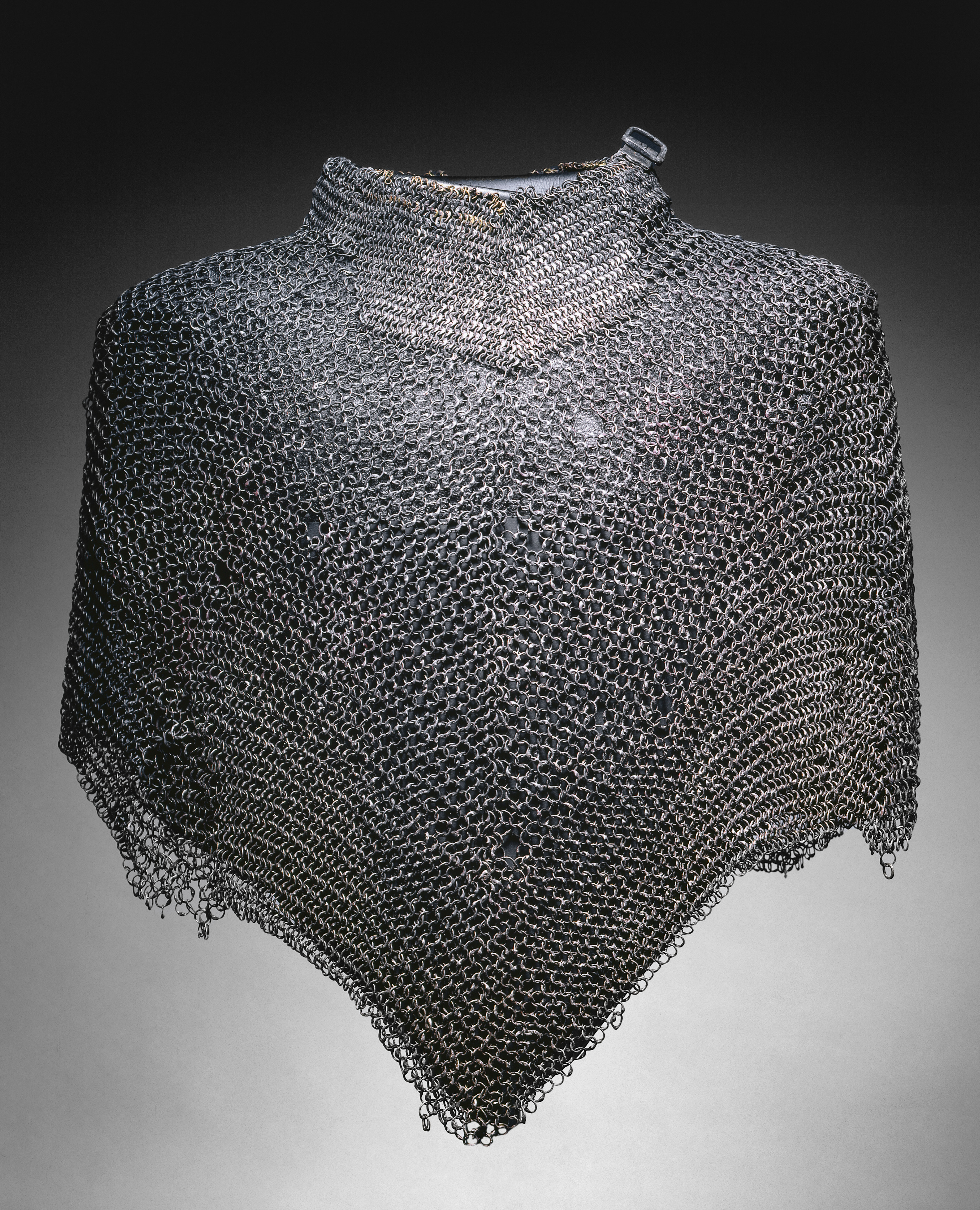
At Zoey Fashion Lab, our mandate is to dissect historical garments not as relics, but as living blueprints for radical reinterpretation. The subject of this analysis—a European, likely German or Swiss, early 16th-century Bishop’s Mantle (Cape)—presents a unique paradox. It is a garment of ecclesiastical authority, yet its construction from riveted steel and brass rings, with a reinforced collar, speaks to a brutal, functional logic. This is not merely armor; it is a textile of war disguised as a vestment of peace. Our deconstruction will reveal how this object, when viewed through the lens of the "New DNA Strand" reference, can be reborn as an avant-garde statement for the contemporary runway.
I. The Original DNA: Form, Function, and Materiality
The original Bishop’s Mantle, often called a cape or mantellum, was a liturgical garment worn over the alb and chasuble. However, the early 16th-century version we examine is a hybrid. The use of riveted steel and brass rings indicates a shift from pure symbolism to practical defense. This was a period of religious and political turmoil in the Holy Roman Empire, where a bishop was both a spiritual leader and a temporal warlord. The cape thus served as a symbol of spiritual protection and literal physical armor.
The construction is key. The rings, likely arranged in a scale-like or chainmail pattern, are not merely decorative. They are riveted—a process of permanent fastening that implies durability, rigidity, and a rejection of fluidity. The reinforced collar, often a heavy, standing band of steel, further emphasizes the garment’s role as a cage for the neck, a barrier between the sacred body and the profane world. The choice of brass mixed with steel is not accidental; brass adds a golden, sacred hue, while steel provides the cold, unforgiving strength of a warrior. This is a dichotomy of soft power and hard force—a theme ripe for avant-garde exploration.
II. The "New DNA Strand" Reference: Re-encoding Historical Logic
The "New DNA Strand" reference is a conceptual tool. In biological terms, DNA contains the instructions for building an organism. In fashion, the "DNA" of a garment is its core structural logic, material vocabulary, and symbolic weight. To create a new strand, we must mutate, splice, and re-sequence these elements. For the Bishop’s Mantle, the original DNA can be broken down as:
- Gene A: Ring Structure (riveted metal rings as a continuous, protective surface).
- Gene B: Collar Reinforcement (rigid, elevated collar as a focal point of authority).
- Gene C: Material Contrast (steel vs. brass, sacred vs. martial).
- Gene D: Draped Silhouette (the cape’s flowing, protective form).
The "New DNA Strand" proposes a recombinant approach: we take these genes and introduce mutations—modern materials, deconstructive techniques, and a shift in context from ecclesiastical power to personal, psychological armor.
III. Avant-Garde Reinterpretation: The Zoey Fashion Lab Blueprint
Our avant-garde version will not replicate the original. Instead, it will amplify its contradictions. The goal is to create a garment that is simultaneously protective and vulnerable, sacred and profane, historical and futuristic.
1. Material Mutation: From Riveted Rings to Laser-Cut Silicone
Replace the heavy steel and brass rings with laser-cut, matte black silicone rings, bonded to a sheer, high-tensile mesh base. The silicone will mimic the scale-like pattern but will be flexible, lightweight, and organic. This mutation subverts the original’s rigidity, introducing a second-skin quality. The rings will be partially detached, creating a frayed, deconstructed edge that suggests the garment is unraveling—a metaphor for the erosion of absolute authority. A single, polished brass ring, left intact at the center of the chest, will serve as a ghost of the original, a relic of the sacred.
2. Collar as Exoskeleton: The Reinforced Collar Reimagined
The reinforced collar will be transformed into a 3D-printed, lattice-like exoskeleton made from recycled steel filament. Instead of a solid band, it will be a translucent, web-like structure that extends upward and outward, framing the face like a halo or a cage. The lattice will be asymmetrical, with one side rising higher, suggesting an imbalance of power or a protective reflex. This collar will be detachable, allowing the wearer to choose between vulnerability (no collar) or heightened authority (collar attached). This introduces a performative element, echoing the original’s dual role as ritual object and armor.
3. Silhouette Deconstruction: The Cape as a Second Skin
The original cape’s flowing silhouette will be fragmented. Instead of a single piece, we will create a modular system of overlapping panels, each made from the silicone ring mesh. These panels will be connected by magnetic clasps, allowing the wearer to reconfigure the cape’s shape—from a full, protective mantle to a narrow, almost scapular-like form. The hem will be raw and unfinished, with loose threads of black Kevlar fiber, referencing the original’s martial origins. This deconstruction challenges the garment’s fixed identity, turning it into a tool for self-definition.
4. Color and Texture: A Palette of Dissonance
The original’s metallic palette will be subverted. The silicone rings will be a deep, matte charcoal, absorbing light, while the mesh base will be a translucent, blood-red—a nod to the liturgical color of martyrdom and the violence inherent in the original’s design. The brass ring will be left polished, a singular, reflective point that draws the eye. The 3D-printed collar will be a gunmetal gray, with a slightly rough, industrial texture. This creates a visual dissonance between the soft, organic red and the hard, metallic gray, echoing the original’s clash of sacred and martial.
IV. Styling and Context: The Avant-Garde Statement
This reimagined Bishop’s Mantle is not for a cathedral. It is for the runway as a battlefield of ideas. It will be styled with minimalist, deconstructed tailoring—a single, raw-edged black silk trouser and a sheer, high-neck top. The model’s face will be partially obscured by a translucent, black veil, referencing the original’s liturgical context while adding an air of mystery. The walk will be slow, deliberate, as if the garment carries the weight of history. The sound of the silicone rings lightly clicking against each other will create a subtle, percussive element, a ghost of the original’s metallic clatter.
The final piece is a commentary on power, protection, and vulnerability. It asks: What does it mean to wear armor in a world where authority is fragmented? The Bishop’s Mantle, once a symbol of absolute, divine right, is now a fragile, mutable shell. The wearer is both a warrior and a martyr, a guardian and a prisoner. This is the essence of the avant-garde: to take a historical object, strip it of its original context, and re-encode it with contemporary meaning.
At Zoey Fashion Lab, we do not preserve the past. We dissect it, mutate it, and reanimate it. The Bishop’s Mantle is no longer a relic; it is a new strand of DNA, ready to evolve.