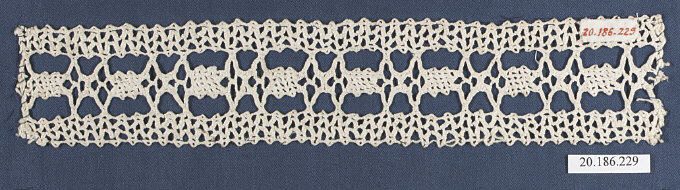
The Architecture of Insertion: Deconstructing the Global Frontier Through Bobbin Lace
The Spring/Summer 2026 season demands a radical rethinking of materiality and silhouette. At Zoey Fashion Laboratory, we reject the passive garment—the mere drape of fabric over form. Instead, we propose Insertion: a methodology where the body becomes a scaffold for engineered voids, and the garment is a cartography of absence. Our chosen medium, bobbin lace, is traditionally associated with the pastoral and the delicate. But on the Global Frontier—a liminal space of digital-physical convergence—this handcrafted netting becomes a structural membrane for futuristic silhouettes. This analysis dissects how bobbin lace, through strategic insertion, redefines volume, transparency, and movement for the avant-garde.
I. Deconstructing the Lace: From Ornament to Skeleton
Bobbin lace is not a surface; it is a system. Each thread is a vector, each pin a pivot point. In conventional couture, lace is applied as decoration, a floral overlay that softens a dress. For SS26, we invert this. Lace becomes the primary structure, not the secondary embellishment. By weaving synthetic monofilaments—carbon-fiber-infused nylon and bio-luminescent silk—into traditional linen threads, we create a composite that is simultaneously rigid and fluid. The Global Frontier is a place of hybridity; our lace mirrors this by fusing handcraft with algorithmic precision. The insertion is not of a zipper or a seam, but of negative space—a deliberate gap where the lace pattern is interrupted, allowing the skin to become part of the garment’s architecture.
Consider a jacket whose sleeves are constructed entirely from lace panels with strategic voids. The shoulder is a continuous web, but the forearm is a series of suspended threads, tethered only at the wrist and elbow. This insertion of emptiness creates a silhouette that is aerodynamic yet organic, referencing both exoskeletal armor and spider silk. The bobbin lace’s traditional floral motifs are replaced with geometric tessellations—hexagons and fractals—that echo the data streams of the Global Frontier. The garment does not cover the body; it inserts itself around it, defining form through absence.
II. Structural Innovation: The Silhouette as a Cage of Light
The futuristic silhouette for SS26 is not about volume in the traditional sense—no bustles or shoulder pads. Instead, we propose translucent architecture. Bobbin lace, when tensioned over a carbon-fiber armature, creates a semi-rigid cage that hovers millimeters from the skin. This is the Insertion Principle: the garment is a second skeleton, one that does not restrict but defines the perimeter of movement. For a floor-length gown, the bodice is a lace corset with laser-cut insertions—sections where the lace is removed and replaced with transparent polymer discs. These discs catch and refract light, creating a moiré effect that shifts with the wearer’s breath. The skirt is a cascade of lace panels, each inserted into a central spine of aluminum alloy, allowing the fabric to float like a nebula.
The Global Frontier is a place of constant migration; our silhouettes reflect this through modular insertion. A coat can be disassembled into six interchangeable lace modules, each connected by magnetic clasps hidden within the bobbin pattern. The wearer can insert or remove sections—a hood, a train, a sleeve—depending on context. This is not customization for its own sake; it is a commentary on the fluid identity required in a globalized world. The structural innovation lies in the tension distribution: the lace is woven with micro-springs that maintain shape even when unclasped, ensuring the silhouette retains its architectural integrity.
III. Material Alchemy: Bobbin Lace as a Conductor of Time
Bobbin lace is inherently time-intensive—a single square inch can require hours of handwork. For SS26, we insert time itself into the material. The lace is woven with thermochromic threads that change color in response to body heat, creating a living pattern that evolves throughout the day. This is the Global Frontier as a temporal landscape: the garment records the wearer’s journey. Insertions of photovoltaic fibers within the lace allow it to harvest ambient light, powering embedded micro-LEDs that trace the lace’s contours. At night, the garment becomes a constellation of illuminated voids—a map of the wearer’s movements.
The materiality also challenges the boundary between hard and soft. Bobbin lace is typically soft, but by inserting resin-coated threads at key stress points—the shoulders, the hips—we create rigid zones that support the garment’s weight. This allows for cantilevered silhouettes: a cape that extends outward like a bird’s wing, supported only by a lace framework. The insertion of memory wire into the lace’s edges enables the garment to hold a pose when removed from the body, transforming it into a sculptural object. This is not clothing; it is wearable architecture that exists in a state of perpetual becoming.
IV. The Avant-Garde Context: Insertion as a Political Act
In a season dominated by digital fashion and virtual try-ons, our commitment to handcrafted bobbin lace is a deliberate counter-movement. But we do not reject technology; we insert it into tradition. The Global Frontier is a space where the local and the global collide. Our lace is sourced from cooperatives in rural Belgium and India, where artisans use centuries-old techniques. We then insert digital patterns—generated by AI trained on historical lace designs—into their workflows. The result is a hybrid artifact that honors the hand while embracing the algorithm.
The Insertion concept also critiques the fashion system’s obsession with surface. By making the lace the structure, we expose the underlying framework of clothing—the seams, the tension points, the voids. This is a deconstructive gesture that reveals the labor and engineering behind the garment. In an era of fast fashion, where garments are disposable, our bobbin lace pieces are designed for longevity—each insertion can be repaired, replaced, or reconfigured. The silhouette is not fixed; it evolves with the wearer, becoming a personal archive of time and place.
V. Conclusion: The Future is Lace
The SS26 collection at Zoey Fashion Laboratory is not about nostalgia for craft. It is about reimagining craft as a tool for futuristic expression. Bobbin lace, through strategic insertion, becomes a medium for light, movement, and structural innovation. The Global Frontier is not a destination; it is a methodology—a way of weaving together the hand and the machine, the void and the form. Our silhouettes are cages of possibility, where insertion is not a compromise but a liberation. The body is no longer a passive mannequin; it is an active participant in the garment’s architecture. This is the definitive avant-garde: lace as a language of the future, spoken through the geometry of absence and the poetry of tension. At Zoey Fashion Laboratory, we do not design clothes. We design systems of insertion—and the world is our loom.