Deconstructing the Estoc: A Blueprint for Zoey Fashion Lab's Avant-Garde DNA
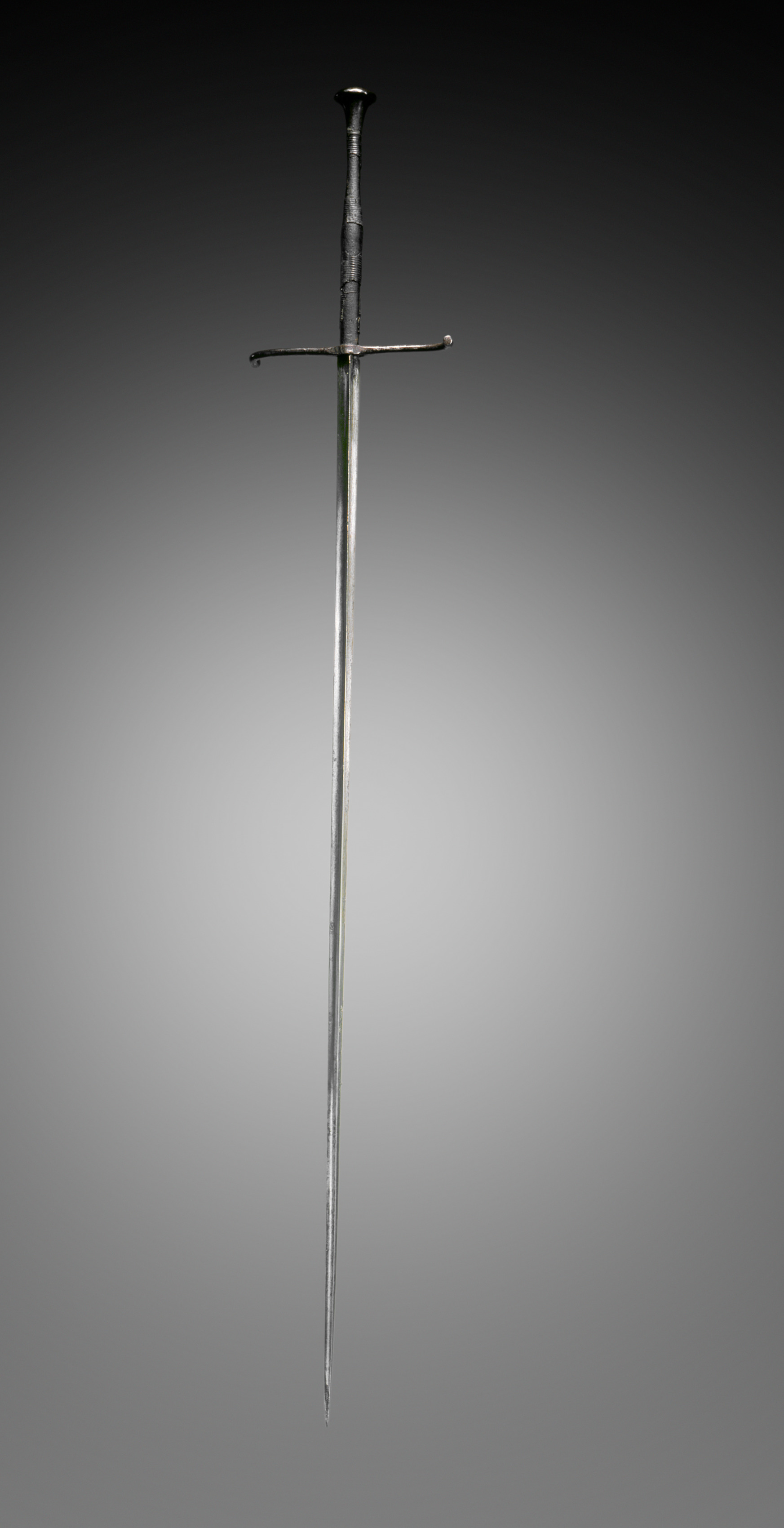
At Zoey Fashion Lab, we do not merely study garments; we dissect the very essence of form, function, and historical power. Our latest subject, the Estoc—a German longsword from the early 16th century—presents a paradox of immense potential. Composed of steel, wood, and leather, this weapon was designed for a single, brutal purpose: to pierce the gaps in plate armor. Yet, within its rigid, linear silhouette lies a revolutionary blueprint for our Avant-Garde collection. We are not replicating a sword; we are extracting its New DNA Strand—a genetic code of tension, precision, and structural defiance—to weave into fabric.
I. The Estoc as a Structural Archetype
The Estoc’s defining characteristic is its extreme elongation and rigidity. Unlike a cutting sword, it possesses almost no distal taper; its blade is a near-perfect, stiff rod of steel, often with a diamond or square cross-section. This geometry is not decorative; it is a technical solution to a specific problem: delivering a concentrated, high-velocity thrust through metal. For Zoey Fashion Lab, this translates into a core design principle: linear tension. We see this in the potential for sharp, unyielding seams, elongated panels that refuse to follow the body’s natural curves, and fabrics that are structured to hold a deliberate, architectural line.
The material trinity—steel, wood, and leather—offers a rich, tactile vocabulary. The steel represents cold, unyielding structure; the wood (often found in the grip core) suggests organic, hidden strength; the leather (wrapped around the grip and scabbard) introduces a layer of textured, human interface. Our deconstruction will not use these materials literally, but as metaphors for fabric behavior. We will seek textiles that mimic steel’s stiffness (rigid organza, metallic-coated neoprene), wood’s grain (woven jacquard, ribbed corduroy), and leather’s grip (matte-finish nappa, textured micro-suede).
II. Extracting the New DNA Strand: Key Genetic Markers
The New DNA Strand we isolate from the Estoc is composed of four primary genetic markers: Thrust, Grip, Guard, and Point. Each will be translated into a distinct design element for our collection.
1. The Thrust (Linear Momentum): The Estoc’s primary action is the thrust—a forward, penetrating movement. In our garments, this manifests as asymmetrical, forward-leading silhouettes. Imagine a coat where the left side is dramatically longer than the right, or a dress with a single, sharp panel that extends from the shoulder to the knee, creating a visual arrow. Seams will be placed not to follow the body, but to direct the eye and the garment’s energy forward. Darts will be replaced by deep, angular pleats that mimic the blade’s facets. The overall effect is one of purposeful, almost aggressive, motion—a garment that appears to be in a state of constant, controlled advance.
2. The Grip (Tactile Interface): The leather-wrapped grip of the Estoc is where the wielder’s hand meets the weapon. It is an area of friction, control, and intimate contact. For Zoey, this translates into strategic textural contrast and ergonomic intervention. We will introduce panels of high-friction fabric—such as a rubberized knit or a densely ribbed wool—at points of high tension: the inner elbow, the waistband, the cuff. These are not mere accents; they are functional zones designed to anchor the garment to the body, creating a sense of controlled tension. The grip also suggests a wrapping or binding technique. We will explore corsetry-like construction using wide, leather-trimmed belts or integrated harnesses that wrap the torso, not for shape, but for structural definition.
3. The Guard (Protective Architecture): The Estoc’s crossguard is a simple, horizontal bar, designed to protect the hand from a sliding blade. In our deconstruction, the guard becomes a structural shoulder or hip element. We envision exaggerated, horizontal shoulder pads—not the soft, rounded shapes of the 1980s, but sharp, flat, and cantilevered, as if cut from a single sheet of steel. Alternatively, a rigid hip yoke made from layered, bonded fabric could extend outward from the waist, creating a protective, architectural silhouette. This element is about defensive geometry—a visual and physical barrier that redefines the body’s outline.
4. The Point (Terminal Precision): The Estoc’s tip is its most critical feature—a sharp, acute angle designed for maximum penetration. In our garments, the point translates into sharp, terminating details. Hemlines will not be soft and flowing; they will be cut at severe angles, ending in a single, sharp point at the front or back. Collars will be elongated into dagger-like lapels. Sleeves might end in a single, pointed cuff that extends past the hand. Every line in the garment should lead to a clear, decisive end point, creating a visual and structural finish that is both aggressive and elegant.
III. Material and Construction: Forging the Silhouette
To realize this vision, we must select materials that can hold these extreme shapes. Bonded and laminated fabrics will be essential. Consider a double-faced wool bonded to a stiff, black mesh—it will drape with weight but resist folding. Laser-cut and heat-set synthetics can create the sharp, faceted edges of the Estoc’s blade. We will also employ metal wire boning and carbon fiber inserts within seams, not for corsetry, but to create rigid, structural panels that stand away from the body. The leather element will be used sparingly, as a binding and finishing material—for edge piping, strap hardware, and grip panels on cuffs and collars.
Construction techniques will prioritize precision over fluidity. Seams will be topstitched with stark, contrasting thread, mimicking the lines of a sword’s fuller. Zippers will be exposed and used as structural elements, running along the garment’s primary axis like a blade’s spine. The overall construction should feel armored, not draped—a second skin that is both protective and provocative.
IV. The Avant-Garde Expression: From Weapon to Wardrobe
This is not a costume. The Estoc-inspired collection for Zoey Fashion Lab is a philosophical and technical exercise. It asks: How can the logic of a weapon—its singular purpose, its brutal efficiency, its material honesty—inform the logic of clothing? The answer lies in a new kind of functional aggression. These garments are not for combat, but for commanding space. They are for the individual who moves with intention, who understands that clothing can be a tool of presence.
The color palette will be stark: anthracite, gunmetal, black, and a single, sharp accent of oxidized copper or blood rust. The silhouette will be lean and elongated, with a high, narrow waist and a long, unbroken line from shoulder to hem. Accessories will be minimal but critical: a single, long, rigid scarf that doubles as a hood; a belt that is more of a weapon’s harness than a cinch; boots with a steel-tipped heel that echoes the Estoc’s point.
In conclusion, the Estoc is not a relic; it is a genetic blueprint. By deconstructing its form, material, and purpose, Zoey Fashion Lab has extracted a New DNA Strand that will define our next Avant-Garde collection. We are forging garments that are not worn, but wielded. They are statements of precision, power, and the unyielding logic of the line. The Estoc has been unarmed; its spirit now lives in fabric.