Deconstructing the Sacred: The Portable Altar of Countess Gertrude as an Avant-Garde Blueprint
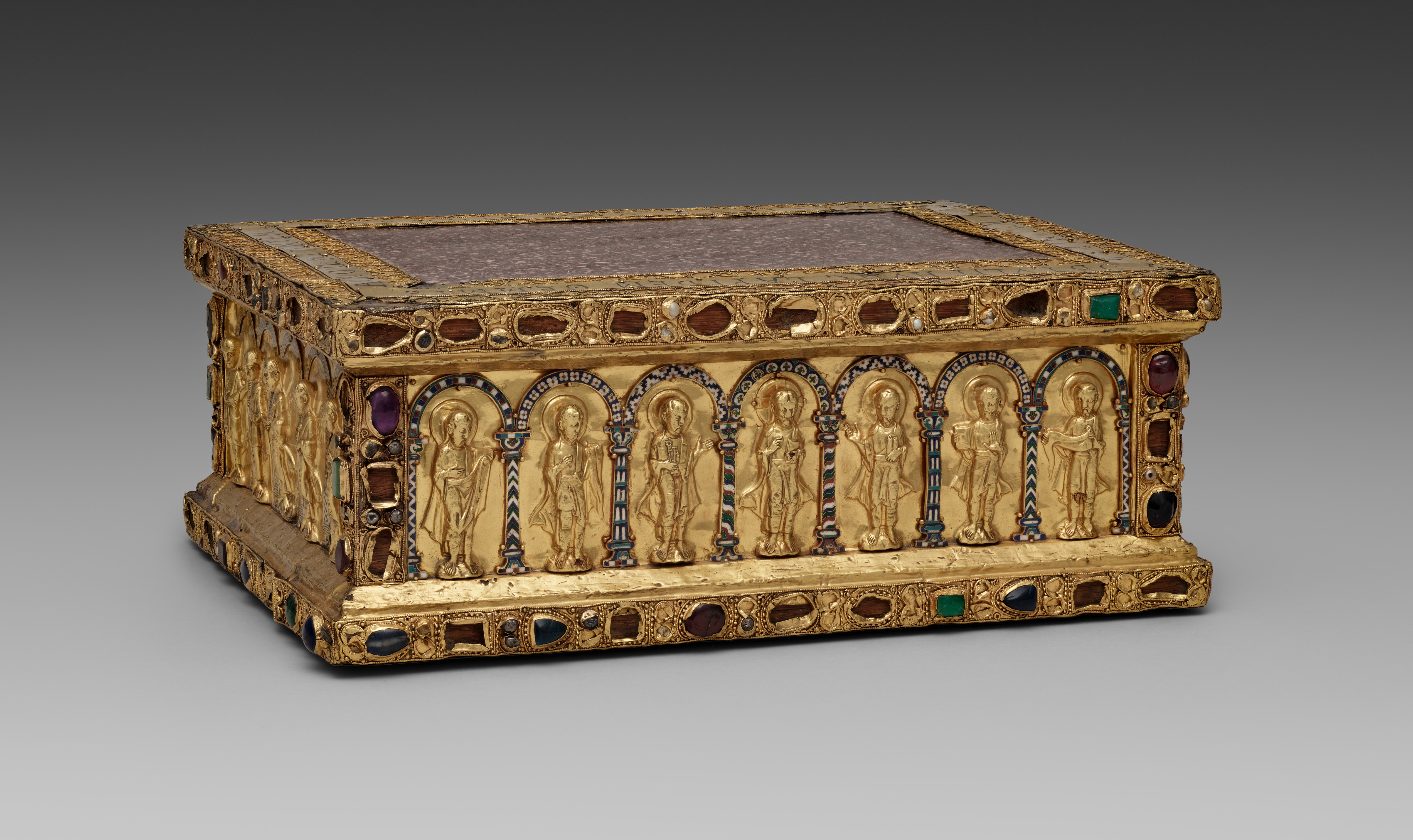
At Zoey Fashion Lab, we do not merely study historical artifacts; we dissect them. We strip them of their original context to reveal the raw, structural DNA of aesthetic power. The Portable Altar of Countess Gertrude, a masterwork of the 11th-century Romanesque period from Lower Saxony, is not a relic of pious devotion to be preserved under glass. It is a manifesto. Its core—a humble block of wood—is encased in a riot of gold, cloisonné enamel, porphyry, gems, pearls, and niello. This is not decoration; it is a declaration of material hierarchy and spiritual engineering. For the avant-garde designer, this altar is a blueprint for constructing identity through the deliberate, almost violent, juxtaposition of materials and narratives.
Material as Message: The Clash of the Earthly and the Celestial
The altar’s technical composition is a study in controlled chaos. The gold is not merely precious; it is a conductor of light, a stand-in for the divine. The cloisonné enamel introduces a painterly, almost liquid quality, trapping vibrant blues, greens, and reds within delicate gold wires. This is the first lesson in deconstruction: constraint breeds intensity. The porphyry, a rare purple stone from Egypt, is a relic of imperial Rome, repurposed here as a foundation for the sacred. It is cold, hard, and ancient. The gems and pearls are tactile interruptions—points of three-dimensional focus that break the flat plane of the enamel. The niello, a black metallic alloy, is the shadow, the negative space that gives form to the gold. Finally, the wood core is the silent anchor, the invisible structure that bears the weight of all this splendor. In avant-garde terms, the altar is a layered, textured garment where each material competes for dominance, yet is held in tension by a hidden skeleton.
The Archive Resonance: A Mirror and a Tomb
Your reference to the Mirror with Split-Leaf—"一面是光洁银镜上以黄金镶嵌的纷繁棕叶纹,另一面是冰冷石棺板上以浮雕诉说的生命叙事" (one side a smooth silver mirror inlaid with gold in intricate palm-leaf patterns, the other a cold stone sarcophagus telling the narrative of life through relief)—is the key to unlocking the altar’s avant-garde potential. The Portable Altar of Countess Gertrude is a three-dimensional embodiment of this duality. It is both mirror and tomb. It reflects the glory of the divine (the mirror side), yet it contains the relics of saints (the tomb side). For the fashion lab, this is a call to create garments that are simultaneously a shield and a window. A jacket that is a reflective surface on the outside, but lined with a narrative of personal history on the inside. A dress that is a cage of gold wire, but within which the wearer’s body becomes the sacred relic.
Structural Avant-Garde: The Altar as a Wearable Framework
How do we translate a 11th-century altar into a 21st-century fashion statement? We do not replicate; we abstract the principles.
1. The Core as Armature: The wood core of the altar is its hidden strength. In fashion, this translates to a structural undergarment or exoskeleton. Think of a corset made not of fabric, but of laser-cut, lacquered wood, serving as the foundation for all other elements. This core is not meant to be hidden; it is the spine of the design, visible through strategic cutouts or translucent overlays.
2. Cloisonné as Digital Embroidery: The enamel’s partitioned color fields can be reinterpreted as 3D-printed resin or silicone panels that are inlaid into a metal mesh. The gold wires become conductive threads that could, in a tech-avant-garde context, light up or change color. The pattern is not printed; it is built, cell by cell, creating a tactile, pixelated surface that is both ancient and futuristic.
3. Porphyry and Gem Placement as Strategic Weight: The altar uses porphyry as a heavy, grounding base. In a garment, this translates to asymmetrical weighting. A single, large, polished stone (or a synthetic equivalent) sewn into the hem of a skirt, or a cluster of pearls acting as a counterbalance to a flowing sleeve. The gems are not adornment; they are functional ballast, dictating the garment’s movement and drape.
4. Niello as Negative Space: The black niello is the void that defines the gold. In fashion, this is cutwork, burnout velvet, or sheer panels. The absence of material becomes as important as the presence. A garment that is a lattice of gold chainmail, with the wearer’s skin (or a second, darker layer) acting as the niello, creating the pattern through negative space.
Narrative Layering: The Life Story in Relief
The altar tells a story through its materials: the life of Christ, the power of the Church, the status of Countess Gertrude. For the avant-garde designer, the garment must tell a personal, fragmented story. The "cold stone sarcophagus" narrative is translated into embossed leather panels that depict abstracted scenes from the wearer’s own life—a birth, a migration, a loss. These panels are not hidden; they are displayed on the back of a coat or the front of a bodice, like a portable reliquary. The "smooth silver mirror" is the public face of the garment—a reflective, polished surface that repels interpretation, while the interior is a dense, textured archive of personal memory.
Conclusion: The Altar as a Call to Material Rebellion
The Portable Altar of Countess Gertrude is not a passive object of beauty. It is an active agent of transformation. It takes the most humble material (wood) and elevates it with the most precious (gold, gems). It traps light (enamel) and absorbs it (niello). It is a portable universe, a microcosm of the sacred and the profane. For Zoey Fashion Lab, this artifact is a directive: abandon the tyranny of the single texture. Embrace the clash. Let gold fight with stone. Let the mirror reflect the tomb. The avant-garde garment is not a uniform; it is a portable altar for the self, a constructed identity that is as complex, contradictory, and materially audacious as the one Countess Gertrude commissioned a thousand years ago. The challenge is not to copy the past, but to reforge its materials into a new, wearable theology of the individual.