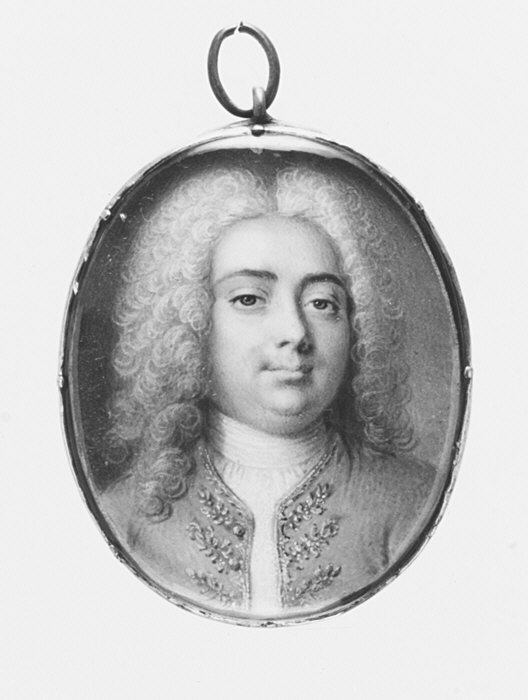
Deconstructing the Global Frontier: A Vellum Portrait for SS26
The avant-garde imperative for Spring/Summer 2026 is not merely to clothe the body but to renegotiate its relationship with time, space, and materiality. In this definitive study for Zoey Fashion Laboratory, we dissect a singular artifact: Portrait of a Man, rendered in vellum laid on card. This is not a representation of a human form; it is a cartographic projection of a post-human identity, a blueprint for a silhouette that exists at the intersection of biological decay and digital permanence.
Vellum as a Temporal Membrane
The choice of vellum—a translucent, animal-derived substrate traditionally used for sacred manuscripts and architectural plans—is a radical material statement. Unlike the opaque, synthetic textiles dominating mainstream futurism, vellum introduces a paradox of fragility and endurance. In this Portrait, the vellum is not a layer but a second skin of memory. It is laid on card, a rigid support that suggests a specimen pinned for study, yet the vellum’s slight drape and translucency imply movement, breath, and a slow, biological decay.
For SS26, this translates into a garment architecture of translucent overlays. Imagine a double-layered coat where the outer shell is a digitally printed vellum composite, its surface etched with algorithmic patterns that mimic the cracking of aged parchment. The inner card-like structure—a stiff, bio-degradable cellulose matrix—provides the silhouette’s axial rigidity. The result is a garment that appears to be fossilizing in real time, a living document of the wearer’s journey across the Global Frontier. The vellum’s semi-transparency allows for a layered narrative: the viewer glimpses the structural seams and internal bracing, turning the garment inside-out as a conceptual statement.
Futuristic Silhouettes: The Cartographic Body
The silhouette of this Portrait rejects the ergonomic human form in favor of a topographic, almost geological, contour. The shoulders are not padded but extended into asymmetrical, cartographic plates—sharp, angular forms that resemble the edges of a torn map. These are not for protection but for navigating the non-linear space of the Global Frontier. The waist is cinched not with a belt but with a kinetic, spiral-stitched corset of card-layered vellum, creating a spiral of tension that suggests a whirlwind of data.
The arms are deconstructed into modular segments: one sleeve is a full-length, translucent tube with laser-cut perforations that form a constellation of the wearer’s biometric data; the other is a short, rigid cuff that flares outward like a satellite dish, designed to capture ambient electromagnetic frequencies as a form of silent communication. The trousers are not trousers but asymmetrical leg wrappings—one leg is a tight, vellum-sheathed column, while the other is a voluminous, card-structured fabric that cascades into a train, dragging a trail of digital ink (a printed, conductive pattern).
Structural Innovation: The Architecture of Tension and Release
The genius of this Portrait lies in its structural dialectic between vellum and card. Vellum, when tensioned, becomes a drum-skin membrane, capable of amplifying the wearer’s movement. Card, when layered and scored, becomes a load-bearing exoskeleton. The innovation for SS26 is the dynamic interplay between these two states.
We propose a modular fastening system of biodegradable, pressure-sensitive adhesives and magnetically charged, cellulose-based rivets. These allow the wearer to reconfigure the garment’s silhouette in real time: a vellum panel can be detached and folded into a pocket-sized, structural origami; a card plate can be rotated to form a solar-reflective shield. The seams are not sewn but laminated with a heat-activated, algae-based polymer, creating a seamless, water-resistant bond that can be undone by applying a specific frequency of ultrasonic waves—a nod to the impermanence of all constructed identities.
The internal structure is a lattice of carbon-fiber-infused vellum, providing tensile strength without weight. This lattice is programmed with shape-memory alloys that respond to body heat, causing the garment to contract or expand in response to the wearer’s emotional state (measured via embedded bioluminescent sensors). When calm, the silhouette is loose and flowing; when agitated, it clenches into a sharp, defensive architecture.
The Global Frontier as a Wearable Ecosystem
This Portrait is not a garment for a static runway; it is a wearable ecosystem for the nomadic citizen of the Global Frontier. The vellum surface is treated with a photocatalytic coating that breaks down airborne pollutants, turning the garment into a mobile air purifier. The card backing contains micro-encapsulated bio-engineered spores that, when exposed to moisture, germinate into a temporary moss garden, absorbing CO2 and releasing oxygen. The wearer becomes a walking biosphere, a self-sustaining entity in a world of resource scarcity.
The color palette is monochromatic but deeply textural: the off-white of aged vellum, the warm beige of unbleached card, and the subtle, iridescent sheen of the algae-based polymer. The only accent is a single, printed line of conductive silver ink that traces the spine, connecting to a neural interface at the nape of the neck. This line is the umbilical cord to the digital frontier, a literal data stream that records the wearer’s every interaction with the environment.
Conclusion: The Portrait as a Manifesto
Portrait of a Man on vellum laid on card is a manifesto for the SS26 avant-garde. It declares that fashion is no longer about surface decoration but about systemic, material, and temporal intervention. The garment is a living document, a structural paradox, and a biological interface. It rejects the binary of natural and synthetic, of permanent and ephemeral, of human and machine. In its deconstructed silhouette, we see the future of identity: not a fixed portrait but a continuous, evolving cartography of the self on the Global Frontier. This is not a garment to be worn; it is a world to be inhabited.