The Pointed Edge: Deconstructing the Bobbin Lace Insertion as a Structural Paradigm for SS26
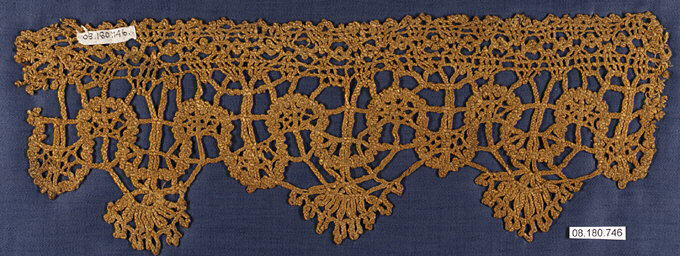
In the relentless pursuit of the next frontier in garment architecture, the avant-garde studio of Zoey Fashion Laboratory turns its gaze to a paradox: the insertion with a pointed edge, rendered in the ancient, painstaking technique of bobbin lace. For the SS26 season, we are not merely referencing heritage; we are weaponizing it. The pointed edge—typically a signifier of termination, of a finished boundary—is recontextualized as a generative force, a point of origin for new silhouettes. This analysis dissects how bobbin lace, a material of extreme fragility and historical domesticity, becomes the structural linchpin for a futuristic, deconstructive aesthetic that challenges the very notion of garment integrity.
Deconstructing the Insertion: From Negative Space to Positive Structure
Traditional couture views an insertion as a subordinate element, a decorative panel inserted into a pre-existing fabric field. The pointed edge of a bobbin lace motif, historically, would be sewn down, its sharp apex rendered inert. Our SS26 thesis inverts this logic. We treat the pointed edge not as a detail to be concealed, but as a structural anchor. The lace insertion becomes a load-bearing component, its pointed tips acting as tensile nodes that pull, drape, and suspend the surrounding textile. This is a fundamental shift from ornament to architecture. The bobbin lace, with its inherent grid of threads and open spaces, is no longer a surface pattern but a topological map for garment construction.
The material itself—bobbin lace from the Global Frontier—is sourced from workshops that blend traditional Flemish techniques with unorthodox fibers: carbon-infused linen, recycled metallic threads, and bio-engineered silk. This frontier lace possesses a rigidity that traditional cotton lace lacks. Its pointed edges are sharp, almost scalpel-like, capable of cutting through the air of a silhouette. For SS26, we are exploring how these points can be left unfinished, raw, and protruding from the garment’s surface. They become exoskeletal spines, protruding from a shoulder seam to create a cantilevered sleeve, or erupting from a waistline to form a jagged, asymmetrical peplum. The insertion is no longer a seam; it is a joint.
Futuristic Silhouettes: The Lace as Armature
The resulting silhouettes for SS26 are defined by controlled instability. Imagine a shift dress that appears to be dissolving at its hem, yet is held taut by a network of bobbin lace insertions with pointed edges that dig into the fabric, creating a series of sharp, triangular points. This is not a frayed edge; it is a deliberate, engineered disintegration. The silhouette is simultaneously fluid and rigid, a paradox born from the tension between the soft, handcrafted lace and its aggressive, pointed terminations.
Consider a second-skin bodysuit, a staple of futuristic design. In our SS26 vision, this bodysuit is constructed from a single, continuous piece of bio-engineered jersey. The bobbin lace insertions are laser-cut and heat-bonded at the pointed edges to create structural ribs that run vertically from the collarbone to the hip. These ribs do not merely decorate; they sculpt the torso, creating a negative-space corset effect. The pointed edges of the lace, left exposed, protrude slightly from the skin, casting sharp shadows that animate the body’s form. The garment breathes, not through fabric, but through the negative space of the lace—a literal insertion of air into the silhouette.
Structural Innovation: The Point as a Fastening System
The most radical innovation of this study lies in the functionalization of the pointed edge. In traditional construction, points are sewn down or hidden. We propose a system of mechanical insertion: the pointed lace tips are reinforced with a micro-carbon core, allowing them to act as toggles, hooks, or tensioning devices. A jacket, for instance, may have no buttons or zippers. Instead, a series of bobbin lace panels with pointed edges are woven through eyelets in the opposing fabric panel. The points are then twisted and locked, creating a self-fastening system that is both decorative and structurally sound. This is a return to the craft of the toggle, but elevated to a futuristic, almost alien, logic.
Furthermore, the pointed edge insertion enables a new language of draping. By attaching a lace panel at a single pointed tip to a shoulder seam, the rest of the lace can fall freely, creating a spiral of negative space around the arm. The weight of the lace itself, combined with the rigidity of the pointed edge, creates a self-supporting cantilever. The garment’s form is no longer dictated by the body alone, but by the internal tension of the lace architecture. This is a direct challenge to the notion of the garment as a second skin; here, the garment is an exoskeleton of light and thread.
Conclusion: The Avant-Garde as a Return to the Thread
Zoey Fashion Laboratory’s SS26 study of the insertion with pointed edge in bobbin lace is not a nostalgic exercise. It is a declaration of war against the flat, the inert, and the decorative. By transforming a humble craft technique into a structural principle, we unlock a new vocabulary for futuristic silhouettes. The pointed edge becomes a spearhead of innovation, piercing the fabric of convention. The bobbin lace, once a symbol of feminine passivity, is re-engineered as a weapon of architectural precision. In this standalone avant-garde study, we prove that the most radical futures are often woven from the most ancient threads, provided we have the courage to let their points cut through the expected.