The Temporal Armature: Deconstructing Horology for the SS26 Avant-Garde Silhouette
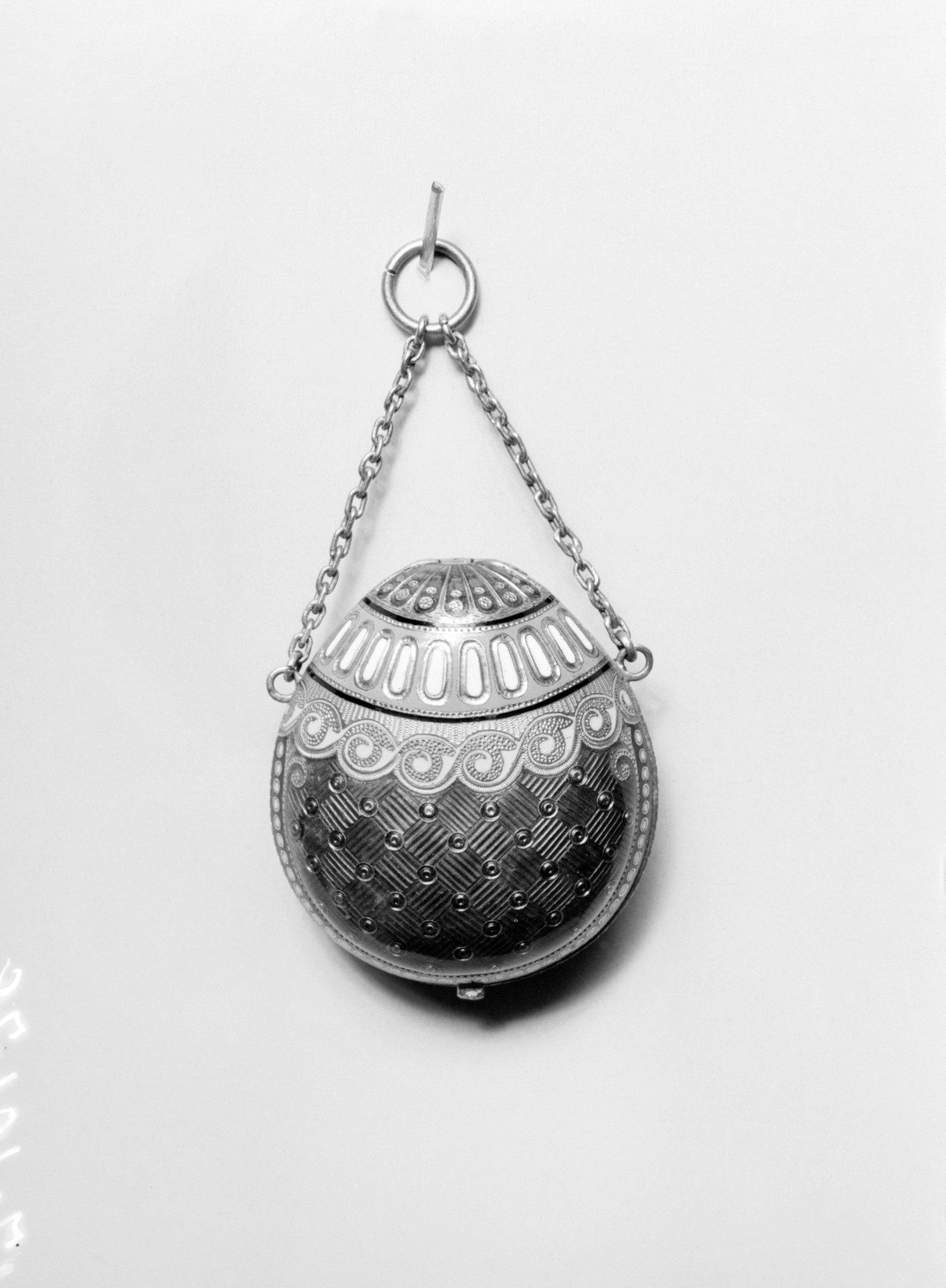
In the rarefied domain of avant-garde couture, the watch has long been relegated to the role of a mere accessory—a functional ornament, a status marker, or a nostalgic heirloom. For the SS26 season, Zoey Fashion Laboratory proposes a radical recontextualization: the watch as a primary structural element, a temporal armature that redefines the human form through the lens of deconstructive aesthetics and futuristic engineering. This analysis dissects a singular artifact—a timepiece forged from gold and enamel, originating from the Global Frontier—to explore how its material and conceptual DNA can be transmuted into a garment architecture that challenges the very boundaries of time, space, and wearability.
Material Alchemy: Gold and Enamel as Structural Syntax
The chosen materials—24-karat gold and vitreous enamel—are not passive signifiers of luxury. In the hands of Zoey’s design philosophy, they become active agents of structural innovation. Gold, with its exceptional malleability and density, is repurposed from a decorative alloy into a load-bearing exoskeleton. Imagine a jacket where the gold is beaten into micro-thin, articulated plates—a lattice that mimics the movement of a watch’s gear train. These plates are not sewn; they are riveted and hinged, allowing for a fluid, almost mechanical drape that responds to the wearer’s kinetic energy. The enamel, traditionally a surface finish, is here inverted: it is cast into translucent, brittle panels that serve as structural membranes, encapsulating the body in a protective shell that refracts light like a frozen moment. This is not adornment; it is a second skin of hardened time.
The Global Frontier origin infuses this material palette with a sense of dislocated modernity. The gold is sourced from ethically ambiguous, hyper-efficient extraction sites, its surface left slightly raw, unpolished—a nod to unfinished industrial processes. The enamel is fused with microscopic data fibers, creating a surface that shifts color based on ambient electromagnetic fields. This is a watch that does not merely tell time; it archives the wearer’s temporal footprint, a living chronograph of movement and environment.
Futuristic Silhouettes: The Watch as a Wearable Infrastructure
The traditional watch is a self-contained object; Zoey’s SS26 proposition dissolves its boundaries, integrating its components into the garment’s very infrastructure. The key silhouette is the Chronos Exosuit, a deconstructed bodysuit that reimagines the watch’s crown, bezel, and dial as architectural anchors. The crown, typically a winding mechanism, is oversized and repositioned at the nape of the neck, functioning as a tension regulator for a series of gold cables that traverse the spine. These cables are not decorative; they are dynamic tension members, akin to suspension bridge cables, that can be tightened or loosened to alter the garment’s posture—elevating the shoulders, elongating the torso, or creating a dramatic, asymmetrical drape.
The bezel, usually a protective rim, is deconstructed into a series of interlocking geometric frames that encircle the hips and collarbone. These frames are articulated with micro-hinges, allowing the wearer to adjust the silhouette from a rigid, geometric cage to a flowing, organic form. The dial—the face of the watch—is sublimated into a translucent, enamel-coated visor that extends from the shoulder to the wrist, obscuring the arm while projecting a holographic time readout. This is not about seeing the time; it is about inhabiting the mechanism of time itself.
Structural Innovation: The Mechanics of Deconstruction
Zoey’s approach to structural innovation is rooted in deconstructive kinetics. The watch’s internal movement—the balance wheel, the gear train, the mainspring—is externalized as a wearable kinetic sculpture. A series of small, gold-leafed gears are embedded into the fabric of a tunic, connected by fine enameled rods. As the wearer moves, these gears rotate, creating a synesthetic rhythm that is both visual and auditory—a soft, metallic chime that marks each step. This is not mere ornamentation; it is a functional re-engineering of the garment’s weight distribution. The gears act as counterbalances, reducing strain on the shoulders and redistributing mass to the hips, allowing for unexpected volumes and silhouettes that defy gravity.
The enamel panels, previously described as brittle, are now treated with a self-healing polymer matrix. When cracked by movement, the material repairs itself within seconds, creating a dynamic surface that records and erases the wearer’s history. This introduces a temporal dimension to the garment: it is never the same twice, its surface a palimpsest of micro-failures and regenerations. This aligns with the avant-garde principle of impermanence as a design virtue, challenging the couture tradition of static perfection.
Contextualizing the Global Frontier: A Standalone Study in Temporal Architecture
This analysis must be understood as a standalone avant-garde study, not a commercial collection. The Global Frontier origin is a conceptual anchor—a vision of a world where time is no longer linear but a resource to be manipulated and worn. The watch, in this context, becomes a portable chronotope, a device that collapses past, present, and future into a single, wearable form. The gold and enamel are not nostalgic; they are materials of a post-industrial age, where craft and technology are indistinguishable.
The silhouette for SS26 is thus one of controlled chaos: sharp, asymmetrical lines that evoke the precision of a Swiss movement, yet softened by the organic flow of enamel and gold. The garment does not hide the body; it reveals it through mechanical layers, turning the wearer into a living horological installation. The watch is no longer an object to be consulted; it is a second skeleton, a framework upon which time is inscribed, erased, and rewritten.
In conclusion, Zoey Fashion Laboratory’s SS26 avant-garde couture analysis repositions the watch from a passive accessory to an active structural protagonist. Through the deconstructive use of gold and enamel, and the integration of futuristic, tensile silhouettes, this study offers a definitive blueprint for a new kind of garment—one that is both a timepiece and a body, a mechanism and a memory. It is a testament to the power of material and form to transcend function, entering the realm of pure, temporal architecture.