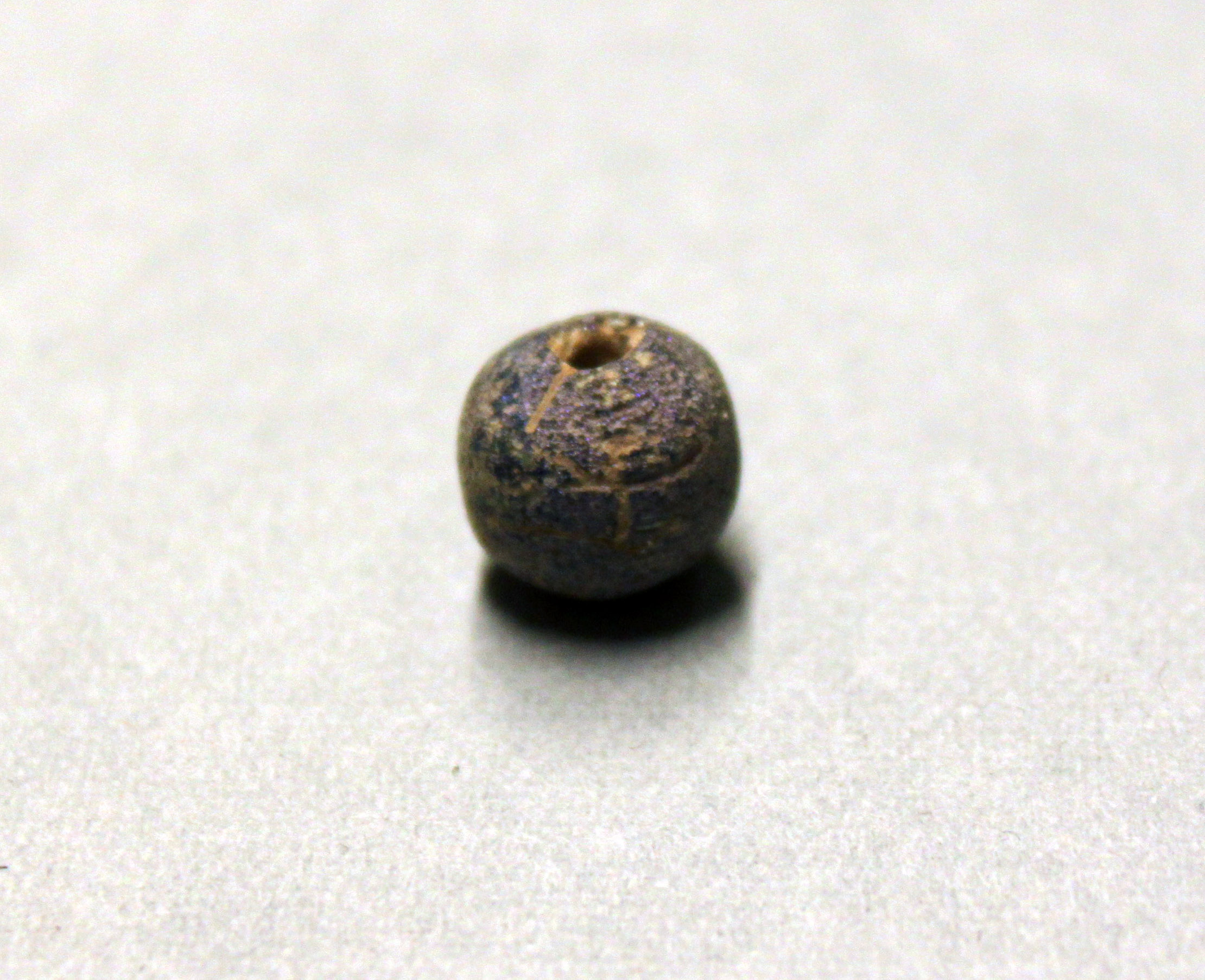
Deconstructing the Luminous Matrix: Beads as Structural Armature for SS26
In the lexicon of Zoey Fashion Laboratory, the bead is not an ornament. It is a unit of construction, a pixel of light, and a node of tension. For Spring/Summer 2026, the Global Frontier presents a radical re-evaluation of the drilled glass bead—transforming it from a decorative afterthought into the primary load-bearing element of a new architectural silhouette. This analysis dissects the bead’s potential as a medium for futuristic structural innovation, moving beyond surface embellishment to explore its role as a dynamic, kinetic, and luminous armature.
From Embellishment to Exoskeleton: The Bead as a Load-Bearing Element
The conventional fashion paradigm relegates beads to the realm of embroidery, applied to a pre-existing textile substrate. Zoey Fashion Laboratory’s avant-garde methodology inverts this hierarchy. For SS26, the drilled glass bead becomes the substrate itself. By threading beads onto high-tensile, translucent monofilament or conductive metallic threads, we engineer a beaded exoskeleton that requires no underlying fabric. This creates a garment that is simultaneously skeletal and ethereal—a lattice of light and shadow.
This approach demands a rethinking of garment construction. Traditional seams and darts are replaced by tension-distribution networks. The bead’s drilled hole becomes a precise engineering point, allowing for the creation of flexible, articulated joints. Consider a shoulder panel: not a tailored curve of cloth, but a geodesic dome of graduated glass beads, each one drilled at a specific angle to facilitate a subtle, organic flex. The result is a silhouette that is at once rigid in its geometry and fluid in its movement, a paradox achievable only through bead-based structural innovation.
Luminous Topography: The Bead as a Pixel of Light and Color
Beyond pure structure, the drilled glass bead serves as a pixel in a luminous topography. The Global Frontier context allows us to source beads with varying refractive indices, from optically clear crystal to smoky obsidian and iridescent dichroic finishes. This is not mere color; it is light manipulation. For SS26, we propose garments that function as wearable light sculptures, where the bead’s internal refraction creates a shifting, prismatic surface.
The strategic placement of beads—by size, opacity, and angle—allows for the creation of gradient fields of luminosity. A bodice might transition from a dense, opaque cluster of dark beads at the waist to a diaphanous spray of clear, faceted spheres at the clavicle, mimicking the effect of a digital gradient or a celestial nebula. This technique eliminates the need for traditional color blocking; instead, the bead itself becomes the color source, with depth and dimension generated by the interplay of light through glass. The silhouette is thus defined not by tailoring, but by the very density and optical behavior of the bead matrix.
Kinetic Architecture: The Bead as a Joint and a Hinge
The most radical innovation for SS26 lies in the bead’s potential as a kinetic joint. When multiple beads are strung on a single, flexible core, they create a chain of articulated segments. This principle, applied at scale, allows for garments that can transform their silhouette in real time. Consider a sleeve that, when the arm is raised, opens into a fan of beaded ribs, or a skirt that can be contracted or expanded through a system of internal drawstrings that compress the bead matrix.
This kinetic quality is achieved through differential threading. By varying the tension and spacing between beads, we create zones of rigidity and zones of fluidity. A concentrated cluster of tightly-packed beads forms a solid, weight-bearing panel, while a looser, spaced string acts as a flexible hinge. The resulting garment is not a static form but a responsive architecture—one that adapts to the wearer’s movement, creating a dialogue between the body and the constructed form. This is the ultimate expression of the bead as a structural innovation: a garment that is perpetually in flux, its silhouette a function of its internal kinetic logic.
Deconstructive Silhouettes: The Bead as a Tool for Negative Space
Avant-garde deconstruction finds its perfect medium in the bead. By strategically omitting beads from the lattice, we create negative space—voids that define the silhouette as powerfully as the beads themselves. This is a form of subtractive construction, where the absence of material becomes a structural and visual statement.
For SS26, we propose silhouettes built around negative-space cutouts that are not cut from fabric but are instead woven into the bead matrix. A high-neck collar might transition into a bare shoulder by a gradual reduction in bead density, the remaining beads forming a web that traces the collarbone. A backless gown is not a fabric shell with a missing panel, but a continuous beaded grid that simply stops at the lumbar spine, leaving the skin as the negative space. This technique creates a fragmented, deconstructed silhouette that is simultaneously revealing and concealing, the glass beads acting as a filter between the body and the environment.
The Global Frontier: Sourcing and Sustainability in the Bead Matrix
The Global Frontier context demands a critical examination of material sourcing. For SS26, Zoey Fashion Laboratory prioritizes recycled and ethically sourced glass beads from artisanal cooperatives in the Global South, transforming waste glass into high-value structural components. This is not a trend; it is a material philosophy. Each bead carries a trace of its origin—a color from a specific sand, a texture from a particular furnace. This provenance adds a layer of narrative to the garment, making the bead a vessel for global cultural exchange.
Furthermore, the bead-based construction allows for circularity. Unlike glued or sewn embellishments, a beaded garment can be fully disassembled. The monofilament can be cut, and each bead can be reclaimed, sorted, and reused in a new configuration. This makes the garment a perpetual resource, not a disposable object. The structural innovation of the bead thus extends beyond aesthetics into a model of sustainable, regenerative design—a true frontier for the avant-garde.
Conclusion: The Bead as a Paradigm for SS26
In the hands of Zoey Fashion Laboratory, the drilled glass bead transcends its decorative heritage to become a foundational element of futuristic garment architecture. For SS26, it is the load-bearing exoskeleton, the luminous pixel, the kinetic joint, and the tool for deconstructive negative space. The bead is no longer a detail; it is the system. This analysis has demonstrated that by reimagining the bead as a structural unit, we unlock a new vocabulary of silhouettes—ones that are responsive, luminous, and sustainable. The Global Frontier of fashion is not about new materials alone, but about a radical rethinking of how we use the materials we have. The bead, in its simplicity and precision, is the avant-garde’s most potent tool for the coming season.