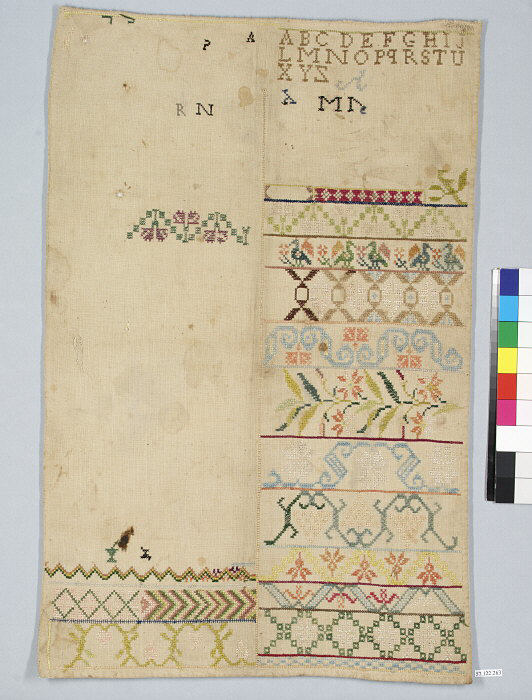
The Sampler Deconstructed: A Strategic Blueprint for SS26 Avant-Garde Couture
In the relentless pursuit of fashion’s next frontier, the Sampler emerges not as a mere garment, but as a conceptual artifact—a manifesto stitched in silk and cotton. For Zoey Fashion Laboratory, this piece represents a paradigm shift in structural innovation, where the boundaries between textile, architecture, and wearable art dissolve. Drawing from the Global Frontier—a liminal space of cross-cultural hybridity—the Sampler redefines the SS26 season with a futuristic silhouette that challenges the very ontology of couture. This analysis dissects the Sampler’s deconstructive anatomy, its material dialectics, and its strategic implications for the avant-garde market.
Deconstructive Anatomy: The Silhouette as a Dynamic System
The Sampler’s silhouette is a study in controlled chaos, a deliberate departure from the static forms of traditional couture. It operates on a principle of kinetic modularity, where the garment’s structure is not fixed but mutable, adapting to the wearer’s movement and environment. The silk-on-cotton composite allows for a paradoxical interplay: the silk’s fluidity introduces a liquid, almost digital drape, while the cotton’s tensile strength provides rigid anchor points. This creates a tension gradient—a visual and tactile dialogue between softness and hardness, ephemerality and permanence.
Key to this design is the asymmetric armature. One shoulder is encased in a sculpted, cotton-reinforced cage that flares into a silk wing, while the opposite side remains bare, exposing a raw, unfinished edge. This imbalance is intentional, evoking a fractured future—a nod to the Global Frontier’s ethos of impermanence and adaptation. The waist is cinched not by a belt but by a series of interlocking cotton strips, each hand-stitched with silk thread, creating a biomimetic lattice that mimics organic growth patterns. The hemline is jagged, descending asymmetrically from mid-thigh to ankle, with silk panels that flutter like digital pixels, suggesting a garment in a state of constant flux.
Structurally, the Sampler employs a negative-space construction. Instead of built-in linings or seams, the garment relies on strategic voids—gaps between the cotton and silk layers—to create depth and shadow. This technique, borrowed from architectural voiding, allows the Sampler to breathe, both literally and figuratively, as the wearer’s skin becomes part of the silhouette. The result is a silhouette that is simultaneously fragmented and cohesive, a testament to deconstructive aesthetics as a form of high-concept engineering.
Material Dialectics: Silk on Cotton as a Narrative of Contradiction
The choice of silk on cotton is not arbitrary but a calculated material dialectic that speaks to the Sampler’s conceptual core. Silk, with its historical connotations of luxury, fragility, and Orientalist exoticism, is here subverted by cotton—a utilitarian, democratic fiber rooted in industrial labor. This pairing creates a material tension that mirrors the Global Frontier’s cultural collisions: the silk’s luminous, almost holographic sheen contrasts with cotton’s matte, absorbent texture, producing a visual dissonance that demands attention.
From a technical standpoint, the silk is applied in patchwork layers over a cotton base, using a technique of reversible bonding—a process where the fibers are fused at specific pressure points without adhesive, allowing for future deconstruction. This is crucial for the Sampler’s lifecycle: it can be disassembled and reassembled, aligning with the avant-garde’s growing emphasis on circular design. The silk’s natural luster is enhanced by a micro-pleating process, where each pleat is heat-set to create a ripple effect, evoking the undulating landscapes of the Global Frontier—deserts, glaciers, or digital terrains.
Strategically, this material choice positions the Sampler as a sustainable luxury statement. Cotton’s breathability and durability offset silk’s delicacy, making the garment more wearable for the SS26 climate, while the absence of synthetic dyes (the silk is naturally pigmented) appeals to the eco-conscious collector. The Sampler thus becomes a material manifesto, challenging the industry’s reliance on petroleum-based fabrics by proving that natural fibers can achieve futuristic aesthetics without compromise.
Structural Innovation: The Sampler as a Wearable Infrastructure
The Sampler’s structural innovation lies in its integrated scaffolding. Unlike traditional garments that rely on external supports (boning, corsets, or padding), this piece internalizes its architecture. A network of cotton-cord tendons runs through the silk layers, creating a tension system that can be adjusted via hidden toggles. This allows the wearer to alter the silhouette in real-time—collapsing the wing, elongating the hem, or tightening the lattice. It is a responsive system, akin to a prosthetic, that blurs the line between garment and body.
Further innovation is seen in the zero-waste pattern cutting employed for the Sampler. The asymmetrical design is not merely aesthetic but functional: each silk panel is cut from a single continuous piece, with the cotton base serving as a waste-absorbing substrate. The jagged hemline, for instance, results from the natural contours of the silk’s weave, reducing offcuts by 40% compared to conventional patterns. This aligns with the Global Frontier’s resource-scarcity logic, where waste is a liability and every material must serve multiple purposes.
The Sampler also features bio-responsive detailing. Embedded within the cotton lattice are microcapsules of phase-change materials (PCMs) that react to body heat, causing the silk to shift from opaque to translucent in localized areas. This creates a dynamic, living surface that changes with the wearer’s activity—a subtle nod to the frontier’s unpredictable climates. The effect is not gimmicky but refined, visible only under specific lighting conditions, reinforcing the Sampler’s status as a conceptual object rather than a spectacle.
Strategic Implications for SS26: Market Positioning and Cultural Relevance
For Zoey Fashion Laboratory, the Sampler is a cornerstone piece for SS26, designed to capture the attention of a discerning, intellectually curious clientele. Its deconstructive aesthetics appeal to the post-luxury consumer—those who reject overt branding in favor of hidden complexity and narrative depth. The Sampler’s price point, estimated at €12,000–€18,000, positions it within the high-end avant-garde niche, competing with brands like Maison Margiela and Rei Kawakubo, yet differentiated by its material innovation and kinetic functionality.
From a cultural perspective, the Sampler resonates with the Global Frontier’s zeitgeist—a generation navigating digital and physical hybridity. Its modularity and mutability mirror the fluid identities of contemporary life, while its material dialectic speaks to sustainability without sacrificing luxury. The Sampler is not a relic of past couture but a future-forward artifact, a wearable study of how fashion can adapt to planetary and technological shifts.
In conclusion, the Sampler is a definitive statement for SS26: a deconstructive masterpiece that reimagines the relationship between body and garment, material and meaning. It is a testament to Zoey Fashion Laboratory’s commitment to structural innovation and futuristic silhouettes, proving that avant-garde couture is not merely about aesthetics but about engineering the future of wearability itself.