Deconstructing the Bowl: A Hellenistic Silver Gilt Artifact Through the Avant-Garde Lens
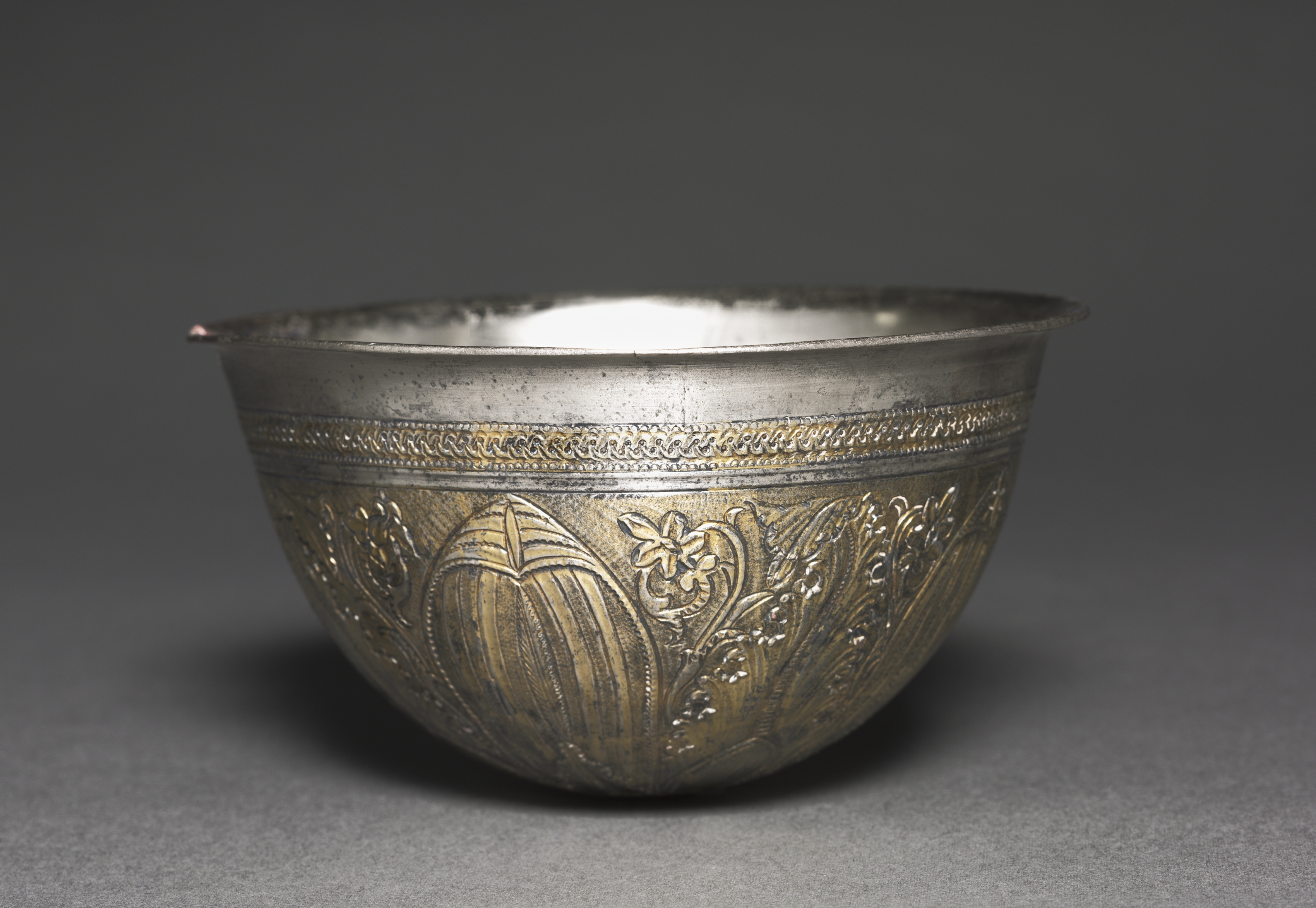
At Zoey Fashion Lab, our mandate is not merely to observe historical artifacts but to deconstruct their material, structural, and symbolic DNA. The subject of this analysis is a silver gilt bowl from the late Hellenistic period (c. 150–50 BCE), originating in Greece. This object, while functional in its era, serves as a profound repository of tension—between light and shadow, surface and depth, the ephemeral and the eternal. The Archive Resonance, referencing a mirror with split-leaf motifs, further deepens this paradox: one side a polished silver mirror inlaid with gold palmettes, the other a cold sarcophagus lid narrating life through relief. For the avant-garde, this bowl is not a relic but a blueprint for a new form of wearable and conceptual design.
Materiality and the Dialectic of Silver and Gold
The bowl’s primary material, silver gilt, immediately establishes a dualistic character. Silver, in its polished state, is a mirror—reflective, cold, and self-absorbed. It captures the viewer’s gaze and the ambient light, creating a surface that is both present and elusive. Gold, applied as gilding, introduces warmth, permanence, and a sense of the sacred. In Hellenistic culture, gold was associated with the divine and the eternal, while silver was linked to lunar cycles and the mutable world. This binary is essential for avant-garde fashion, which thrives on contradiction. A garment or accessory that alternates between matte and polished surfaces, or between cool silver and warm gold accents, generates a dynamic visual rhythm. The bowl’s construction—where gold is not merely a coating but an inlay—suggests a technique of embedding, not overlaying. This implies a design philosophy where contrasting elements are interwoven, not simply juxtaposed. For Zoey Fashion Lab, this translates into textiles where metallic threads are woven into the fabric’s warp and weft, creating a surface that changes with movement and light, much like the bowl’s shifting reflections.
Structural Analysis: The Split-Leaf Motif and Negative Space
The Archive Resonance describes a mirror with split-leaf palmettes. This motif is critical. The palmette, a stylized palm frond, was a symbol of victory and regeneration in the Hellenistic world. However, the “split-leaf” variant introduces a fracture, a moment of asymmetry. In the context of the bowl, this design likely appears as a frieze or a central medallion, where the leaves are divided, perhaps by a central stem or by the bowl’s curvature. This split creates negative space—gaps that are as important as the metal itself. In avant-garde fashion, negative space is a tool for revealing the body or the underlying structure. A dress that uses cutouts or laser-etched patterns, where the fabric is removed to create a palmette-like silhouette, echoes this Hellenistic technique. The split also implies motion, as if the leaf is in the process of unfurling or being torn. This kinetic quality can be translated into garments that are modular, with detachable panels or adjustable drapes that allow the wearer to alter the silhouette. The bowl’s surface, therefore, is not static; it is a field of tension between the whole and the fragment.
Function and Dysfunction: From Vessel to Artifact
Originally, this bowl was a functional object—used for libations, offerings, or perhaps as a decorative piece in a symposium. Its silver gilt surface would have been polished to a high sheen, reflecting the faces of those who used it. However, the late Hellenistic period was one of cultural hybridity and decline, where Greek forms were increasingly influenced by Roman and Eastern aesthetics. The bowl, therefore, carries the weight of its own obsolescence. It is a vessel that no longer holds liquid but holds meaning. This transformation from utility to artifact is a core concept for the avant-garde. Fashion, like this bowl, often sacrifices function for form. A garment that is unwearable in a practical sense—too heavy, too fragile, too revealing—becomes a statement. The bowl’s silver gilt surface, prone to tarnishing, also introduces the idea of entropy. The material decays, and this decay is part of its narrative. For Zoey Fashion Lab, this suggests collections that incorporate oxidation, patina, or intentionally distressed finishes. A silver lamé dress that is allowed to tarnish in controlled patterns, or gold leaf applied to fabric that will flake over time, creates a living garment that evolves with the wearer.
The Mirror and the Sarcophagus: A Dichotomy of Reflection and Narration
The Archive Resonance explicitly contrasts two sides: a polished silver mirror with gold inlay, and a sarcophagus lid with relief sculpture. This is the most potent avant-garde element. The mirror side is purely reflective—it shows the viewer their own image, but it is also a surface that can be inscribed with meaning through the gold palmettes. The sarcophagus side, however, is narrative. It tells a story through carved figures, scenes of life or death, and mythological references. The bowl, as an object, must reconcile these two modes. It is both a mirror that reflects the present and a sarcophagus that contains the past. In fashion, this duality can be expressed through garments that are reversible. One side might be a highly reflective, metallic surface that acts as a literal mirror, while the other side features embroidered or printed reliefs that tell a story—perhaps a personal narrative, a historical reference, or an abstract pattern derived from the split-leaf motif. The act of turning a garment inside out becomes a ritual of transformation, from the self-absorbed to the historical, from the immediate to the eternal.
Avant-Garde Application: Deconstructing the Bowl into Wearable Form
For Zoey Fashion Lab, the bowl’s technical and symbolic elements are not to be copied but deconstructed. The silver gilt surface becomes a fabric that is both reflective and textured. The split-leaf motif inspires a pattern of asymmetrical cutouts, where the garment’s structure is revealed through gaps. The mirror-sarcophagus dichotomy informs a collection that alternates between minimal, reflective surfaces and dense, narrative-rich embroidery. The bowl’s curvature—a continuous, unbroken line—can be translated into silhouettes that are both sculptural and fluid, such as a circular cape or a spiral-cut dress that wraps the body without seams. The late Hellenistic origin adds a layer of cultural hybridity, suggesting that the collection should incorporate influences from multiple eras and geographies, much like the Hellenistic world itself. The bowl is not a static object; it is a resonance chamber for ideas about surface, time, and identity. By deconstructing it, Zoey Fashion Lab can create designs that are not just clothing but artifacts of a new, avant-garde archaeology.
Conclusion: The Bowl as a Resonant Archive
This silver gilt bowl from the late Hellenistic period is far more than a historical curiosity. It is an archive of material, structural, and symbolic tensions that are directly applicable to avant-garde fashion. Its dual nature—reflective and narrative, functional and symbolic, whole and fragmented—provides a rich vocabulary for design. At Zoey Fashion Lab, we do not seek to reproduce the past but to resonate with it. The bowl’s split-leaf motifs, its silver-gold dialectic, and its mirror-sarcophagus dichotomy are all templates for a new kind of fashion that challenges the boundaries of wearability, materiality, and meaning. The final garment or accessory is not a copy of the bowl but a translation—a piece that carries the same weight of time, the same play of light, and the same capacity to reflect both the wearer and the world they inhabit.