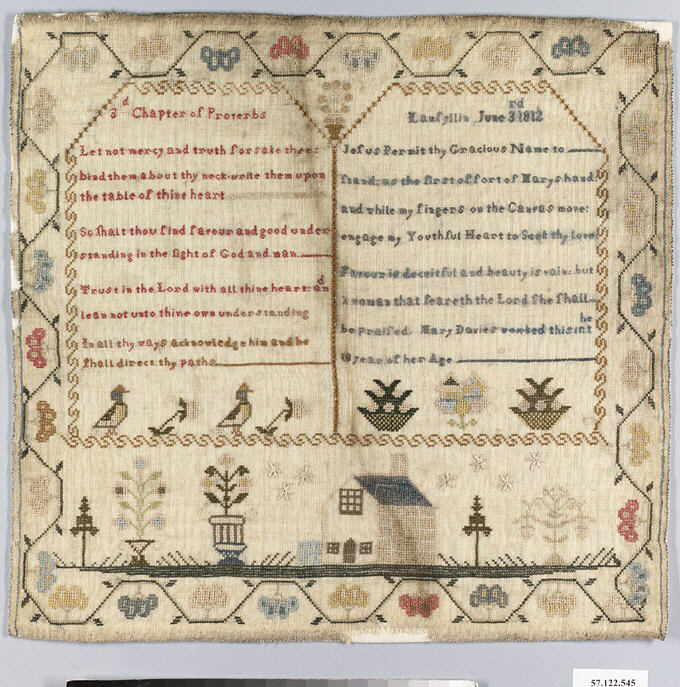
The Sampler: A Cartography of Deconstruction for SS26
The Sampler, as reimagined by Zoey Fashion Laboratory for the SS26 season, transcends its historical roots as a mere textile proof or embroidered exercise. It emerges not as a fragment, but as a complete, autonomous garment narrative—a manifesto stitched in wool canvas. Originating from the nebulous Global Frontier, a conceptual territory where cultural boundaries dissolve and technological nomadism reigns, this piece is a standalone avant-garde study. It interrogates the very nature of garment construction, proposing a future where silhouette is not a given, but a proposition; where structure is not static, but a dynamic system. This analysis dissects the Sampler’s architectural lexicon, its material dialectic, and its radical redefinition of the human form for a season defined by deliberate, thoughtful disruption.
Deconstructing the Canvas: Material as a Site of Rebellion
The choice of wool canvas is a calculated provocation. In an era of hyper-lightweight, performance-driven synthetics, Zoey Fashion Laboratory returns to a foundational, almost archaic textile. However, this is not a nostalgic gesture. The wool canvas is treated as a structural substrate, a blank slate for a new kind of architectural drapery. Its inherent weight and rigidity are not limitations, but opportunities. The material is subjected to a rigorous process of deconstructive cartography: seams are deliberately misaligned, creating topographical shifts in the garment’s surface; panels are cut on the bias and then re-joined at extreme angles, generating tension that mimics the pull of gravity on a landscape.
The canvas is further manipulated through heat-set pleating and chemical cracking, creating a patina of age and wear that is entirely artificial yet feels deeply organic. These techniques produce a surface that is both raw and refined, a paradox that defines the avant-garde spirit. The wool’s natural breathability and thermal regulation are preserved, but its visual and tactile identity is radically altered. It becomes a memory fabric, bearing the scars of its own creation, a testament to the process of becoming. This is not a garment that hides its seams; it celebrates them as a form of structural calligraphy.
Futuristic Silhouettes: The Body as a Scaffold for the Unknown
The Sampler’s silhouette is a study in asymmetrical volumetric tension. It rejects the clean, streamlined lines of mainstream futurism in favor of a more complex, almost cyborgian geometry. The garment is built around a core of negative space—a void that defines the wearer’s presence as much as the fabric itself. The shoulders are exaggerated into sharp, cantilevered planes, reminiscent of architectural flying buttresses, while the torso is wrapped in a series of overlapping, trapezoidal panels that create a sense of kinetic armor.
A defining feature is the deconstructed sleeve, which is not a single tube but a series of disconnected, articulated segments that float around the arm, connected only by invisible magnetic closures or tensioned straps. This creates a silhouette that is both protective and ethereal, suggesting a body that is in constant negotiation with its environment. The hemline is radically uneven, dipping to the floor on one side and rising to the hip on the other, forming a diagonal axis that destabilizes the viewer’s perception of balance. The overall effect is of a garment that is perpetually in the process of assembling itself, a snapshot of a dynamic, evolving form.
Structural Innovation: The Architecture of Impermanence
The true innovation of the Sampler lies in its modular structural system. The garment is not sewn together in a traditional sense but is assembled through a network of adjustable tension points, including integrated leather straps, industrial-grade snaps, and custom-molded resin grommets. This allows the wearer to reconfigure the silhouette in real-time, transforming the garment from a closed, protective shell into an open, flowing drape. The canvas is reinforced at key stress points with carbon-fiber rods that are sheathed in the wool, providing invisible structural support without compromising the fabric’s tactile quality.
Furthermore, the Sampler incorporates pneumatic chambers—thin, sealed air pockets within the double-layered canvas—that can be inflated or deflated via a small, hidden valve. This technology, borrowed from aerospace engineering, allows for the creation of dynamic volume. A sleeve can be suddenly inflated to create a dramatic, bulbous form, or deflated to become a flat, linear appendage. This introduces a temporal dimension to the garment’s architecture, making it a living, responsive structure. The Global Frontier context is thus literalized: the garment is a portable environment, a personal ecosystem that adapts to the shifting conditions of the wearer’s journey.
Contextualizing the Standalone Avant-Garde Study
As a standalone study, the Sampler is not intended for mass production or commercial viability. It is a thesis in fabric, a provocation that challenges the fashion industry to rethink its relationship with material, form, and function. It positions Zoey Fashion Laboratory as a laboratory of ideas, where the garment is a vehicle for exploring the intersection of craftsmanship, technology, and philosophy. The Sampler asks: What if a garment could think? What if it could remember its own construction? What if it could be reconfigured to suit the emotional and physical needs of its wearer?
This piece stands in stark opposition to the seasonal cycles of fast fashion. It is a slow, deliberate artifact, one that demands contemplation and engagement. Its beauty lies in its incompleteness, its refusal to be a final, resolved object. The Sampler is a blueprint for the future, a future where garments are not consumed but co-created, where the line between designer and wearer is blurred, and where the act of dressing is an act of spatial and temporal negotiation. In the lexicon of Zoey Fashion Laboratory, the Sampler is not a finished product; it is an invitation—a call to explore the uncharted territories of what clothing can become.