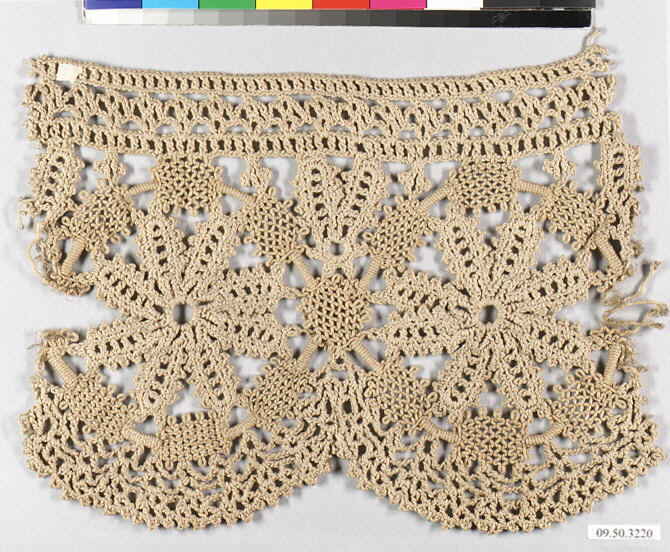
Deconstructing the Frontier: Crochet as Architectural Medium in SS26
The avant-garde mandate is not to predict the future, but to construct its sartorial dialect. For Zoey Fashion Laboratory's SS26 inquiry, the directive is clear: to interrogate a material of profound historical tactility—crochet—and project it into the lexicon of the Global Frontier. This is not a nostalgic revival but a radical re-contextualization. Crochet, traditionally associated with domesticity and artisanal continuity, is here subjected to a process of architectural alchemy. Our analysis posits this collection as a standalone study in paradoxical materiality, where the softness of thread confronts the rigidity of futuristic form, creating a wearable dialectic between the hand and the hyper-digital.
Structural Innovation: From Loop to Exoskeleton
The foundational innovation lies in the subversion of crochet's inherent properties. We move beyond the pliant, draping fabric typically yielded by the hook. Instead, SS26 employs a proprietary technique we term Rigid-Filament Construction. By impregnating bio-polymer threads with a latent structural resin and manipulating stitch tension and density algorithmically, we create panels that are malleable during construction but cure into predetermined, rigid forms. This transforms the crochet process from one of weaving fabric to one of directly 3D-printing garment architecture on the body.
Silhouettes thus emerge as exoskeletal frameworks. Imagine a bodice that appears as a sprawling, geometric coral reef in ivory thread, its voids as critical to the structure as its solids, providing support and shape independent of an underlying corset. A sleeve extends beyond the hand not as a flowing cascade, but as a cantilevered truss of hexagonal motifs, a functional study in tensile integrity. This approach dismantles the traditional fashion hierarchy of foundation and outer layer; the crochet structure is the foundation, the architecture, and the aesthetic surface in one fused entity.
Futuristic Silhouettes: The Parasitic and the Parametric
The SS26 silhouette vocabulary is bifurcated along two conceptual lines: the Parasitic and the Parametric. The Parasitic Silhouette engages in a symbiotic relationship with the wearer's form. Garments are not merely worn; they appear to grow from specific anatomical points—the scapula, the iliac crest, the sternum. From these nodes, crocheted forms erupt in asymmetric, organic expansions, reminiscent of mycological networks or silicon-based marine life. A dress may anchor at a single shoulder, with its mass cascading down one side of the body in a complex, self-supporting web, leaving the other side starkly exposed. This creates a dynamic, living relationship between body and garment, where the human form is both host and integral structural component.
Conversely, the Parametric Silhouette is derived from algorithmic data sets—simulations of wind pressure, thermal mapping, or urban grid patterns. These pieces present as fully autonomous, geometric forms that maintain their own spatial volume irrespective of the body within. Think of a crocheted sphere deconstructed into a segmented outer shell, worn over a minimalist sheath, creating a palpable, breathable space between body and garment. Or a columnar dress featuring a spiraling, turbine-like distortion woven into its very lattice, a frozen snapshot of dynamic forces. These silhouettes challenge the very premise of clothing as a second skin, proposing it instead as a personal, portable environment.
Material Context: The Hand in the Machine
In the context of the Global Frontier—a conceptual space where technology and organic life converge—the choice of crochet is profoundly strategic. It serves as the critical human artifact in a digitally-driven aesthetic. The imperfection of the handmade stitch is not concealed but celebrated as a data point, a record of human decision-making within an otherwise computationally-derived form. We introduce "glitch-crochet," where intentional errors in the pattern are amplified, creating unexpected apertures or structural deviations, thereby embedding a narrative of process within the final object.
Furthermore, materiality is pushed through hybridity. Crochet is integrated with shards of recycled photovoltaic film, strands of fiber-optic yarn that emit a low-level lumen glow, or is laminated over morphing electro-luminescent substrates. The texture becomes a multi-sensory interface: a rigid, lacquer-like surface in one panel abuts a section of hyper-pliant, sensor-embedded mesh crochet. This transforms the garment from a static object into a reactive architectural site, capable of limited interaction with its environment.
Conclusion: The Standalone Study as Manifesto
This SS26 analysis for Zoey Fashion Laboratory ultimately frames the collection as a definitive manifesto on material agency. Crochet is liberated from its patrimony of comfort and nostalgia and weaponized as a tool for avant-garde speculation. By forcing this most tactile of techniques to answer questions of structural engineering, spatial volume, and biometric interface, we propose a new model for couture. It is a model where the distinction between craft and technology, between the organic and the synthetic, and between the garment and the habitat is not just blurred but productively erased. The resulting forms—both parasitic and parametric—are not mere clothing for the future. They are architectural prosthetics for a new mode of being, standing alone as rigorous studies in how we will inhabit, and be inhabited by, the world at the frontier.