The Panel Deconstructed: Needle Lace as Structural Armature for SS26
Deconstructing the Global Frontier: From Archival Craft to Futuristic Silhouette
The panel, in its most conventional form, represents a finite, often decorative, segment of a garment—a discrete unit of fabric defined by its borders. For Zoey Fashion Laboratory’s SS26 collection, this architectural element is radically reimagined. We are not merely applying needle lace as an embellishment; we are weaponizing it as a load-bearing structural component. The Global Frontier—a conceptual territory where geographic boundaries dissolve into digital and material flows—demands a new sartorial syntax. Here, needle lace, traditionally a symbol of painstaking, handcrafted intimacy, is extruded into the third dimension. It becomes a lattice of tension and release, a network of voids and solids that defines the silhouette not by covering the body, but by framing it. This is not a lace dress; it is a lace exoskeleton.
Material Alchemy: Needle Lace as a Tensegrity System
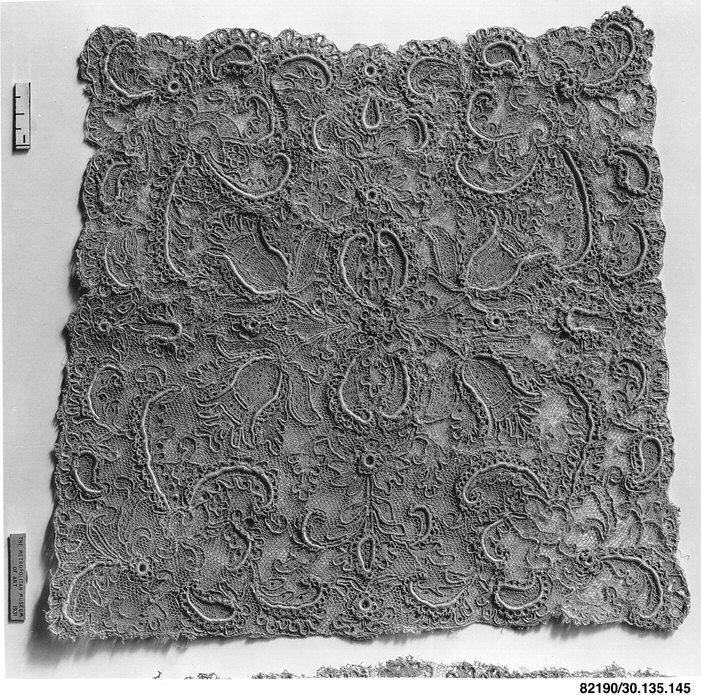
To understand the SS26 panel, one must first discard the notion of lace as soft, yielding, or purely ornamental. Our needle lace is engineered from a hybridized yarn—a core of high-tenacity recycled nylon fused with a sheath of micro-crocheted silk. This composite material possesses a paradoxical quality: it is both rigid and fluid, capable of holding a sharp, architectural fold while draping with a liquid grace. The panel itself is constructed not as a flat sheet, but as a series of interconnected, three-dimensional nodes. Each node is a miniature, self-contained tensile structure, created through a modified needle-lace technique we call *tension-point framing*. The traditional buttonhole stitch is replaced with a locked loop that creates a fixed, non-yielding intersection, while the background mesh is left intentionally open. The result is a panel that functions as a tensegrity system—a network where compression elements (the dense, locked nodes) are held in place by tension elements (the open, gossamer threads). This allows the panel to support its own weight, to resist gravity, and to create a silhouette that appears to float, suspended in space.
Architectural Silhouette: The Floating Shoulder and the Voided Torso
The most radical application of this panel system is in the construction of the garment’s upper body. We have abandoned the traditional shoulder seam. Instead, a single, continuous panel of needle lace—shaped through a heat-set molding process—curves from the nape of the neck, over the clavicle, and down to the mid-ribcage. This panel is not attached to a bodice; it is the bodice. The negative space beneath the panel—the void between the lace and the skin—is a deliberate design feature. It creates a *floating shoulder* effect, where the garment’s structure hovers a full three to five centimeters away from the body. This is not a gap; it is a volume. The silhouette is defined by this interstitial space, a zone of pure potential. The torso is then wrapped in a second, larger panel that spirals from the waist, across the ribs, and over the opposite shoulder, creating a diagonal, asymmetrical wrap. This second panel is anchored only at the waist and the opposite hip by a series of micro-magnetic closures embedded within the lace nodes. The result is a silhouette that is simultaneously armored and ethereal—a hard, geometric shell that is paradoxically transparent and weightless.
Structural Innovation: The Morphing Panel and the Kinetic Lattice
Beyond static architecture, the SS26 panel system introduces a kinetic dimension. The needle lace is engineered with a variable stiffness gradient. Along the panel’s outer edge, the density of the locked nodes is increased, creating a rigid, self-supporting frame. Toward the panel’s center, the node density decreases, allowing the lace to flex and drape. This gradient enables the panel to morph between two distinct states: a flat, planar shield when the wearer is at rest, and a cascading, fluid drape when the wearer moves. This is achieved through micro-articulation points—tiny, flexible hinges formed by a single, unbroken thread that loops around a node and returns to the frame. When the body rotates or bends, these hinges allow the panel to fold, twist, and reconfigure without creasing or losing its structural integrity. The panel becomes a living, breathing surface, responding to the wearer’s biomechanics. This is not a garment that constrains; it is a garment that collaborates with the body.
Avant-Garde Context: The Panel as a Statement of Autonomy
In the broader context of avant-garde couture, the panel has historically been a tool for decoration or pattern-cutting efficiency. Zoey Fashion Laboratory’s SS26 intervention repositions the panel as a primary agent of form. The needle-lace panel is no longer a piece of a puzzle; it is the puzzle itself. Its structural innovation—the tensegrity system, the floating shoulder, the kinetic hinge—challenges the very definition of a garment. It asks: What is clothing if not a structure that defines space around the body? Our answer is a garment that is a pure, autonomous structure, a wearable sculpture that derives its meaning from its own internal logic. The Global Frontier is not a place; it is a condition of flux. The SS26 panel, with its ability to morph, float, and support itself, is the material manifestation of that condition. It is a declaration that the future of couture lies not in covering the body, but in constructing the void that surrounds it.