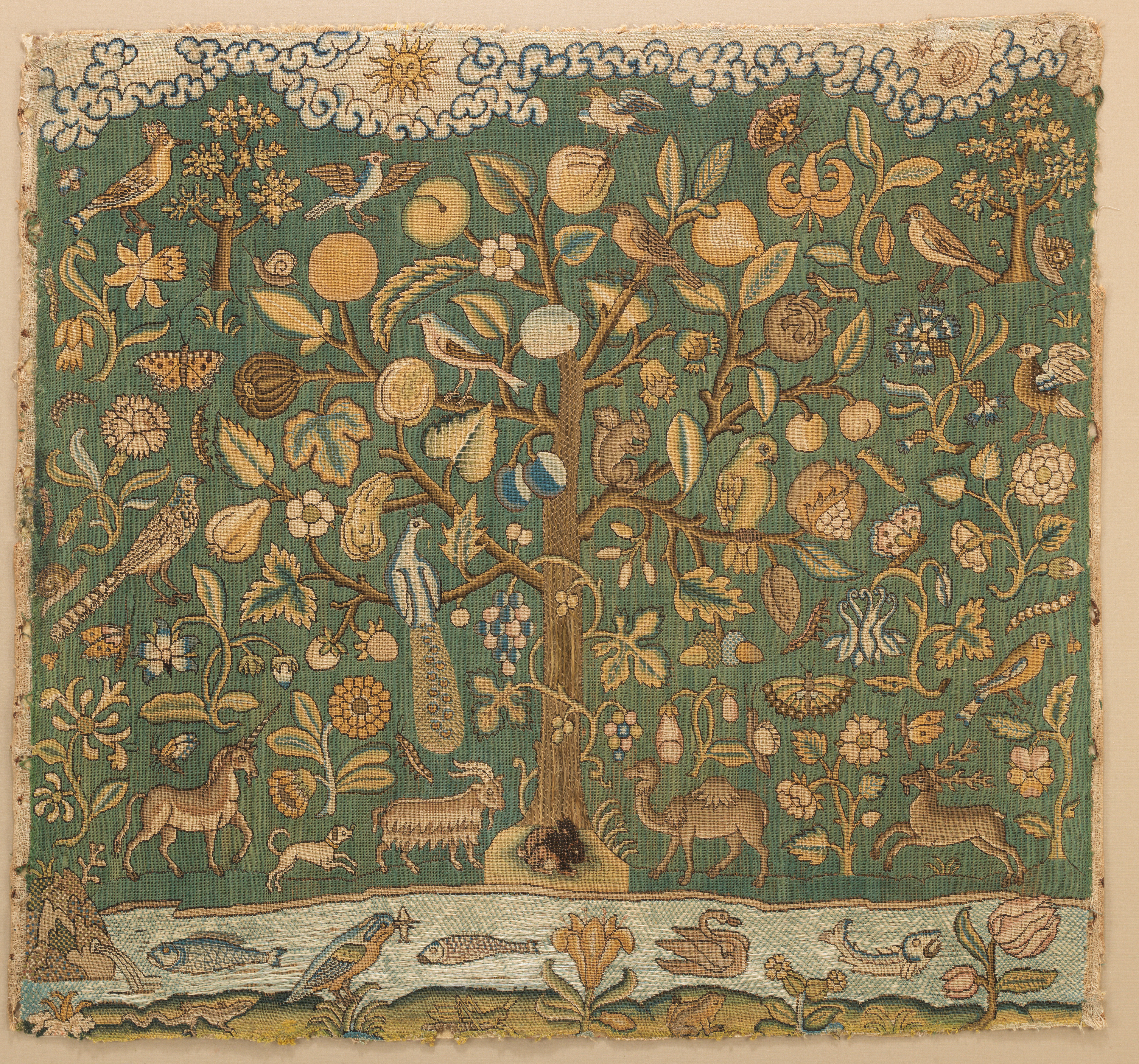
The Arboreal Construct: Deconstructing the Tree of Life for SS26
In the annals of avant-garde couture, the Tree of Life motif has often been relegated to the pastoral—a symbol of fertility, growth, and organic harmony. For Zoey Fashion Laboratory’s SS26 collection, this archetype undergoes a radical transfiguration. We are not concerned with the tree as a naturalistic emblem, but as a structural blueprint for a post-human silhouette. The garment, conceived from a global frontier of raw canvas and silk thread, becomes an architectural diagram of existence itself: a scaffold of memory, tension, and future growth. This is not a dress; it is a living system.
Material Dialectics: Canvas as Skin, Silk as Sap
The choice of canvas—a material of utility, of tents and sails—is a deliberate provocation. It rejects the soft, decadent silks of traditional haute couture. Here, canvas is the exoskeleton, the ground upon which life is inscribed. Yet, paradoxically, it is worked with silk thread, creating a dialectic of strength and fragility. The silk is not a mere embellishment; it is the lifeline, the sap that courses through the canvas veins.
The technical execution is paramount. Three distinct stitch methodologies are deployed: tent stitch, Gobelin stitch, and couching stitch. The tent stitch, known for its durability and density, forms the root system—a tight, impenetrable grid at the garment’s base, suggesting subterranean anchoring. The Gobelin stitch, with its long, diagonal threads, creates the trunk and primary branches—a textural topography that rises in vertical, almost gravitational defiance. Finally, the couching stitch, where one thread is laid upon the fabric and another stitched over it, becomes the canopy and root tendrils—a web of floating, unanchored lines that suggest the tree’s reach into unseen dimensions. This is not embroidery; it is cartography of the unseen.
Silhouette as System: The Fractal Canopy
The futuristic silhouette for SS26 abandons the human form as a passive mannequin. Instead, the body becomes a catalyst for structural emergence. The garment is built as a series of modular, interlocking panels that can be reconfigured, echoing the fractal growth patterns of a tree. The shoulders are not padded; they are cantilevered, extending outward like primary branches, supported by hidden wire frames that mimic the tree’s lignin. The waist is cinched not by a belt, but by a woven corset of couched silk threads, creating a point of tension that radiates energy upward and downward.
The most radical innovation is the “Root Train”—a long, trailing extension of the canvas base that is stitched in a dense, root-like pattern using the tent stitch. This train does not simply drag behind; it is asymmetrically weighted, causing the garment to tilt and shift with the wearer’s movement, as if the tree is constantly seeking new ground. The canopy, meanwhile, is realized as a detachable cape of couched silk threads, which can be worn as a halo, a shroud, or a wing. This modularity challenges the notion of a fixed silhouette, proposing a wardrobe that evolves in real-time, responsive to environment and intent.
Structural Innovation: The Tension Architecture
Where traditional couture relies on seams and darts, Zoey Fashion Laboratory introduces tension architecture. The garment is held together not by stitching alone, but by the dynamic pull of the silk threads across the canvas. The Gobelin stitches, in particular, are used as tension cables, pulling the canvas into sharp, angular folds that create negative space—voids where the body is absent but implied. This is the architecture of absence, a deconstructive gesture that honors the tree’s hollows and knots.
The most innovative element is the “Cambium Layer”—a hidden inner structure of silk threads that is not visible from the exterior. This layer, stitched in a loose, net-like pattern, acts as a shock absorber, allowing the outer canvas to move independently of the body. The result is a garment that breathes and pulses, creating a kinetic dialogue between the wearer and the fabric. It is not a second skin; it is a symbiotic exoskeleton.
Global Frontier: The Tree as a Network
The “Global Frontier” context is not a geographical location but a conceptual territory where boundaries dissolve. The Tree of Life is reimagined as a network—a rhizomatic structure that connects disparate nodes of culture, memory, and material. The canvas, sourced from industrial sailcloth, speaks to movement and trade. The silk thread, a material of ancient luxury, recalls the Silk Road. The stitches themselves—tent, Gobelin, couching—are techniques from global textile traditions, repurposed for a futuristic vision.
The garment is designed to be worn in multiple configurations, reflecting the fluidity of identity in a globalized world. The canopy cape can be detached and worn as a separate shawl, or the root train can be folded and pinned into a bustle. This is nomadic couture, where the garment is not a fixed object but a traveling system. The Tree of Life is no longer rooted in one place; it is a wandering arboretum, carrying its ecosystem with it.
The SS26 Manifesto: Beyond Sustainability
This analysis is not about sustainability in the conventional sense. It is about regeneration through deconstruction. The Tree of Life for SS26 is a protest against the static. It rejects the idea of a finished garment in favor of a perpetual becoming. The canvas will fray, the silk will loosen, the tension architecture will shift over time—and that is the point. The garment ages, grows, and decays, mirroring the life cycle of a tree.
The futuristic silhouette is not about a distant, sterile future. It is about a future that is rooted in the ancient, where technology and craft are indistinguishable. The Tree of Life is a synthesis of the organic and the engineered, a garment that is at once a tent, a map, a root, and a wing. It is a standalone study in how couture can become a laboratory for new forms of life.
Zoey Fashion Laboratory does not design clothes. We design systems of existence. The Tree of Life is the first branch of that system—a testament to the power of thread, canvas, and the human will to defy gravity. Wear it, and you are no longer a person. You are a conduit for growth. You are the tree.