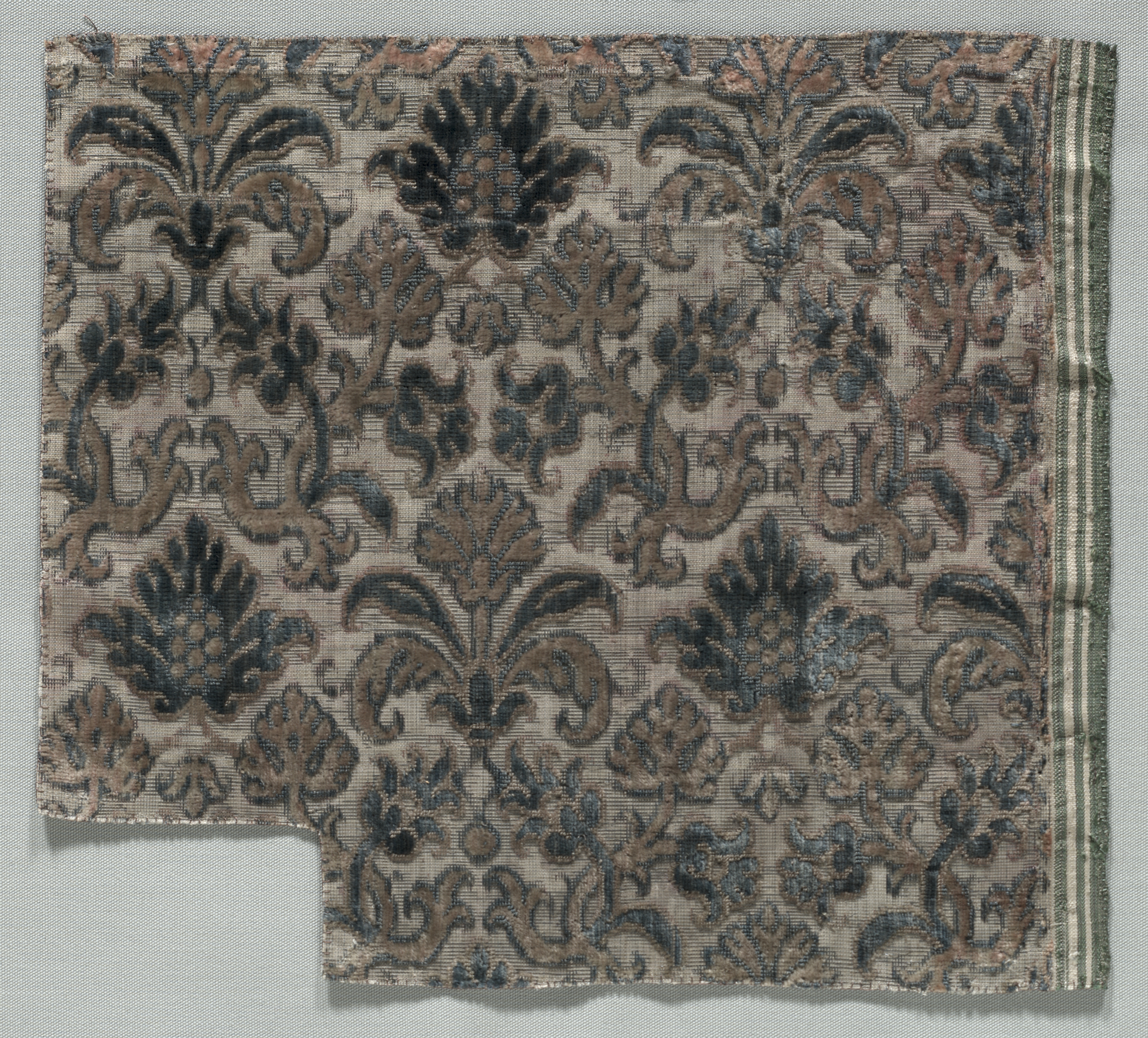
Deconstructing the Velvet Fragment: A 17th-Century Italian DNA Strand for Avant-Garde Fashion
At Zoey Fashion Lab, the role of the Chief Fabric Deconstructionist is to unearth the latent narratives embedded within historical textiles. The subject of this analysis is a singular velvet fragment, originating from 17th-century Italy. This is not merely a piece of fabric; it is a genetic code, a New DNA Strand waiting to be sequenced, reinterpreted, and re-expressed through an avant-garde lens. By dissecting its physical, historical, and symbolic architecture, we can isolate the core elements that will inform a radical new collection.
I. The Physical Architecture: A Technical Autopsy
The fragment, though small, is a masterclass in textile engineering. Velvet, by its very nature, is a fabric of duality: a stable ground weave supporting a precarious pile. In this 17th-century Italian iteration, the technical specifics are paramount. The ground is likely a silk warp and weft, providing a lustrous, rigid foundation. The pile, also silk, is formed through a supplementary warp system, cut to create a dense, upright surface. This is not a plush, soft velvet; it is a silk voided velvet, where sections of the pile are deliberately omitted to create a pattern, often a symmetrical floral or pomegranate motif, against the flat ground.
The deconstruction reveals a tension between structure and sensuality. The cut pile, once vibrant, now shows signs of crushing and wear—a patina of history. The ground, however, remains remarkably intact. This dichotomy is the first clue for the avant-garde designer: the interplay between the ephemeral and the enduring. The technical challenge is to replicate this structural complexity using modern materials. We propose a laser-cut, high-density microfiber pile bonded to a flexible, recycled polyester ground. This allows for the same voided effect—where the pile is removed to reveal a contrasting, perhaps metallic or iridescent, underlayer—but with enhanced durability and a reduced ecological footprint. The "crush" of the original can be digitally simulated, creating a controlled, intentional texture that speaks to the passage of time.
II. The Historical Context: A Genetic Marker of Power and Piety
This fragment is not just a textile; it is a document of 17th-century Italian society. Velvet was a fabric of immense luxury, reserved for the aristocracy and the Church. Its production was a closely guarded secret, centered in cities like Genoa, Venice, and Florence. The pattern—often a stylized pomegranate or artichoke—was a symbol of fertility, eternity, and divine order. To wear such a fabric was to wear a statement of wealth, power, and religious devotion. The fragment, therefore, carries a genetic marker of hierarchical structure and ritualistic significance.
For the avant-garde reinterpretation, this historical DNA must be subverted. The opulence of the original can be weaponized. Instead of reinforcing hierarchy, we use it to question the very concept of luxury and exclusivity. The pattern, once rigidly symmetrical, can be algorithmically distorted, creating a glitch in the historical matrix. The pomegranate motif, a symbol of life, can be reimagined as a biometric data visualization—a pattern of heartbeats or neural activity, printed or woven into the voided areas. This transforms a symbol of static power into a representation of dynamic, individual identity. The fabric becomes a wearable manifesto, challenging the viewer to reconsider the relationship between historical privilege and contemporary self-expression.
III. The Avant-Garde Application: A New DNA Strand for Zoey Fashion Lab
The "New DNA Strand" is not a literal genetic code but a conceptual framework. It is the extraction of the fragment's core principles—tension, duality, structural complexity, and historical symbolism—and their recombination into a novel fashion language. The avant-garde style demands that we break the rules of traditional garment construction. Here, the velvet fragment informs three key design directions:
1. Deconstructed Silhouettes: The voided velvet technique inspires a garment where the "pile" is not fabric but laser-cut leather or silicone, bonded to a sheer, translucent base. The "voids" become windows to the body or to a secondary, digital layer (e.g., an LED panel). The silhouette is asymmetrical, perhaps a single sleeve with a trailing, crushed-pile train, mirroring the fragment's irregular edges. The garment is not a complete object; it is a fragment itself, a suggestion of a larger whole.
2. Textural Contrast and Hybridization: The original velvet's crushed pile is a record of its history. In the new DNA strand, we intentionally create hybrid textures. A jacket might feature a smooth, reflective ground (like liquid metal) with a flocked, matte-black pile in a distorted pomegranate pattern. The "crush" is achieved through heat-pressing and selective abrasion, creating a tactile map of wear. This is not decay but a deliberate aesthetic of controlled entropy.
3. Digital and Physical Integration: The historical fragment is static. The new DNA strand is dynamic. We embed conductive threads within the ground weave, allowing the garment to respond to touch or environmental data. The voided pattern could change color with the wearer's heartbeat or pulse with a low-frequency vibration. The pomegranate motif becomes a biometric interface, a living pattern that evolves. This is the ultimate avant-garde gesture: a fabric that is not just worn but interacted with, a conversation between the wearer, the garment, and the history it carries.
IV. Conclusion: From Fragment to Future
This 17th-century Italian velvet fragment is not a relic to be preserved in a museum. It is a provocation. For Zoey Fashion Lab, it is a New DNA Strand that demands to be re-sequenced. By deconstructing its technical, historical, and symbolic codes, we have identified a pathway to an avant-garde future. The result is not a reproduction but a rebellion—a fashion that honors the past by dismantling it, creating garments that are at once luxurious, critical, and deeply personal. The velvet fragment lives again, not as a piece of history, but as a blueprint for the future of fashion. This is the work of the Chief Fabric Deconstructionist: to find the future in the fragment.