Deconstructing the Moche Fragment: A Dialogue Between Ancient Andean Textiles and Avant-Garde Sensibility
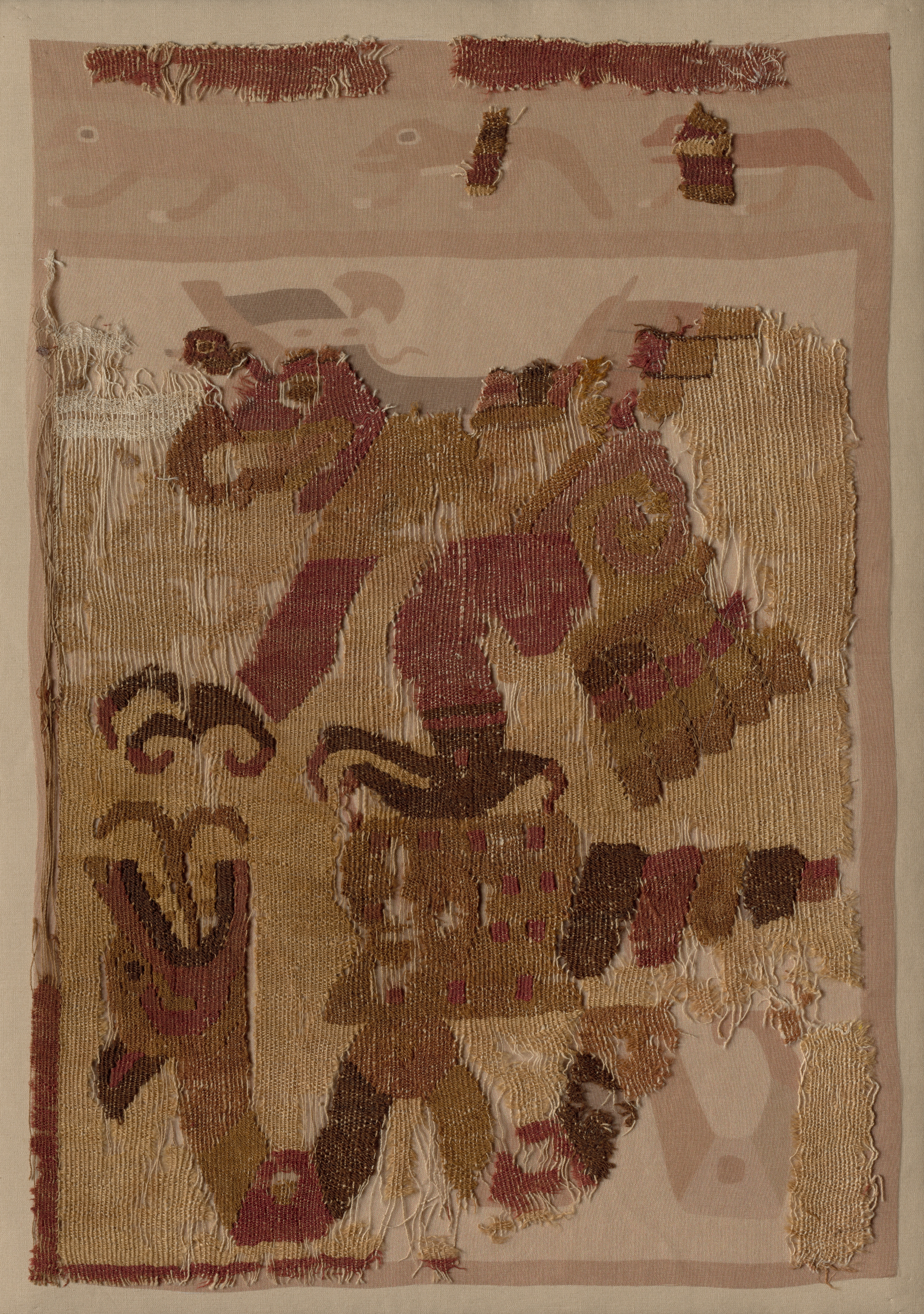
As the Chief Fabric Deconstructionist for Zoey Fashion Lab, I am tasked with dissecting not merely the physical properties of textile artifacts, but the latent narratives and structural philosophies embedded within their fibers. The subject of this analysis—a textile fragment originating from the Moche culture of Peru’s north coast, composed of cotton and camelid fiber—offers a profound case study in material intelligence. This fragment, cataloged under the reference Archive Resonance, is not a relic of a bygone era. Instead, it is a living blueprint for avant-garde design, a testament to the fact that the most radical innovations often emerge from a deep, deconstructive reading of the past.
The Moche, flourishing between 100 and 800 CE, were master engineers of the visual and tactile. Their textiles, often overshadowed by their celebrated goldwork and ceramic portraiture, represent a sophisticated system of structural storytelling. This fragment, a hybrid of plant-based cotton and animal-derived camelid fiber, is a deliberate act of material alchemy. The cotton, native to the region, provides a cool, absorbent, and structurally stable ground. The camelid fiber—likely from alpaca or llama—introduces warmth, tensile strength, and a capacity for deep, vibrant dye absorption. In an avant-garde context, this is not a haphazard blend; it is a calculated binary system of opposing properties—softness versus resilience, opacity versus luster, earth versus animal. This duality is the first principle of deconstruction: to identify the fundamental conflict within the material and then to exploit it for expressive form.
Technical Analysis: The Grammar of Warp and Weft
The fragment’s construction reveals a mastery of the warp-faced weave, a technique where the warp threads are densely packed, creating a smooth, almost impervious surface. This is a technology of control. The cotton warp provides the rigid, linear skeleton, while the camelid weft, often introduced in discontinuous or supplementary patterns, acts as the narrative agent. Under magnification, one can observe the precise tensioning—each thread is a vector of force, a unit of design. For Zoey Fashion Lab, this translates into a lesson in parametric construction. The Moche weaver was not a freehand artist; they were a programmer of threads, using a backstrap loom to create a binary code of pattern and ground.
The color palette, though faded by centuries, speaks to a sophisticated chemical knowledge. The camelid fibers retain traces of indigo (blue), cochineal (crimson), and mollusk-based purple. These are not arbitrary colors. In Moche cosmology, blue was associated with water and the underworld, red with blood and life force, and purple with royalty and the divine. The fragment’s pattern—a series of interlocking stepped diamonds and stylized feline figures—is a visual cosmology. The deconstructive act is to recognize that this pattern is not decoration but data encoding. The feline, a symbol of power and the shamanic journey, is rendered not as a naturalistic form but as a geometric abstraction. This is proto-avant-garde: the reduction of the figurative to its essential, structural components.
Archive Resonance: The Silent Witness of Cultural Collision
The reference Archive Resonance situates this fragment within a broader historical dialogue, specifically the sixteenth and seventeenth centuries—the era of Spanish conquest and colonial imposition. It is crucial to understand that this fragment survived not because it was treasured, but because it was buried. The Moche civilization had collapsed centuries before the Spanish arrived. Yet, the textile’s journey is one of silent resistance. When the Spanish imposed European weaving techniques—treadle looms, tapestry weave, and iconography of saints and heraldry—the indigenous Andean weavers did not simply abandon their craft. They engaged in a form of subversive hybridity, embedding pre-Columbian motifs within Christian garments, using camelid fiber in European-style garments as an act of cultural preservation.
This fragment, pre-dating that collision, represents a pure signal before the noise of colonization. For the avant-garde designer, this is a critical lesson in cultural sovereignty. The fragment’s technical language—its warp-faced structure, its use of discontinuous weft for pattern, its symbolic geometry—is a complete, self-contained system. It does not need to be “improved” by Western design principles. Instead, it demands to be read on its own terms. The deconstructionist’s role is to translate this ancient system into a contemporary vocabulary without diluting its original power. This is not appropriation; it is resonant translation.
Avant-Garde Application: From Fragment to Form
How does this fragment inform the work of Zoey Fashion Lab? The answer lies in a three-part deconstructive protocol: extraction, inversion, and re-synthesis.
Extraction: The first step is to isolate the structural DNA of the fragment. The warp-faced weave, with its dense, linear surface, is a precursor to modern jacquard and double-weave techniques. The Moche weaver’s use of supplementary wefts to create raised, almost sculptural patterns is a direct antecedent to textile architecture. For an avant-garde garment, this translates into a silhouette that is not draped but built. The fabric itself becomes the structure, eliminating the need for internal boning or heavy interfacing. The fragment teaches us that strength and flexibility are not opposites but complements.
Inversion: The avant-garde thrives on subversion. The Moche fragment is a closed, finished object. Our deconstructive move is to unweave it conceptually. We take the binary of cotton and camelid and push it to extremes. What if the cotton is left raw, unspun, as a fuzzy, chaotic ground? What if the camelid fiber is felted into rigid, armor-like panels? This inversion honors the original material dialogue while exploding its static form. The result is a garment that is both fragile and resilient, a textile ruin that speaks of time and transformation.
Re-synthesis: Finally, we re-assemble the elements into a new temporal hybrid. The geometric feline motif is not reproduced but abstracted into a generative pattern—a code that can be scaled, rotated, and layered using digital knitting or laser-cut leather. The color palette is extracted and re-saturated using modern bio-dyes, creating a chromatic shock that references the ancient while screaming the present. The silhouette is a fusion: a Moche-inspired tunic, but sliced, asymmetrical, and deconstructed to reveal the raw edges of the warp. The garment is not a costume; it is a critical commentary on the endurance of indigenous knowledge systems within the global fashion industry.
Conclusion: The Fragment as Future Archive
This Moche textile fragment is not a historical artifact to be preserved under glass. It is a living document of material intelligence, a testament to a culture that understood the profound relationship between thread, symbol, and society. For Zoey Fashion Lab, it serves as a design manifesto. It challenges us to abandon the tyranny of novelty and instead engage in a deep, deconstructive dialogue with the past. The most avant-garde garment is not the one that invents a new material, but the one that reveals the hidden structures within the old. The cotton and camelid fibers of this fragment are not dead; they are resonant, waiting to be activated by a designer who understands that true innovation is a form of archaeological excavation. This fragment is our blueprint for a future where fashion is not a disposable commodity, but a permanent archive of human resonance.