Deconstructing the Medieval Equestrian: An Avant-Garde Blueprint for SS26
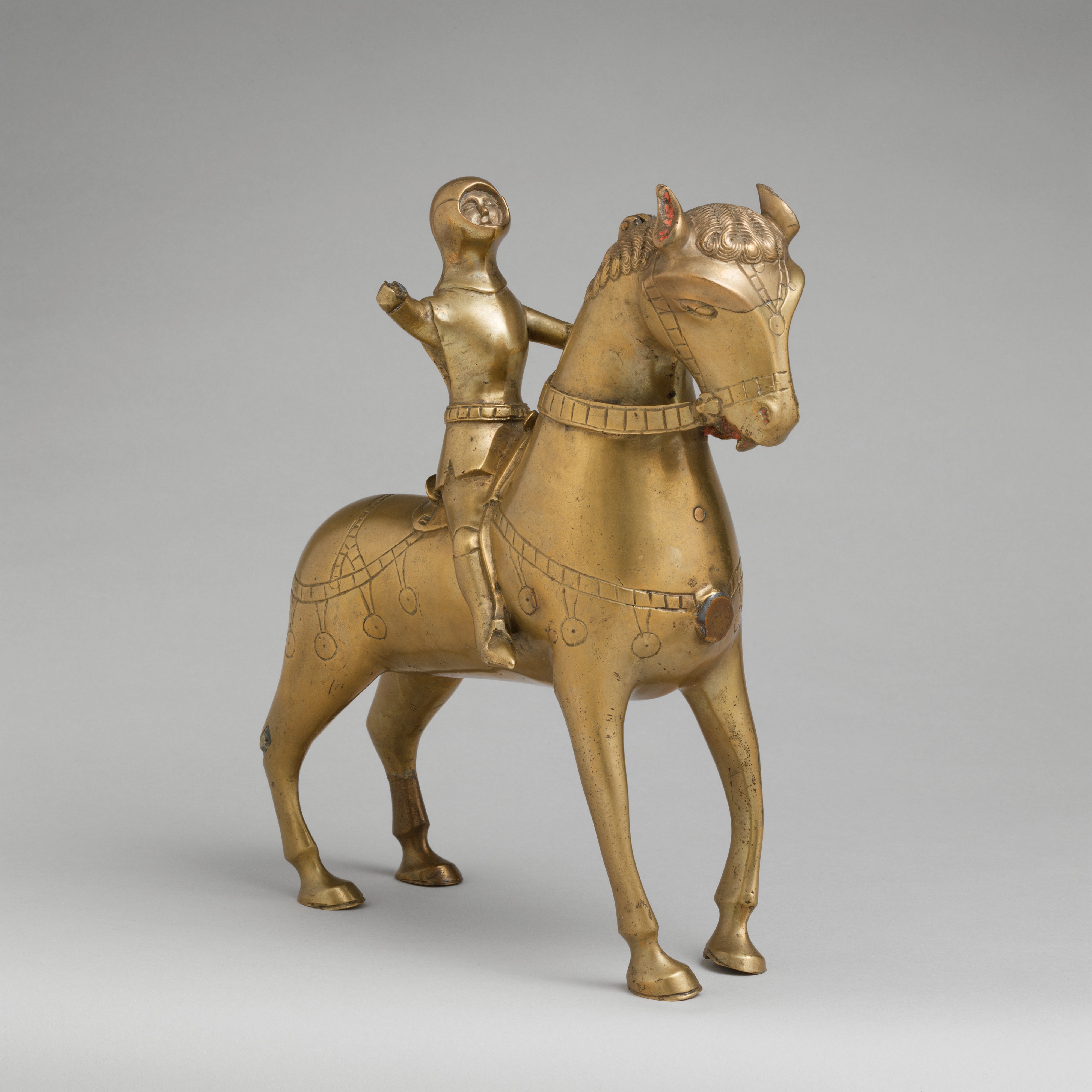
The Aquamanile in the Form of a Soldier on Horseback, a German copper alloy artifact from the medieval period, is far more than a ceremonial vessel for hand-washing. It is a frozen narrative of power, utility, and metallurgical mastery. For Zoey Fashion Laboratory’s SS26 collection, this object serves as a radical departure point—a catalyst for reimagining the human form through the lens of futuristic silhouettes and structural innovation. By extracting the core architectural principles of this historical piece—the tension between rider and mount, the fluidity of liquid within rigid metal, and the ceremonial weight of armor—we can forge a new lexicon of avant-garde couture that transcends time and materiality.
Structural Innovation: The Armature of Liquid Metal
The Aquamanile’s primary innovation lies in its functional duality: it is both a static sculpture and a dynamic conduit for water. For SS26, this principle translates into garments that are not merely worn but inhabited. The copper alloy’s rigid yet malleable nature inspires a new category of architectural textiles that mimic the patina and tensile strength of aged metal. Imagine a jacket constructed from laser-sintered metallic panels that articulate like medieval armor but are engineered to flex with the body’s micro-movements. These panels, treated with a chemical oxidation process, would develop a living patina over time—a direct homage to the Aquamanile’s aged copper surface.
The soldier’s posture—upright, commanding, yet poised for action—suggests a skeletal exoskeleton integrated into the garment’s core. For SS26, we propose a corset-like structure crafted from carbon-fiber-reinforced polymer, mimicking the horse’s ribcage and the rider’s spine. This exoskeleton would house microfluidic channels, a nod to the Aquamanile’s water-pouring function. These channels, filled with a non-toxic, iridescent liquid, would create a dynamic, flowing silhouette that shifts with the wearer’s temperature or movement—a literal liquid architecture that blurs the line between garment and vessel.
Futuristic Silhouettes: The Equine-Rider Dialectic
The Aquamanile’s central tension—the soldier on horseback—is a rich metaphor for the relationship between the human body and its technological extensions. For SS26, we deconstruct this duality into asymmetrical, hybrid silhouettes that merge equine and human forms. A key piece is a jumpsuit with a built-in, cantilevered saddle structure that extends from the lower back, creating a dramatic, floating silhouette. This saddle, crafted from memory-foam and aluminum mesh, would be both a seat and a sculptural element, allowing the wearer to sit, recline, or stand while the garment maintains its architectural integrity.
The soldier’s helmet, a defining feature of the Aquamanile, inspires a headpiece that functions as a sensory visor. For SS26, this is reimagined as a transparent, polycarbonate dome embedded with OLED panels. These panels would display real-time data—heart rate, ambient sound, or even abstract visualizations of the wearer’s emotional state—transforming the helmet into a wearable interface. The visor’s shape, echoing the Aquamanile’s conical helmet, is elongated and aerodynamic, suggesting speed and protection. This piece is not merely a nod to medieval armor but a futuristic exosuit that redefines the boundary between the organic and the digital.
Material Alchemy: From Copper Alloy to Smart Textiles
The Aquamanile’s copper alloy is a testament to medieval material science—a blend of durability, malleability, and thermal conductivity. For SS26, we translate this into smart textiles that respond to environmental stimuli. A key innovation is a fabric woven from copper-coated nylon threads, which can conduct electricity and heat. This fabric, when integrated into a gown, would create a thermochromic effect—shifting from deep bronze to verdigris green as the wearer’s body heat increases. This living patina is a direct reference to the Aquamanile’s aged surface, but with a futuristic twist: the color change is reversible and programmable.
Another material innovation is a bio-mimetic leather grown from fungal mycelium and infused with copper nanoparticles. This material, lightweight and breathable, mimics the texture of aged copper without the weight. For SS26, this is used to construct a cape that drapes like liquid metal, its surface rippling with subtle, iridescent patterns. The cape’s hem is weighted with micro-beads of recycled brass, ensuring it falls in precise, sculptural folds reminiscent of the Aquamanile’s poured water. This piece is a meditation on material temporality—the way metal ages, the way liquid flows, and the way garments carry the memory of their creation.
Ceremonial Utility: Redefining Function in Couture
The Aquamanile was a ceremonial object, used in rituals of cleanliness and hospitality. For SS26, we reclaim this ceremonial function by designing garments that serve as vessels for personal ritual. A key piece is a wearable water vessel—a transparent, polycarbonate bladder integrated into a bodice, filled with a scented, electrolyte-infused liquid. The wearer can activate a micro-pump to release a fine mist, creating a personal microclimate and a sensory experience. This garment blurs the line between fashion and wellness, transforming the act of dressing into a ritual of hydration and renewal.
The soldier’s sword, often depicted in Aquamaniles, inspires a wearable kinetic sculpture attached to the hip. For SS26, this is a retractable, metallic fan that unfurls with a flick of the wrist. The fan’s blades, made from laser-cut titanium, are etched with algorithmically generated patterns that reference medieval heraldry. When fully extended, the fan becomes a shield, a screen, or a performative prop—a functional objet d’art that challenges the traditional boundaries of couture accessories. This piece embodies the Aquamanile’s dual nature: it is both a tool and a talisman, a weapon and a vessel.
Conclusion: The Future as a Medieval Mirror
The Aquamanile in the Form of a Soldier on Horseback is not a relic of the past but a blueprint for the future. By deconstructing its structural, material, and ceremonial elements, Zoey Fashion Laboratory’s SS26 collection reimagines couture as a living, breathing architecture—a fusion of medieval metallurgy and futuristic technology. These garments are not merely worn; they are inhabited, activated, and transformed by the wearer. They are vessels for liquid, data, and ritual, bridging the gap between the ceremonial and the everyday. In doing so, we honor the Aquamanile’s legacy while propelling fashion into a new era of structural innovation and avant-garde expression.