Analysis of the Tang Dynasty Phoenix Ornament: A Deconstruction for Avant-Garde Application
Introduction: The Artifact as a Catalyst
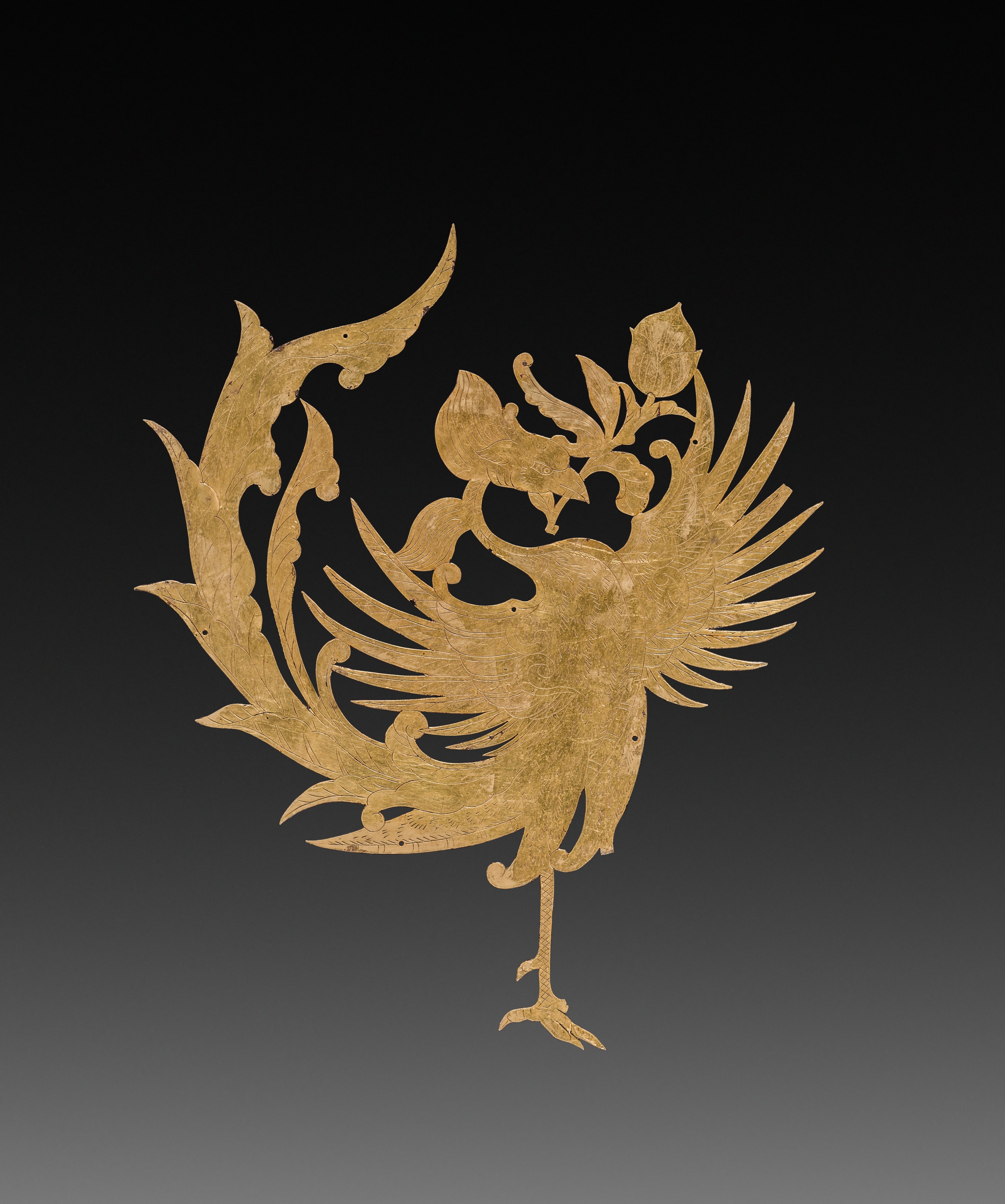
At Zoey Fashion Lab, our mission is to excavate historical materiality and reconstruct it through an avant-garde lens. The object under analysis—a Chinese Tang dynasty (618-907) phoenix ornament, executed in beaten gold with chased detail—presents a profound opportunity. This piece is not merely a decorative textile appliqué; it is a nexus of technical mastery, symbolic cosmology, and dynastic power. For the avant-garde designer, this artifact offers a lexicon of form, texture, and narrative that can be radically recontextualized. We will deconstruct its material, technical, and symbolic properties to propose a new vocabulary for contemporary fashion.
Material and Technical Deconstruction: The Gold Substrate
The choice of beaten gold is the first critical element. Gold, in the Tang context, was not a casual luxury. It signified imperial authority, spiritual transcendence, and the eternal. The technique of beating gold into an ultra-thin, malleable sheet (often less than 0.1mm thick) demonstrates a sophisticated understanding of metallurgy. For the fabric deconstructionist, this process parallels the manipulation of textile substrates. The gold leaf becomes a metallic skin, a second epidermis that can be draped, folded, and embossed.
Chased detail is the second technical pillar. Chasing is a cold-working technique where the gold surface is pushed, indented, and sculpted from the front side using fine tools. This creates a high-relief, three-dimensional texture without removing material. The phoenix’s feathers, beak, and crest would have been rendered through hundreds of microscopic hammer strikes. This process imbues the metal with a tactile, organic quality that contradicts its rigid materiality. For Zoey Fashion Lab, this suggests a method for treating synthetic or metallic textiles: embossing, creasing, and heat-pressing to create analogous topographies. The chased detail is a precursor to modern textile surface design—a dialogue between light and shadow that we can replicate through laser etching or bonded foil techniques on silk, neoprene, or technical mesh.
Symbolic Deconstruction: The Phoenix as Avant-Garde Motif
The phoenix (fenghuang) in Tang China was not a singular bird of fire as in Western mythology. It was a composite creature, embodying yin and yang, virtue, and the empress’s grace. Its iconography is rich with deconstructive potential: the rooster’s head (dignity), the swallow’s jaw (grace), the snake’s neck (flexibility), the fish’s tail (fluidity), and the dragon’s scales (power). This hybridity is inherently avant-garde. It rejects a singular, fixed form in favor of a mutable, assemblage-like identity.
In a fashion context, this phoenix can be fragmented. We propose deconstructing the motif into its constituent parts: a tail feather becomes a structural hem; a scale pattern becomes a digital print on a sheer overlay; the beak becomes a sharp, asymmetrical collar. The phoenix’s traditional role as a symbol of rebirth and renewal aligns perfectly with the avant-garde ethos of destroying and remaking. The ornament is not a static emblem but a generative algorithm for pattern cutting and garment construction. The chased lines can be interpreted as seam lines, darts, or laser-cut perforations that allow the garment to breathe and move, echoing the bird’s celestial flight.
Contextual Resonance: The Tang Dynasty as a Globalized Moment
The Tang dynasty (618-907) was a period of unprecedented cosmopolitanism. The Silk Road facilitated a dense exchange of textiles, metals, and motifs between China, Central Asia, Persia, and beyond. The phoenix ornament, while distinctly Chinese, likely absorbed influences from Sogdian metalwork and Sassanian silver. This cultural hybridity is a core tenet of the avant-garde. The ornament is not a pure, isolated artifact; it is a node in a network of global aesthetics.
Zoey Fashion Lab can exploit this by layering the phoenix motif with non-Chinese references. Imagine a garment where the chased gold pattern is rendered in industrial silicone, referencing both Tang metalwork and contemporary sportswear. Or a deconstructed qipao silhouette where the phoenix tail becomes a train of laser-cut leather, echoing the saddle blankets of Central Asian equestrian cultures. The Tang dynasty’s openness to foreign influences validates our own practice of bricolage—combining disparate historical and material references to create something new.
Technical Translation for Avant-Garde Fashion
Surface Embellishment: The chased gold detail can be translated through metallic foil transfer on matte black silk, creating a high-contrast, reflective surface. Alternatively, 3D-printed polymer can mimic the relief of chasing, applied as appliqués on structured cotton or wool. The key is to preserve the tactile depth of the original while using modern, lightweight materials.
Structural Integration: The phoenix’s form—its sweeping tail, arched neck, and outstretched wings—can inform garment architecture. The tail becomes a corseted peplum; the wings become cap sleeves with exaggerated, boned edges; the head and crest become a headpiece or collar. The garment should not merely depict the phoenix but embody its movement—the way light catches the chased gold is analogous to the way a fabric’s drape catches light.
Color Palette: The Tang phoenix was often polychrome, with red, green, blue, and gold. For an avant-garde palette, we desaturate these colors: oxidized copper, verdigris green, deep indigo, and burnished brass. This evokes the patina of aged metal, lending a sense of archaeological depth to the collection.
Conclusion: The Phoenix as a Living Archive
The Tang dynasty phoenix ornament in beaten gold is far more than a historical curiosity. It is a technical and symbolic blueprint for the avant-garde. At Zoey Fashion Lab, we do not replicate; we resonate. By deconstructing its materiality—gold as skin, chasing as texture, hybridity as form—we activate the artifact within a contemporary dialogue. The phoenix’s promise of rebirth is literalized in our design process: the ancient ornament dies as a fixed object and is reborn as a dynamic, wearable system. This is the essence of Archive Resonance—not preservation, but transformation. The beaten gold of Tang China will beat again, not on a warrior’s robe, but on a runway, under strobe lights, in a future that honors the past by dismantling and reimagining it.