The Drawnwork Frontier: A Structural Manifesto for SS26
In the relentless pursuit of fashion’s next horizon, Zoey Fashion Laboratory presents a definitive avant-garde analysis of a singular piece—a garment that transcends mere clothing to become an architectural event. This study, set against the Global Frontier, dissects a creation born from the ancient yet radical technique of drawnwork, reimagined for SS26. It is not a dress; it is a blueprint for a future where fabric becomes structure, and silhouette becomes a statement of pure, unmediated innovation. The piece challenges the very ontology of couture, asking: what if the negative space—the void left by removed threads—is the most potent form of materiality?
Deconstructing the Drawnwork Paradigm
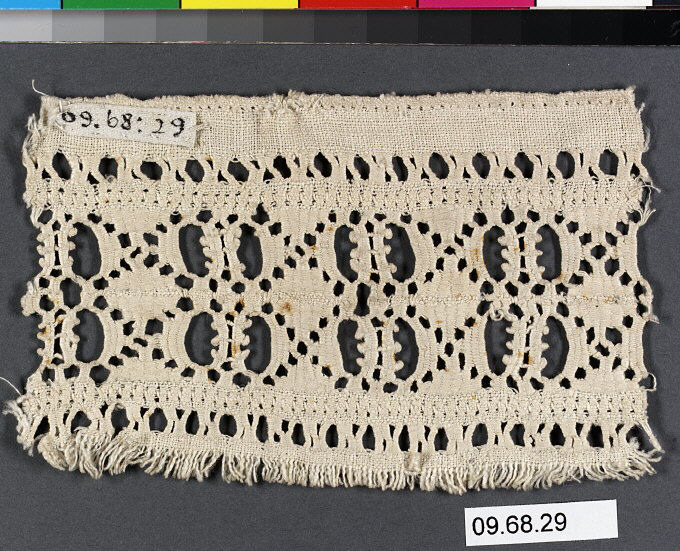
Drawnwork, historically a craft of meticulous hand-pulled threads to create openwork patterns, is here weaponized as a tool of structural deconstruction. The garment’s foundation is a single, continuous length of industrial-grade silk organza, laser-cut with precision to create a matrix of incisions. These cuts are not decorative; they are load-bearing. By strategically removing sections of the fabric, the designer has engineered a system of tension and release. The remaining threads—thin, translucent, and almost tensile—form a web that holds the garment’s shape without seams or darts. This is not embroidery; it is a fabricated skeleton. The result is a silhouette that appears to float, suspended by its own internal logic, a ghost of a dress that is both present and absent.
The piece’s origin on the Global Frontier—a conceptual space blending digital design, nomadic craftsmanship, and futuristic material science—is evident in its asymmetry. One shoulder is fully encased in a dense, almost armored panel of drawnwork, where threads are tightly woven to create a solid surface. The opposite side dissolves into a cascade of loose, unraveling filaments, a deliberate nod to entropy and the passage of time. This duality is the core of the avant-garde statement: the garment is both a fortress and a ruin, a monument to control and a celebration of chaos. The silhouette is a sculptural wedge, widening from a narrow, almost invisible waist to a dramatic, wing-like extension at the hip, achieved not by padding or boning, but by the sheer tension of the drawnwork matrix.
Futuristic Silhouettes: The Architecture of Absence
For SS26, the silhouette is not about volume in the traditional sense; it is about negative volume. The garment’s form is defined by what is missing. The drawnwork creates a series of voids—triangular, organic, and irregular—that map onto the body’s contours. These voids are not merely decorative cutouts; they are structural apertures that alter the garment’s gravity and movement. When the wearer moves, the voids shift, creating a kinetic interplay of light and shadow. The silhouette is perpetually in flux, never static, a living sculpture that breathes with the body. The hem is not a line but a fractured edge, where drawnwork threads trail off into free-hanging strands, some ending in tiny, polished hematite beads that weigh down the fabric, creating a gravitational pull that contrasts with the airy, ethereal upper portion.
This structural innovation extends to the garment’s interior. There is no lining, no undergarment. The drawnwork is the only barrier, rendering the body visible through the gaps. This is a radical act of vulnerability and strength, a rejection of modesty in favor of radical transparency. The designer has turned the inside out, making the structural process the aesthetic statement. The seams, where they exist, are raw and unfinished, left as exposed, frayed edges that serve as a reminder of the garment’s handcrafted origin. This is not a flaw; it is a feature, a deliberate embrace of unfinished perfection that aligns with the deconstructive ethos of the avant-garde.
Material Alchemy: From Thread to Tectonic Form
The choice of drawnwork as the primary material is a masterstroke of conceptual rigor. The threads themselves are a hybrid: a core of biodegradable Tencel wrapped in a micro-filament of recycled stainless steel. This composite gives the garment both flexibility and memory. The drawnwork can be pulled taut, creating a rigid, almost metallic surface, or allowed to relax into a soft, fluid drape. This dynamic materiality allows the piece to shift between states, from architectural armor to gossamer veil, depending on the wearer’s movement and the ambient environment. The steel component also introduces a subtle shimmer, a futuristic glint that catches the light and refracts it through the voids, creating a constellation of tiny reflections on the skin beneath.
The color palette is monochromatic, a deep, almost black charcoal that verges on violet under certain light. This is not a neutral; it is a chromatic void, a color that absorbs and reflects simultaneously. The drawnwork’s open structure allows the skin’s natural tones to bleed through, creating a gradient of warmth against the cool, industrial fabric. The effect is one of embedded intimacy, a dialogue between the synthetic and the organic. The garment’s weight is negligible, a paradox given its structural complexity. It feels like a second skin, yet it maintains a rigid, almost armored presence. This is the ultimate avant-garde achievement: a garment that is both heavy with concept and light with execution.
Contextualizing the Piece: A Standalone Avant-Garde Study
This piece does not exist within a collection; it is a standalone study, a manifesto in fabric. It is a response to the oversaturation of fast fashion and the commodification of trends. The drawnwork technique, requiring hours of manual labor and digital precision, is a slow fashion rebellion. It rejects the ephemeral in favor of the eternal, the disposable in favor of the monumental. The garment is designed to be worn, but also to be observed, to be studied as a piece of functional art. It challenges the viewer to reconsider the relationship between garment and body, between structure and void.
For SS26, this piece signals a shift toward hyper-specificity in avant-garde design. It is not a template for mass production but a singular expression of a boundary-pushing philosophy. The Global Frontier origin is not a physical location but a conceptual space where digital modeling, artisanal craft, and futuristic materials converge. This garment embodies that convergence, a testament to the power of deconstructive aesthetics to create something entirely new from the oldest of techniques. It is a definitive statement: the future of couture lies not in adding more, but in subtracting with purpose, in finding form through the absence of form. This is the drawnwork frontier, and it is only the beginning.